


An interesting recent article in the Wall Street Journal discusses how various levels of the Chinese government are taking stakes in private companies.
According to the article: “the government stakes are sometimes very small [sometimes a 1% holding] but they tend to give the government board seats, voting power and sway over business decisions. Colloquially, they are known as golden shares.”
The article states:

FCPA Professor has been described as “the Wall Street Journal concerning all things FCPA-related,” and “the most authoritative source for those seeking to understand and apply the FCPA.”
Set forth below are the topics discussed this week on FCPA Professor.
As discussed here, Roger Ng (a former Goldman Sachs managing director who was found guilty at trial of FCPA and related charges for paying bribes to various Malaysian and Abu Dhabi officials in connection with Malaysia’s state-owned and state-controlled investment development company and sentenced to 10 years in prison) was also ordered to forfeit $35.1 million.
As discussed in this recent Wall Street Journal article:
“The Biden administration is pushing hard for American businesses to invest in Africa despite the obstacles they face there, more than a decade after China began expanding its economic and political ties with countries across the continent.
Vice President Kamala Harris pledged [recently] in Ghana’s seaside capital to “double down” on efforts to bring billions of dollars in investments to Africa, a continent that many Western investors still view as high risk. Ms. Harris is the highest ranking in a string of top White House and Biden administration officials to travel through Africa this year, promising to unlock American investment as both the U.S. and China look to tap into the continent’s vast natural resources.
But U.S. and other Western investors often cite corruption, poor infrastructure and still rampant poverty, all of which preclude easily operating across dozens of countries that all have their own rules and market peculiarities.”
The above example is the latest example (see here, here and here for prior posts) of the U.S. government encouraging investment in a country – because it advances the U.S. government’s current foreign policy interests – while knowing full well that the country has corruption problems that could expose U.S. companies to FCPA issues.
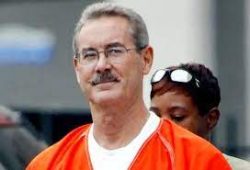
Samuel Bankman-Fried of course is presumed innocent of the criminal charges against him (including the recent Foreign Corrupt Practices Act charge – see here for the prior post) until proven otherwise by the government or a plea by the defendant.
As detailed in the prior post, the FCPA charge against Bankman-Fried focuses on an alleged bribe to Chinese officials to unfreeze certain trading accounts containing over $1 billion in cryptocurrency – which had been frozen by Chinese authorities – so that Bankman-Fried and others could use the assets to fund additional trading activity.
In other words, the DOJ alleges, Bankman-Fried conspired to violate the FCPA to help facilitate the overall financial fraud schemes he allegedly engaged in.
As detailed below, this is not the first time the FCPA was lurking in the background of a high-profile financial fraud case.
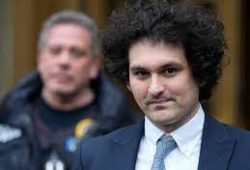
In December 2022, the Department of Justice announced criminal charges against Samuel Bankman-Fried arising from an “alleged wide-ranging scheme by [him] to misappropriate billions of dollars of customer funds deposited with FTX, the international cryptocurrency exchange [he] founded …, and mislead investors and lenders to FTX and to Alameda Research, the cryptocurrency hedge fund [he] also founded.”
Specifically, Bankman-Friend was charged with conspiracy to commit wire fraud, wire fraud, conspiracy to commit commodities fraud, conspiracy to commit securities fraud, conspiracy to commit money laundering, and conspiracy to defraud the Federal Election Commission and commit campaign finance violations.
Yesterday, the DOJ filed a superseding indictment adding a Foreign Corrupt Practices Act conspiracy charge to the criminal charges Bankman-Fried is facing.
Russ Ryan spent ten years in the SEC’s Division of Enforcement, including his last three years as Assistant Director of the Enforcement Division. He also spent substantial time in private practice at King & Spalding and is currently Senior Litigation Counsel at the New Civil Liberties Alliance.
Ryan is one of the best commentators around on many SEC issues and his candor is delightful.
His latest piece published on his LinkedIn page is titled “The SEC Penalty Racket” and it discusses two recent SEC FCPA enforcement actions against Rio Tinto and Flutter International (see prior posts here and here) to illustrate the SEC’s “largely unchecked power to shake down companies with astronomical penalties that far exceed statutory limits set by Congress.”

In April 2022, Roger Ng (a former Goldman Sachs managing director) was found guilty at trial of Foreign Corrupt Practices Act and related charges for paying bribes to various Malaysian and Abu Dhabi officials in connection with Malaysia’s state-owned and state-controlled investment development company. See here.
Earlier this month, Judge Margo Brodie (E.D.N.Y.) sentenced Ng to 10 years in prison. (See here for the DOJ release). The ten year sentence for FCPA (and related crimes) is among the longest in FCPA history.
Last week, Judge Brodie also ordered Ng to forfeit $35.1 million (see here for the order).
FCPA Professor has been described as “the Wall Street Journal concerning all things FCPA-related,” and “the most authoritative source for those seeking to understand and apply the FCPA.”
Set forth below are the topics discussed this week on FCPA Professor.
This post takes a closer look at the “factual basis for breach” in the Ericsson matter.
Another week, another speech by Assistant Attorney General Kenneth Polite.
In the speech, Polite told an audience of white collar criminal professionals not to” fall victim to recency bias” (even though of course the DOJ facilitates it) and served up a word salad of ambiguous terms and concepts.
I have been reading speeches by DOJ enforcement officials for approximately 15 years and Polite’s speech is one of the worst I have encountered as it is mostly just a play on words.

One reason to take FCPA enforcement agency rhetoric with a grain of salt is because it is warranted.
For instance, the FCPA enforcement agencies often talk about the importance of x and how they are committed to x, but in reality rarely do x.
Case in point is SEC individual FCPA enforcement actions.
For many years, SEC enforcement officials have talked about the importance of individual FCPA enforcement actions and set forth below are representative quotes from over the years.
U.S. Ambassador to Bangladesh Peter Haas recently gave this speech at an event in the country.
In the speech, Haas discussed U.S. government support for initiatives “that help Bangladeshi businesses meet international standards and regulations, making them more competitive in the global market,” and offered ideas for how the Bangladeshi government could reduce corruption.
Haas concluded his speech by saying that “if Bangladesh can assure citizens and investors that corruption is less prevalent here than in other markets, it will attract more investment and help the country continue the path of economic growth.”

I look at many things through a Foreign Corrupt Practices Act lens. It’s an occupational hazard I guess.
So when looking at this year’s “Most Ethical Companies” list published by Ethisphere, I looked for FCPA violators or companies currently under FCPA scrutiny – and like prior year’s – there were quite a few.
For starters, the “Most Ethical Companies” list has become diluted. This year, Ethisphere recognized 135 companies. By comparison, when Ethisphere first released its list in 2007 there were 92 companies. But who knows, perhaps companies have become ethical.
The following 2023 “Most Ethical Companies” honorees have resolved FCPA enforcement actions: ADM, Allianz, Elbit Systems, Eli Lilly, HP, IBM, Johnson Controls, Juniper Networks, Linde, Rockwell Automation, Pfizer, and Schnitzer Steel.
The following 2023 “Most Ethical Companies” honorees are currently under FCPA scrutiny: 3M, Edwards Life Sciences, and Leidos.