

In August, Asante Berko (a former Executive Director of Goldman Sachs International) was convicted by a jury of FCPA and related offenses in connection with a Ghana bribery scheme after a trial in the E.D. of New York.
Thereafter, Berko filed a motion for acquittal and a new trial which stated in pertinent part: In this case, the evidence is insufficient to show Mr. Berko agreed with the alleged coconspirators to pay bribes to government officials. The evidence involving Ghanaian officials consists of either (1) emails between Aksa personnel, Goldman Sachs personnel, or Tricorp personnel negotiating the deal with the officials, or (2) routine emails regarding the deal’s progress or logistics.”
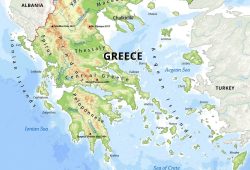
This post highlights nine Foreign Corrupt Practices Act enforcement actions concerning conduct (in whole or in part) in Greece.
The enforcement action concerned conduct in Greece, Vietnam and South Korea.
As to Greece, the allegations were: “Novartis Greece, through its employees and agents, knowingly and willfully conspired and agreed to corruptly provide improper benefits and things of value to employees of state-owned and state-controlled hospitals and clinics in Greece (“Greek State HCPs”) and other HCPs in Greece with the intent to obtain an improper advantage and to increase sales of a certain Novartis-branded prescription drug in Greece. Specifically, Novartis Greece sponsored Greek State HCPs to attend international congresses as a means to bribe and corruptly influence the HCPs to increase prescriptions of Lucentis a drug to treat adults with age-related macular degeneration].
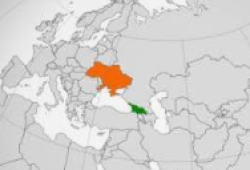
This post highlights FCPA enforcement actions concerning conduct (in whole or in part) in Georgia and Ukraine.
Georgia
The enforcement action concerned conduct in Georgia and the allegations were: “From approximately November 2006 to December 2009, Linde, through Spectra Gases, Inc., a company that Linde acquired in October 2006, made corrupt payments to high-level officials at the National High Technology Center (NHTC) of the Republic of Georgia, a 100% state-owned and-controlled entity, in connection with its purchase of certain income-producing assets from the NHTC.”
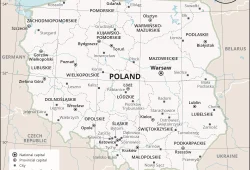
This post highlights 8 FCPA enforcement actions concerning conduct (in whole or in part) in Poland.
The enforcement action concerned conduct in Russia, Poland and Mexico.
As to Poland, the allegations were: HP Poland “(i) caused the falsification of HP’s books and records; and (ii) circumvented HP’s existing internal controls, in connection with a scheme to make corrupt payments to one or more foreign officials in Poland, including the Polish Official [the Director of Information and Communications Technology within the Polish National Police Agency (“KGP”) which was part of the Polish Ministry of the Interior and Administration].” Between 2006 and 2010 HP Poland “provided Polish Official cash worth the equivalent of approximately $600,000, gifts valued in excess of $30,000, and several thousand dollars in improper travel and entertainment benefits.” “During this same time span, the Polish government awarded to HP Poland at least seven contracts for KGP-related information technology products and services, with a total value of approximately $60 million.”
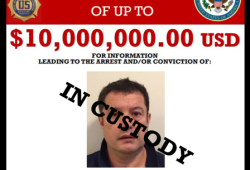
In 2019, Alvaro Pulido Vargas was criminally charged with laundering the proceeds of violations of the FCPA in connection with a scheme to pay bribes to take advantage of Venezuela’s government controlled-exchange rate. (See here).
In 2021, the DOJ also announced the unsealing of an indictment charging various individuals including Alvaro Pulido Vargas for their alleged roles in laundering the proceeds of contracts to provide food and medicine to Venezuela that were obtained through bribes. (See here for the prior post).
Yesterday, the DOJ announced that Pulido Vargas was arrested and will be making an initial appearance on October 13th in the Southern District of Florida to face federal prosecution.
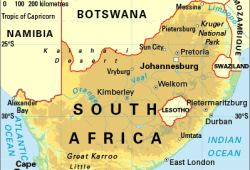
This post highlights seven FCPA enforcement actions concerning conduct (in whole or in part) in South Africa.
The enforcement action concerned conduct in South Africa and Nepal.
As to South Africa, the allegations were: “between January 2016 and at least January 2020, AAR, through its agents, knowingly and willfully conspired and agreed with others to corruptly offer and pay bribes to, and for the benefit of, government officials in South Africa […] to secure improper advantages in order to assist AAR in obtaining and retaining business from SAAT [South African Airways Technical – a wholly owned subsidiary of South African Airways – that provided technical services for SAA and other airlines], namely the award of a five-year aircraft component support contract (“SAAT Contract”) and disbursement of payments by SAAT pursuant to that contract.”

In February 2026 Charles Hunter Hobson (who served in a variety of roles at Corsa Coal from 2013 to 2018) was found guilty by a jury for various Foreign Corrupt Practices Act and related offenses in connection with an Egyptian bribery scheme.
With a motion for a judgement of acquittal pending, in September 2026 (through new counsel) Hobson filed a motion to dismiss based on the court’s supervisory powers.
In a rather cavalier response, the DOJ sort of responded to the motion, but also stated that if “the Court wishes to resolve the substance of Defendant’s claims, the government respectfully requests 60 days to respond more fully.” (See here).
The Foreign Corrupt Practices Act has always been a law much broader than its name suggests.
Sure, the FCPA contains anti-bribery provisions which concern foreign bribery.
Sure, the FCPA’s books and records and internal controls provisions can be implicated in foreign bribery schemes.
However, the fact remains that most FCPA enforcement actions (that is enforcement actions that charge or find violations of the FCPA’s books and records and internal controls provisions) have nothing to do with foreign bribery. For lack of a better term, these enforcement actions have longed been called non-FCPA, FCPA enforcement actions by this site.
The latest example concerns an SEC enforcement action against Latch, Inc. (a Missouri based company that develops and manufactures smart access hardware and software products for multi-family residential properties).

18 USC 3292 can play a meaningful role in certain FCPA enforcement actions in terms of the statute of limitations.
The statutory provision states in pertinent part:
(a) (1) Upon application of the United States, filed before return of an indictment, indicating that evidence of an offense is in a foreign country, the district court before which a grand jury is impaneled to investigate the offense shall suspend the running of the statute of limitations for the offense if the court finds by a preponderance of the evidence that an official request has been made for such evidence and that it reasonably appears, or reasonably appeared at the time the request was made, that such evidence is, or was, in such foreign country.

As highlighted in this prior post, in 2021 Frederick Cushmore Jr. (a former executive of Pennsylvania-based coal mining company Corsa Coal Corp.) was criminally charged and pleaded guilty to a conspiracy charge to violate the FCPA’s anti-bribery provisions in connection with a bribery scheme in Egypt involving Al Nasr Company for Coke and Chemicals (an alleged Egyptian state-owned and state-controlled entity).
In 2022, in connection with the same core allegations, the DOJ also criminally charged Charles Hunter Hobson (another former executive of Corsa Coal). The charges against Hobson went to trial, at trial Cushmore testified for the DOJ, and Hobson was found guilty in February 2026.
With post-trial mentions pending, Hobson’s counsel recently filed a motion to continue sentencing revealing “new sentencing-related information disclosed by the government.”
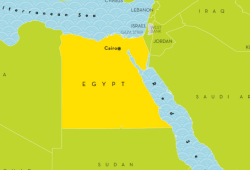
This post highlights nine FCPA enforcement actions concerning conduct (in whole or in part) in Egypt.
The enforcement action concerned conduct in Egypt and alleged that from “2016 until early 2020, certain of Corsa’s employees and agents engaged in a scheme to bribe Egyptian government officials in order to obtain and retain lucrative contracts to supply coal to Al Nasr Company for Coke and Chemicals (“Al Nasr”), an Egyptian state-owned and -controlled coke company. To effectuate the scheme, Corsa paid approximately $4.8 million to an Egypt-based third-party intermediary that Corsa’s employees knew would be used, at least in part, to pay bribes to Egyptian government officials, including the Chairman of Al Nasr. In exchange for the bribe payments, Corsa secured approximately $143 million in coal contracts from Al Nasr and earned approximately $32.7 million in profits.” Individual enforcement actions were also based on the same core conduct.
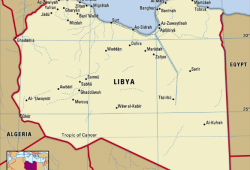
This post highlights seven FCPA enforcement actions concerning conduct (in whole or in part) in Egypt.
The enforcement action against Cyrus Ahsani and Saman Ahsani (the former CEO and Chief Operations Officer of Monaco-based Unaoil) concerned conduct in Iraq, Kazakhstan, Libya, Algeria, Iran, Azerbaijan, Angola, Syria, the Democratic Republic of the Congo, and elsewhere.
As to Libya, the enforcement action concerned various schemes involving foreign government officials including at a state-owned oil and gas company to obtain and retain business for Unaoil and its client companies. The information refers to Libya Official 1, but states that S. Ahsani and others “understood that Libya Official 1 was not an appointed Libyan government official at the time they promised to pay Libya Official 1” but that “Libya Official 1 could exert influence over senior Libyan government officials, including one official who was a close relative of the then head of the Libyan government, and that this senior Libya official’s support or lack of support could determine whether” a company won an award for a project. Based on the same core conduct, Steven Hunter (a former business development manager at Unaoil) resolved an enforcement action.