

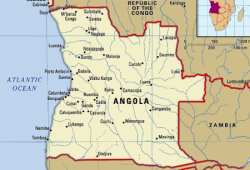
This post highlights fourteen FCPA enforcement actions concerning conduct (in whole or in part) in Angola.
The enforcement action involved conduct in Angola and the allegations: “Beginning in September 2007, Frank’s tried to increase its business in Angola, but learned through an oil company that Sonangol was blocking its hiring and it could no longer use Frank’s to provide tubular services. Senior Frank’s managers learned that Sonangol directed the customer to use a competitor of Frank’s that purportedly made a superior financial investment in Angola. But a senior Sonangol executive relayed that Sonangol could change its mind if Frank’s established a consulting company and paid five percent of the value of the contract to the consulting company for the benefit of high-ranking Sonangol officials.”
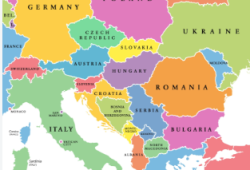
Previous posts have highlighted FCPA enforcement actions concerning conduct (in whole or in part) Greece, Georgia and Ukraine, and Poland.
This post highlights FCPA enforcement actions concerning conduct (in whole or in part) in the following countries: Romania, Bulgaria, Hungary, Slovakia, Slovenia, and Czech Republic.
Romania
The enforcement action concerned conduct in Romania and the allegations were: “Between 2007 and 2012, Elbit and Plaza [a majority-owned indirect subsidiary], directly and indirectly, paid millions of dollars to third-party offshore consultants and sales agents purportedly for their services related to a real estate development project in Romania and the sale of a large portfolio of real estate assets in the U.S. However, Elbit and Plaza made these payments even though they had no evidence that the consultants and sales agents had actually provided the contracted for services. Elbit and Plaza failed to properly record those payments in a manner that, in reasonable detail, accurately and fairly reflected the nature of the payments in their books and records. Elbit and Plaza also failed to devise and maintain internal accounting controls sufficient to provide reasonable assurances that company funds would only be used as authorized for legitimate corporate purposes and that transactions were recorded as necessary to maintain accountability for assets, particularly with regard to the accounts payable process.”
In November 2024, the SEC announced a Foreign Corrupt Practices Act enforcement action against Cyril Sebastien Dominique Cabanes (“Cabanes”) – a French citizen and resident of Singapore who was previously a member of the board of directors of Azure Power Global Limited (a Mauritius company with its principal place of business in India).
During the time period relevant to the enforcement action, Azure was a publicly traded company with shares traded on the New York Stock Exchange.
The enforcement action concerns alleged bribes paid to Indian officials to secure multi-billion dollar energy projects for Azure and another company Adani Green Energy Limited.

In recent months, I’ve had several exchanges with various individuals (including journalists) about FCPA enforcement and the false narrative that FCPA enforcement has stopped.
When shown clear evidence that the narrative is indeed false, two common responses have been:
(1) but FCPA enforcement activity during the Trump administration involves matters initiated / begun (use whatever term you want) during a prior administration; and
(2) but the Trump administration has closed / abandoned (use whatever term you want) FCPA inquiries or investigations without bringing an enforcement action.
These common responses ignore the fact that both dynamics have been part of FCPA enforcement for nearly 50 years.
As highlighted in this prior post, in 2012 BizJet International Sales and Support Inc. (a Tulsa, OK based provider of aircraft maintenance, repair and overhaul services) resolved an $11.8 million FCPA enforcement action “for bribing government officials in Latin America to secure contracts to perform aircraft services for government agencies.”
The enforcement action alleged conduct by several executives generically referred to at the time as Executive B, Executive B, Executive C, and Sales Manager A.
In 2013, the DOJ announced the unsealing of related criminal charges (filed in 2012) of the four executives and revealed the names of the executives including “Sales Manager A” Jald Jensen.