

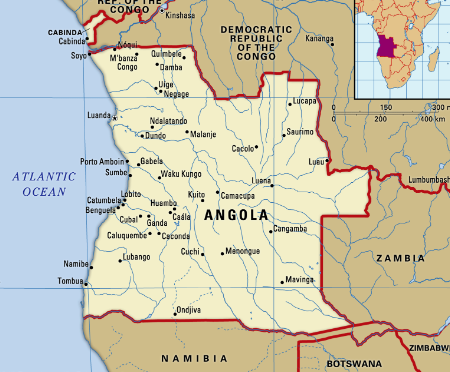
This post highlights fourteen FCPA enforcement actions concerning conduct (in whole or in part) in Angola.
The enforcement action involved conduct in Angola and the allegations: “Beginning in September 2007, Frank’s tried to increase its business in Angola, but learned through an oil company that Sonangol was blocking its hiring and it could no longer use Frank’s to provide tubular services. Senior Frank’s managers learned that Sonangol directed the customer to use a competitor of Frank’s that purportedly made a superior financial investment in Angola. But a senior Sonangol executive relayed that Sonangol could change its mind if Frank’s established a consulting company and paid five percent of the value of the contract to the consulting company for the benefit of high-ranking Sonangol officials.”
The enforcement action involved conduct in Angola, Saudi Arabia, Morocco, Spain, Turkey, Gabon, Benin, Burkina Faso, Senegal, Ivory Coast, Niger, Cameroon China, Serbia, Bosnia, and Mexico.
As to Angola, the allegations were: “FMC, through FMC Portugal [a wholly-owned subsidiary of FMC] and FMC Angola [an entity overseen by FMC Portugal], offered or provided things of value to the Angolan Military Health Officer [a high-ranking officer in the Medical Services Division of the Angolan Armed Forces] and his family, as well as prominent Angolan government-employed nephrologists, specifically shares in a joint venture, storage contracts, and consultancy agreements, for the purpose of securing an improper advantage and assisting FMC with obtaining and retaining business in Angola.”
The enforcement action involved conduct in Brazil, Angola, Equatorial Guinea, Kazakhstan and Iraq.
As to Angola, the allegations were: “SBM knowingly paid bribes either directly or through [an intermediary] to officials with the Angolan government for the purpose of securing an improper advantage and assisting SBM in obtaining and retaining business from Sonangol. SBM paid bribes to at least nine Angolan officials within Sonangol and Sonusa. [Sonangol is described as a state-owned and state-controlled oil company that was controlled by the Angolan government and performed government functions for Angola. Sonusa [Sonangol USA Co.] is described as a Houston, Texas based wholly-owned subsidiary of Sonangol. Sonusa was controlled by the Angolan government and performed government functions for Angola.”]”
The enforcement action involved conduct in Angola and the allegations were: “Halliburton paid $3,705,000 to a local Angolan company that Halliburton had proposed to a Sonangol Official to fulfill local content obligations. The local Angolan company was owned by a former Halliburton employee and a friend and neighbor of the Sonangol government official and some of the payments were made in advance of Halliburton obtaining lucrative oilfield services contracts.”
The enforcement action involved conduct in Angola, Azerbaijian, Brazil, Indonesia, Iraq, Kazakhstan, Nigeria, Russia, Thailand.
As to Angola, the allegations were: “In Angola, Rolls-Royce, RRESI, Executive, Employee 1 and others, engaged Intermediary 2 [a Madeira-incorporated, Angola-based, oil and gas services intermediary that was created as a joint venture between Intermediary 1 and another company], knowing that Intermediary’s 2’s commission payments would be used to bribe foreign officials at Sonangol [an Angolan state-owned and state-controlled oil company]. From in or around 2008 through in or around 2012, RRESI made approximately $1.2 million in corrupt commission payments to Intermediary 2, knowing that Intermediary 2’s commission payments would be used to bribe foreign officials at Sonangol in order to obtain confidential information and win contracts for Rolls-Royce and RRESI. Ultimately, three Sonangol projects were awarded to Rolls-Royce and RRESI, resulting in approximately $30 million in profits in Angola.”
The enforcement action involved conduct in Angola, Bangladesh, Indonesia, Thailand, China, and Egypt.
As to Angola, the allegations were: “General Cable conducted business in Angola through General Cable Celcat [an indirect subsidiary headquartered in Portugal whose financial statements were consolidated with the financial statements of General Cable] and General Cable Condel [an indirect subsidiary headquartered in Angola whose financial statements were consolidated with the financial statements of General Cable] . The majority of the company’s sales in Angola were made to state-owned customers, including Angolan State-Owned Enterprise 1, Angolan State-Owned Enterprise 2, and Angolan State-Owned Enterprise 3. Between 2003 and 2013, General Cable Celcat and General Cable Condel made corrupt payments, … to employees of Angolan State-Owned Enterprise 1, Angolan State-Owned Enterprise 2, and Angolan State-Owned Enterprise 3, and other state-owned customers to obtain and retain business in Angola. Specifically: (i) between 2003 and 2009, General Cable Celcat and General Cable Condel paid more than $450,000 directly to officials at Angolan State-Owned Enterprise 1, Angolan State-Owned Enterprise 2, and Angolan State-Owned Enterprise 3; (ii) between 2009 and 2013, General Cable Condel paid more than $8 7 million to a sales agent in Angola with knowledge that the sales agent would, and did, pass a portion of those payments to officials at Angolan State-Owned Enterprise 1, Angolan State-Owned Enterprise 2, and Angolan State-Owned Enterprise 3; and (iii) General Cable Condel paid more than $150,000 to another agent with knowledge that the payments would be passed on, in part., to two officials of a state-owned customer.
The enforcement action concerned conduct in Angola, Argentina, Brazil, Colombia, Dominican Republic, Ecuador, Guatemala, Mexico, Mozambique, Panama, Peru, and Venezuela.
As to Angola, the allegations were concerned payments to government officials (including a high-level official of an Angolan state-owned and state-controlled company) to secure public works projects.
The enforcement action concerned conduct in Kenya and Angola.
As to Angola, the allegations were: “From 2007 through 2011, Trentyre [a wholly-owned subsidiary of Goodyear] paid over $1.6 million in bribes to employees of government-owned or affiliated entities, and private companies, to obtain tire sales. Trentyre paid approximately $1.4 million of these bribes to employees of government-owned or affiliated entities in Angola, including the Catoca Diamond Mine, UNICARGAS, Engevia Construction and Public Works, the Electric Company of Luanda, National Service of Alfadega, and Sonangol. A majority of these improper payments were paid to employees of Trentyre’s largest customer at the time, the Catoca Diamond Mine, which is owned by a consortium of mining interests, including Endiama E.P., Angola’s national mining company, and ALROSA, a Russian mining company. During the same time period, Trentyre also made approximately $64,713 in improper payments to local government officials in Angola, including police and tax authorities.”
The enforcement action involved conduct in Angola, Congo, Algeria, Albania, and Iraq.
As to Angola, the allegations were focused on “two schemes to bribe Sonangol officials to obtain or retain business.” The bribery scheme “centered around a joint venture which WSL and other Weatherford employees established with two local Angolan entities” and alleged that “Angolan Officials 1, 2, and 3 [described as “high-level, senior officials of Sonangol” with influence over contracts] controlled and represented one of the entities” and that a “relative of Angolan Official 4 [described as a “high-level, senior official of Angola’s Ministry of Petroleum” with influence over contracts entered into by the Angolan government] controlled and represented the other.” “Certain WSL and Weatherford employees knew from the outset of discussions regarding the joint venture that the members of Angolan Company A included a Sonangol employee and Angolan Official 3’s wife, while Angolan Company B’s members included Angolan Official 4’s daughter and son-in-law.” The second bribery scheme focused on the “Cabinda Region Contract Renewal” in which WSL “bribed Angolan Official 5 [described as “a Sonangol official with decision-making authority in Angola’s Cabinda region”] so that he would approve the renewal of a contract under which WSL provided oil services to a non-governmental oil company in the Cabinda region of Angola.” Even though the contract was between WSL and a non-governmental company, Angolan law required “that it be approved by Sonangol before being finalized” and that “Angolan Official 5 was the Sonangol official responsible for approving or denying the renewal contract.”
The enforcement action concerned conduct in Nigeria, Angola, Azerbaijan, Brazil, Kazakhstan, Russia, and Turkmenistan.
As to Angola, the allegations were: between 2002 and 2008 “Panalpina Angola paid approximately $4.5 million in bribes to Angolan government officials.” Two types of payments are described: “Customs and Immigration Payments” and “Payments to Secure Contracts.” Customs and Immigration Payments were made to “Angolan government officials responsible for customs and immigration matters” and the purpose of the payments was to “cause such officials to: overlook incomplete or inaccurate documentation; avoid levying proper customs duties; or avoid imposition of fines relating to the failure of Panalpina Angola, or its customer, to comply with legal requirements.” Panalpina Angola paid “hundreds of bribes” ranging from “de minimus amounts to $25,000 per transaction.” Payments to Secure Contracts involved, between December 2006 and March 2008, “Panalpina Angola paid over $300,000 to two Angolan government officials responsible for Angolan oil and gas operations to secure two separate logistics contracts.” The officials “had the authority to approve or disapprove the retention of logistics companies to provide services for projects that Panalpina sought to secure.” In connection with certain of these payments, Panalpina Angola “invoiced an Angolan government-controlled entity for a non-existent employee (referred to as the ‘ghost employee’) who was allegedly dedicated to the Angolan entity to work on the logistics for the particular project.”
The enforcement action concerned conduct in Gabon, Angola, and Equatorial Guinea.
As to Angola, the allegations were that “GSF, through its customs brokers, also made a number of other payments […] totaling approximately $300,000 to government officials in [four countries including Angola]”
The enforcement action concerned conduct in Costa Rica, Honduras, Malaysia, Taiwan, Kenya, Nigeria, Bangladesh, Ecuador, Nicaragua, Angola, Ivory Coast, Burkina Faso, Uganda, and Mali.
Angola was listed in the enforcement action under the heading “Other Consultancy Agreements Entered Into Without Proper Due Diligence.”
The enforcement action concerned conduct in Kazakhstan, Indonesia, Angola, Russia, Uzbekistan, and Nigeria.
As to Angola, the allegations were: “From 1998 to 2003, Baker Hughes paid an agent more than $10.3 million in commissions under circumstances in which the company failed to adequately assure itself that such payments were not being passed on to employees of Sonangol, Angola’s state-owned oil company, to obtain or retain business in Angola.”
The enforcement action concerned conduct in Nigeria, Angola and Kazakhstan.
As to Angola, the allegations were: “ABB’s subsidiaries made corrupt payments to Angolan government officials during a period beginning before, and continuing after, ABB became a reporting company in the United States. The payments were made to Sonangol engineers who had responsibility for the technical evaluation of bids submitted to Sonangol, and were issued in the context of three separate training trips sponsored by ABB from 2000 to 2002: twice to the United States and Brazil, and once to Norway and the United Kingdom. In each instance, ABB’s Vetco Gray US. and UK subsidiaries paid all the travel, meals, lodging and entertainment expenses of the Sonangol engineers, and also provided them with cash spending money of $120 to $200 per day, at a time when Angola’s gross annual per capita income was just $710.”
