

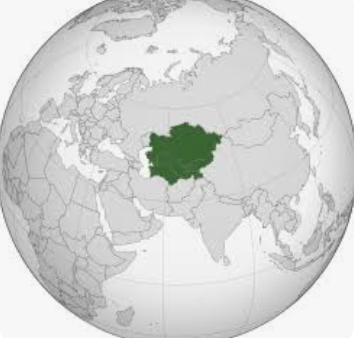
Previous posts have focused on Foreign Corrupt Practices Act enforcement actions concerning conduct (in whole or in part) in Kazakhstan, Azerbaijan, and Uzbekistan.
This post highlights other FCPA enforcement actions concerning conduct (in whole or in part) in other Central Asia countries.
Turkmenistan
The enforcement action concerned conduct in Nigeria, Angola, Azerbaijan, Brazil, Kazakhstan, Russia, and Turkmenistan.
As to Turkmenistan, the allegations were: ““Between in or around 2002 and in or around 2009, Panalpina Turkmenistan paid over $500,000 in cash bribes to: (i) Turkmen government officials responsible for assessing and collecting duties and tariffs on imported goods in order to expedite the release of shipments and undocumented shipments and to circumvent the official Turkmen customs and immigration regulations; (ii) Turkmen government officials responsible for auditing, assessing, and collecting taxes on economic activity in Turkmenistan to minimize the duration of audits and investigations and to reduce proposed fines; and (iii) Turkmen govermnent officials responsible for enforcing Turkmenistan labor, health, and safcty laws, including through the use of audits and inspections, to minimize the duration of audits and investigations and to reduce the proposed fines.”
The enforcement action concerned conduct in at least 22 countries – including China, Croatia, Egypt, Greece, Hungary, Indonesia, Iraq, Ivory Coast, Latvia, Nigeria, Russia, Serbia and Montenegro, Thailand, Turkey, Turkmenistan, Uzbekistan, Vietnam.
As to Turkmenistan, the allegations were: “Daimler, and its Vienna based distributor (IPC) delivered to high-level Turkmen government officials various gifts, including “an armored Mercedes Benz S-class passenger car, valued at more than €300,000 for his birthday. Neither the Turkmen Government Official nor the Turkmen government paid for the vehicle” but Daimler affiliate employees “agreed to provide this birthday gift to the Turkmen Government Official with the expectation that [Daimler] would receive large contracts for the purchase of vehicles by the Turkmenistan government in the coming year.”
Pitchford was the Vice President and Country Manager in Turkmenistan for the Central Asia American Enterprise Fund (CAAEF), an entity wholly funded by a $150 million appropriation from Congress pursuant to the Support for Eastern European Democracy Act of 1989 and the Freedom for Russia and Emerging Eurasian Democracies and Open Market Support Act of 1992.
“On or about September 1997, in connection with a CAAEF project to establish and equip an edible oil manufacturing facility in Ashkhabad, Turkmenistan, Pitchford and the Foreign Government Official whose duties included identifying foreign business opportunities for British companies and assisting these companies in obtaining contracts – entered into an agreement by which the Official would cause a British Company to bid on the CAAEF Turkmenistan project at a price inflated by approximately 15 percent, or $200,000, and Pitchford would ensure that CAAEF awarded the contract to the British Company.”
Mongolia
The enforcement action concerned conduct in China, Thailand, and Mongolia.
As to Mongolia, the allegations were: In 2005, UTSI attempted to expand its business into Mongolia. UTSI’s Executive Vice President and CEO of UTS-China at that time authorized a $1.5 million payment to a Mongolian company pursuant to a purported consulting agreement and told UTSI’s Board of Directors that the $1.5 million was a license fee paid to the Mongolian government. […] In reality, the license fee was only $50,000. UTSI agreed to work with the Mongolian company and pay the $1.5 million because the Mongolian company had government connections. UTSI’s Executive Vice President and CEO of UTS-China knew that the $1.5 million payment was not a license fee and that the Mongolian company used a portion of that $1.5 million to make payments to at least one Mongolian government official to help UTSI obtain a favorable ruling in a dispute over its license.”
Kyrgyzstan
Alliance One International (2010)
The enforcement action concerned conduct in Kyrgyzstan, Thailand, China, Greece, and Indonesia.
As to Kyrgyzstan, the allegations were: “Kyrgyz Official A served as the “General Director of the Tamekisi” “an agency and instrumentality of the [Kyrgyz] government [established] to manage and control the government-controlled shares of the tobacco processing facilities throughout Kyrgyzstan.” The Tamekisi agreed to issue a license to Dimon to process and export tobacco and that from October 1996 through at least February 2004, DIK delivered approximately $2.6 million in cash payments to the official. These payments were intended to “influence acts or decisions” of the official in his official capacity and to secure DIK’s “continued access to the tobacco processing facilities controlled by the Tamekisi.”
An Akim is a head of Kyrgyz local government with “authority over the sale of tobacco by the growers” within a specific municipality or geographic area. Beginning in 1996 “it became necessary for DIK to obtain permission from local Akims to purchase tobacco from the growers in each area” and “several of the Akims demanded payment of a “commission” from DIK “in order to secure the relevant Akim’s approval” for DIK to purchase tobacco from local growers. From January 1996 to at least March 2004 DIK made cash payments “to the Akims of five different municipalities totaling approximately $283,762 in order to influence the acts and decisions of the Akims and to secure DIK’s continued ability to purchase tobacco from growers in the muncipalities controlled by the Akims.”
During periodic audits” of DIK, the police assessed penalties and threatened to shut down DIK. From March 2000 to March 2003 DIK “made approximately nine cash payments to officers of the Kyrgyz Tax Inspection Police totaling approximately $82,850 in order to influence the acts and decisions” of the police and to secure DIK’s “continued ability to conduct its business in Kyrgyzstan.”
An FCPA enforcement action against Bobby Elkin was also based on the same core conduct.
