

Previous posts have highlighted FCPA enforcement actions concerning conduct (in whole or in part) Greece, Georgia and Ukraine, and Poland.
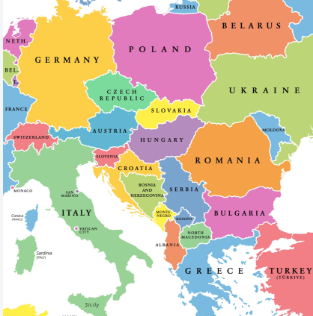
This post highlights FCPA enforcement actions concerning conduct (in whole or in part) in the following countries: Romania, Bulgaria, Hungary, Slovakia, Slovenia, and Czech Republic.
Romania
The enforcement action concerned conduct in Romania and the allegations were: “Between 2007 and 2012, Elbit and Plaza [a majority-owned indirect subsidiary], directly and indirectly, paid millions of dollars to third-party offshore consultants and sales agents purportedly for their services related to a real estate development project in Romania and the sale of a large portfolio of real estate assets in the U.S. However, Elbit and Plaza made these payments even though they had no evidence that the consultants and sales agents had actually provided the contracted for services. Elbit and Plaza failed to properly record those payments in a manner that, in reasonable detail, accurately and fairly reflected the nature of the payments in their books and records. Elbit and Plaza also failed to devise and maintain internal accounting controls sufficient to provide reasonable assurances that company funds would only be used as authorized for legitimate corporate purposes and that transactions were recorded as necessary to maintain accountability for assets, particularly with regard to the accounts payable process.”
The enforcement action concerned conduct in Mexico, Poland, Romania, Argentina, and Greece.
As to Romania, the allegations were: “From at least 2003 through July 2007, Stryker’s wholly-owned subsidiary in Romania (“Stryker Romania”) made 192 improper payments to foreign officials totaling approximately $500,000 in order to obtain or retain business with affiliated public hospitals. Stryker Romania recorded these payments as legitimate sponsorships of foreign officials’ attendance, travel and lodging at conferences, and medical events, when in reality they were illicit payments made to obtain or retain business. As a result of these payments, Stryker Romania earned more than $1.7 million in illicit profits.”
The enforcement action concerned conduct in Greece, Poland, Romania, and Iraq.
As to Romania, the allegations were: “From in or around 2005 through in or around 2008, J&J Romania [a wholly owned subsidiary] employees made arrangements with J&J Romania distributors for the distributors, on behalf of J&J Romania, to provide cash payments and gifts to publicly-employed Romanian HCPs [healthcare professionals] in exchange for prescribing certain pharmaceuticals manufactured by J&J subsidiaries and operating companies.” “In total, from in or around July 2005 to in or around mid-2008, J&J Romania and its employees authorized the payment, directly or indirectly, of approximately $140,000 in incentives to publicly-employed Romanian HCPs to induce the purchase of pharmaceuticals manufactured by J&J subsidiaries and operating companies.”
Bulgaria
The enforcement action concerned conduct in Bulgaria, China, Croatia, Czech Republic, Indonesia, Italy, Kazakhstan, Pakistan, Russia, Saudi Arabia, and Serbia.
As to Bulgaria, the allegations were as follows: “On or about January 24, 2003, a District Manager in Pfizer HCP’s representative office in Bulgaria (“Pfizer HCP Bulgaria”) sent an email to his subordinates that discussed marketing programs and “various possibilities to stimulate the prescribers” and instructed them to give individual doctors employed in Bulgarian public hospitals “a specific target as to how many packs (or new patients) per month he should achieve” and then provide support for international travel on the basis of the promises to prescribe made by the doctors. On or about October 14, 2003, a Pfizer HCP Bulgaria sales department manager sent an electronic message to multiple sales representatives containing instructions for submitting sponsorship requests. The manager wrote, “[e]ach representative wanting to sponsor someone …must very precisely state the grounds for recommending the sponsorship, and also what the doctor in question is expected to do or has already done (which is the better option).”
The enforcement action concerned conduct in Bangladesh, Bulgaria, Costa Rica, Egypt, Indonesia, Myanmar, Panama, the United Arab Emirates, and Vietnam. The enforcement action does not contain any specific allegations regarding Bulgaria.
The enforcement action concerned conduct in at least 22 countries – including China, Croatia, Egypt, Greece, Hungary, Indonesia, Iraq, Ivory Coast, Latvia, Nigeria, Russia, Serbia and Montenegro, Thailand, Turkey, Turkmenistan, Uzbekistan, Vietnam.
As to Bulgaria, the allegations were: “Daimler’s Corporate Audit Department “discovered three binders located in a safe at MB Turk’s [a Daimler subsidiary in Turkey] offices in Istanbul” that, along with other evidence, demonstrated that “MB Turk made approximately €6.05 million in payments to third parties in connection with vehicle export transactions that involved the sale of vehicles to non-Turkish government customers in [various countries including Bulgaria] in deals with revenues of approximately €95 million.” According to the information, at least €3.88 million of the €6.05 million comprised of “improper payments and gifts […] paid to foreign government officials or to third parties with the understanding that the payments and gifts would be passed on, in whole or in part, to foreign government officials to assist in securing the sale of Daimler vehicles to government customers.”
Hungary
The enforcement action concerned conduct in Hungary, Saudi Arabia, Thailand and Turkey.
As to Hungary, the allegations were: “From approximately 2013 to June 2015, a senior executive and other employees of MS Hungary participated in a scheme to inflate margins in the Microsoft sales channel, which were used to fund improper payments under the FCPA. More specifically, a MS Hungary executive and other employees falsely represented to Microsoft that discounts from Microsoft’s estimated retail prices for government contracts were necessary to conclude deals with Hungarian government agencies. The savings represented by the discounts, however, were not passed along in full by TPIs to the Hungarian government customers to reduce the end customer price. Instead, the inflated margins were used to fund improper payments under the FCPA in connection with the sale of Microsoft software to Hungarian government agencies. MS Hungary, therefore, knowingly and willfully caused Microsoft, a U.S. issuer, to falsely record as discounts in its books and records amounts that were used to fund improper payments under the FCPA. In total, MS Hungary caused Microsoft to report false discounts for a number of licensing deals. The subject licensing deals resulted in profits to Microsoft of $14,586,325 attributable to the sales and marketing activities of MS Hungary.”
The enforcement action concerned conduct in at least 22 countries – including China, Croatia, Egypt, Greece, Hungary, Indonesia, Iraq, Ivory Coast, Latvia, Nigeria, Russia, Serbia and Montenegro, Thailand, Turkey, Turkmenistan, Uzbekistan, Vietnam.
As to Hungary, the allegations were that to help facilitate the sale of 32 used buses to a state-owned regional public transport company in Hungary, EvoBus Austria GmbH agreed to pay a “commission of €333,370 to a U.S. based corporation called USCON Ltd. with the understanding that the payment would be passed on, in whole or in part, to Hungarian government officials.”
Slovakia
The enforcement action concerned conduct in China, India, Thailand, Laos, Indonesia, Bosnia, Croatia, Serbia, Slovenia, Slovakia, Iran, Saudi Arabia, Libya, Syria, the United Arab Emirates, Mauritania, Congo, Niger, Madagascar, Turkey, Malaysia, Egypt, and Poland.
As to Slovakia, the allegations were: “[Between 2004 to 2006] Tatra [a Slovakian joint venture that was approximately 90 percent indirectly owned by Tyco] made payments in the amount of approximately $96,000 to one of its sales agents in exchange for the sale agent’s attempt to have Tatra products included in the specifications for tenders to a government customer, while at the same time the sales agent was getting paid by the government customer to draw up the technical specifications for the tenders. Tatra improperly recorded the payments to the sales agent as ‘commissions’ in Tatra’s books and records. In connection with these improper transactions, Tatra earned approximately $226,863 in gross profit.”
Slovenia
The enforcement action concerned conduct in China, India, Thailand, Laos, Indonesia, Bosnia, Croatia, Serbia, Slovenia, Slovakia, Iran, Saudi Arabia, Libya, Syria, the United Arab Emirates, Mauritania, Congo, Niger, Madagascar, Turkey, Malaysia, Egypt, and Poland. The enforcement action does not contain any specific allegations regarding Slovenia.
Czech Republic
The enforcement action concerned conduct in Bulgaria, China, Croatia, Czech Republic, Indonesia, Italy, Kazakhstan, Pakistan, Russia, Saudi Arabia, and Serbia.
As to Czech Republic, the allegations were: “From at least 2003 and through 2004, Pfizer Czech, through its employees and agents, provided support for international travel and recreational opportunities to doctors employed by the Czech government with the intent to influence these government officials to prescribe Pfizer products.” “Pfizer Czech employees took steps to conceal the true nature of these transactions, and failed to accurately record these transactions by falsely booking them as “Conventions and Trade Meeting,” among other false and misleading descriptions.”
