

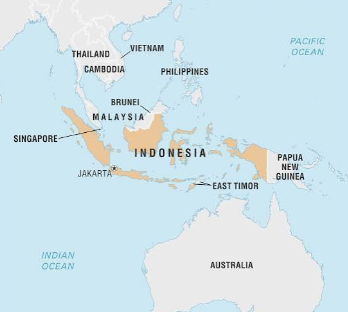
This post highlights the 27 FCPA enforcement actions concerning conduct (in whole or in part) in Indonesia.
The enforcement action concerned conduct in South Africa and Indonesia.
As to Indonesia, the allegations were: “Between approximately 2015 and 2018, SAP, through its agents, including but not limited to SAP Indonesia and its personnel, engaged in a scheme to bribe Indonesian officials, to obtain improper business advantages for SAP in connection with various contracts between and among SAP and Indonesian departments, agencies, and instrumentalities.”
The enforcement action concerned conduct in Vietnam, Indonesia, and India.
As to Indonesia, the allegations were: ““Albemarle … used a third-party intermediary to corruptly obtain catalyst business with Indonesia’s state-owned oil company Pertamina, despite that third-party intermediary informing Albemarle that it was necessary to pay bribes to Pertamina officials to obtain business.”
The enforcement action concerned conduct in Djibouti, China, Vietnam, Kuwait, Indonesia, and Saudi Arabia.
As to Indonesia, the allegations were: “In or about and between 2012 and 2015, LM Ericsson, through certain of its employees and agents, including Ericsson Indonesia, Employee 5 (a high-level executive in the Asia Pacific Region), and Employee 9 (a high-level executive in China and Hong Kong), made approximately $45,000,000 in payments to Consulting Company C (a consulting company formed in Indonesia and Singapore) in order to create off-the-books slush funds to be managed by Consulting Company C, with oversight and direction from employees and agents of LM Ericsson and its subsidiaries, including Ericsson Indonesia, Employee 5, and Employee. LM Ericsson, through its agents and employees, took active steps to conceal these payments on Ericsson’s books and records. The payments to Consulting Company C were made pursuant to sham contracts between Ericsson Malaysia, Ericsson Indonesia, and Consulting Company C for services that were never performed.”
The enforcement action concerned conduct in Russia, Azerbaijani, China, Kuwait, South Korea, Pakistan, Thailand, and Indonesia.
As to Indonesia, the allegations were: “UTC funded leisure travel and entertainment for foreign officials from several countries, including … Indonesia. UTC policies required the Legal Department to review and approve all leisure travel and entertainment as gifts to a foreign official. Nonetheless, employees frequently circumvented this requirement by submitting travel for foreign officials for approval without disclosing the leisure and entertainment component. On occasion, the travel was included as a cost component in the contract with the end customer and was therefore not submitted for appropriate approval.
The enforcement action concerned conduct in Angola, Bangladesh, Indonesia, Thailand, China, and Egypt.
As to Indonesia, the allegations were: “General Cable conducted business in Bangladesh, Indonesia, and Thailand through PDTL [Phelps Dodge International (Thailand) Ltd.]. Between 2010 and 2014, PDTL made corrupt payments, i.e, bribes, to obtain business in Bangladesh and Indonesia. Specifically, PDTL paid: (i) more than $2 million to two freight forwarders in Indonesia with the understanding-that the freight forwarders would use the money, in part, for corrupt purposes.”
The enforcement action concerned conduct in Indonesia, Vietnam, India and Kuwait.
As to Indonesia, the allegations were: “beginning in approximately 2005, the Company sought contracts with the Indonesian government as a subcontractor by interposing a one-man consulting company as the prime contractor in order to avoid directly paying bribes to foreign officials even though the Company was well aware that the prime contractor was paying bribes.” In 2008 “when the law firm handling the Company’s internal review directed scrutiny [at a citizen and national of Indonesia employed by the Company in Jakarta] Richard Hirsch and others attempted to discourage [the employee] from speaking with the Company’s review team.” The same core conduct was at issue in the individual enforcement action against Hirsch.
The enforcement action concerned conduct in Indonesia, Saudi Arabia, Egypt, the Bahamas, and Taiwan.
As to Indonesia, the allegations were in connection with various power projects in Indonesia through Indonesia’s state-owned and state-controlled electricity company, Perusahann Listrik Negara (“PLN”). One such project was the Tarahan Project, a project to provide power-related services to the citizens of Indonesia at approximately $118 million and another such project was the Muara Tawar Block 5 Project, a project to expand the existing Muara Tawar power plant and provide additional power-related services to the citizens of Indonesia at approximately $260 million. In summary fashion, the allegations were: “In connection with these projects, Alstom disguised on its books and records millions of dollars and other things of value provided to Indonesian officials in exchange for those officials’ assistance in securing the power projects for Alstom and its subsidiaries. Alstom also knowingly failed to implement and maintain adequate controls to ensure that no unlawful payments were being made through consultants to foreign officials in connection with these projects.” The Indonesia allegations were substantively similar to the allegations in the prior FCPA enforcement action against various individuals associated with Alstom Power. (See here).
The enforcement action concerned conduct in Indonesia.
Marubeni was a “consortium partner” with Alstom in connection with the Tarahan Project and through its employees and agents made payments to a consultant’s bank account, knowing that a portion of the payments to the consultant was intended for Indonesian officials in exchange for their influence and assistance in awarding the Tarahan Project to Marubeni and Alstom.
The enforcement action concerned conduct in China, Indonesia and Russia.
As to Indonesia, the allegations were: “through its subsidiary P.T. Diebold Indonesia (“Diebold Indonesia”), Diebold spent over $147,000 on leisure trips and entertainment for officials of government owned banks in Indonesia. Diebold executives in charge of the company’s operations in Asia knew of these improper practices. The illicit payments were falsely recorded in Diebold’s books and records as training or other legitimate business expenses.”
The enforcement action concerned conduct in Pakistan, Indonesia, Turkey, Nepal and Bangladesh.
As to Indonesia, the allegations were: “In 2009, Smith & Wesson attempted to win a contract to sell firearms to a Indonesian police department by making improper payments to its third party agent in Indonesia, who indicated that part of the payment would be provided to the Indonesian police officials under the guise of legitimate firearm lab testing costs. On several occasions, Smith & Wesson’s third-party agent indicated that the Indonesian police expected Smith & Wesson to pay them additional amounts above the actual cost of testing the guns as an inducement to enter the contract. The agent later notified Smith & Wesson’s Regional Director of International Sales that the price of “testing” the guns had risen further. Smith & Wesson’s Vice President of International Sales and its Regional Director of International Sales authorized and made the inflated payment, but a deal was never consummated.”
The enforcement action concerned conduct in Indonesia and was based on the conduct of an Indonesian majority-owned subsidiary, PT Asuransi Allianz Utama (“Utama”). “Between 2001 and 2008, Utama managers made improper payments to employees of state-owned entities in Indonesia in order to obtain and retain business.”
The enforcement action concerned conduct in China, India, Thailand, Laos, Indonesia, Bosnia, Croatia, Serbia, Slovenia, Slovakia, Iran, Saudi Arabia, Libya, Syria, the United Arab Emirates, Mauritania, Congo, Niger, Madagascar, and Turkey.
As to Indonesia, the allegations were:
“[Between 2003 and 2005] Eurapipe [Tyco Eurapipe Indonesia Pt. an indirect wholly owned subsidiary of Tyco] made approximately eleven payments in the amount of approximately $358,000 to a former employee of Banjarmasin provincial level public water company (PDAM) and two payments to the project manager for PDAM Banjarmasin in connection with the Banjarmasin Project. During the same time period, Eurapipe made payments in the amount of approximately $23,000 to sales agents who then passed some or all of the payments on to employees of government entities in connection withe projects other than the Banjarmasin Project. Eurapipe improperly recorded the payments as ‘commissions payable’ in Eurapipe’s books and records. In connection with these improper transactions, Eurapipe earned approximately $1,298,453 in gross profit.”
“[Between 2002 and 2005] PT Dulmision Indonesia [an Indonesia corporation 99% indirectly owned by Tyco] made payments to third parties, a portion of which went to employees of PLN [a state-owned electricity company in Indonesia], including approximately seven payments one of PT Dulmison’s sales agents, who in turn passed money on to the PLN employees. PT Dulmison Indonesia improperly recorded the payments in PT Dulmison Indonesia’s books, records and accounts. In addition, PT Dulmison Indonesia improperly recorded travel expenses in company books and records, including payments for non-business entertainment in connection with visits by PLN employees to TE Dulmision Thailand’s factory and paid hotel costs incurred as part of a social trip to Paris for PLN employees following a factory visit to Germany, as ‘cost of goods sold’ in PT Dulmison Indonesia’s and TE Dulmison Thailand’s records. In connection with these improper transactions, PT Dulmision Indonesia and TE Dulmison Thailand earned approximately $109,259 in gross profit.”
The enforcement action concerned conduct in Bulgaria, China, Croatia, Czech Republic, Indonesia, Italy, Kazakhstan, Pakistan, Russia, Saudi Arabia, and Serbia.
As to Indonesia, the complaint alleges as follows. “From at least 2005 until 2010, Wyeth Indonesia [an Indonesian company that was an indirect majority-owned subsidiary of Wyeth], through its employees and agents, provided cash payments and nutritional products to employees of Indonesian government-owned hospitals, including doctors employed by the Indonesian government. The cash payments and products were intended to influence the doctors’ recommendation of Wyeth nutritional products to their patients, to ensure that Wyeth products were made available to new mothers at the hospitals, and to obtain information about new births that could be used for marketing purposes.” “Wyeth Indonesia employees also took steps to conceal the true nature of the transactions by inaccurately recording them as “Miscellaneous Expenses – Joint Promotions,” “Medical Education – Promo,” “Trade Allowances,” and “Miscellaneous Selling Expenses,” among other false and misleading descriptions.”
The enforcement action concerned conduct in Bangladesh, Bulgaria, Egypt, Indonesia, Myanmar, Panama, the United Arab Emirates, and Vietnam.
As to Indonesia, the allegations were: “Aon Limited served as a broker on reinsurance contracts with BP Migas and Pertamina, two Indonesian state-owned entities in the oil and gas industry.” “Several former Aon Limited employees authorized improper payments to government officials in Indonesia to secure the Pertamina and BP Migas accounts for Aon Limited.”
The enforcement action concerned conduct in Kyrgyzstan, Thailand, and Indonesia.
As to Indonesia, the allegations were: “the controller of [a] subsidiary in Indonesia made a $44,000 cash payment to an Indonesian tax official in exchange for receiving a tax refund.”
The enforcement action concerned conduct in China, Croatia, Egypt, Greece, Hungary, Indonesia, Iraq, Ivory Coast, Latvia, Nigeria, Russia, Serbia and Montenegro, Thailand, Turkey, Turkmenistan, Uzbekistan, and Vietnam.
As to Indonesia, the allegations were: “Daimler’s local affiliates provides gifts, travel and entertainment to government officials associated with Perum Damri in order to secure business.” According to the information, Perum Damri was a “state-owned bus company.” The information alleged that between 1998 and 2005, “Daimler’s local affiliates spent approximately $41,000 on such gifts, including golf clubs, wedding gifts for the children of a senior offical at Perum Damri, golf outings for Perum Damri officials, and gifts that were raffled off to low-level employees on the occasion of Perum Damri’s anniversary. According to the information, Perum Damri purchased approximately $8.36 million worth of buses from Daimler’s Indonesian affiliates. The information also alleged that “Daimler’s local affiliates also made several large cash payments to tax officials in Indonesia for the purpose of reducing their tax obligations.”
The enforcement action concerned conduct in Iraq and Indonesia.
As to Indonesia, the allegations were: (i) that “[f]rom 2000 until approximately 2005, Innospec used [a] Indonesian Agent [an Indonesian citizen] and his company to pay bribes of approximately $1,323,507 to Official X [a senior official at BP Migas, an Indonesian state owned oil and gas company … who previously was a senior official at the Ministry of Energy and Mineral Resources]”; (ii) that “in 2000 and 2001, Innospec also made payments [totaling $700,000] to government officials at Pertamina, another state owned oil compay related to BP Migas” through a “privately owned bank in Geneva, Switzerland;” and (iii) that Innospec “also bribed other officials at Pertamina in order to influence their decisions regarding TEL purchases.”
The enforcement action concerned conduct in China, Indonesia, and Pakistan.
As to Indonesia, the allegations were: “after Avery acquired a company in June 2007, employees of the acquired company continued their pre-acquisition practice of making illegal petty cash payments to customs or other officials in several foreign countries” including Indonesia.
The enforcement action concerned conduct in China, Indonesia, Kazakhstan, Mexico and Nigeria.
As to Indonesia, the allegations were: “In April 2003, employees of Pertamina, Indonesia’s national oil company, requested funds from Paradigm Indonesia for the purpose of obtaining or retaining business. Such payments were made. The agent was involved in making the payments. At the time, the agent received commission payments from Paradigm through a New York bank account. The total amount of any improper payments could not be determined from the readily available documentation, but Paradigm’s Regional Controller confirmed that at least one such improper payment was made.”
The enforcement action concerned conduct in Iraq, United Arab Emirates, Bangladesh, Indonesia, Egypt, and India.
As to Indonesia, the allegations were: “In Indonesia, a company representative was paid $149,000 of a $321,171 contract (more than half the contract value) to perform after-sales services. Of the $149,000 paid to the representative, $10,000 went to a procurement official of a government-owned company, Pertamina, to sponsor a golf tournament with very little documentation to show what the representative actually did with the remainder.”
The enforcement action concerned conduct in Kazakhstan, Indonesia, Angola, Russia, Uzbekistan, and Nigeria.
As to Indonesia, the allegations were: “between 2000 and 2003, Baker Hughes paid certain freight forwarders to import equipment into Indonesia using a “door-to-door” process under circumstances in which the company failed to adequately assure itself that such payments were not being passed on, in part, to Indonesian customs officials.”
The enforcement action concerned conduct in Indonesia and the allegations were: In 2001 the Indonesian government “announced a rule requiring an environmental impact study, known as AMDAL, be performed for a variety of activities including the cultivation of genetically-modified crops” and that “after a change of governments and the appointment of new officials, Monsanto and Consultant Company (an Indonesian corporation hired by Monstanto to assist in obtaining various governmental approvals and licenses) sought to have the new government, in which Official A [described as a high-ranking official who was in a position to authorize various decrees and regulations that would have enabled the company to sell certain products in Indonesia] had a post, amend or repeal the requirement for the environmental impact statement.”
‘From 1997 to 2002, Monsanto’s Indonesian affiliates made at least $700,000 of illicit payments to at least 140 current and former Indonesian government officials and their family members. The largest single set of payments was for the purchase of land and the design and construction of a house in the name of the wife of a senior Ministry of Agriculture official. The total amount of improper payments made in 1998 and 1999 for the house and land was the rupiah equivalent of $373,990. Other examples of improper payments include, among others, payments to a senior official of Budget Allocation at the National Planning and Development Board, totaling $86,690, and payments to other Ministry of Agriculture officials, totaling $8,100. Other payments for travel and gifts (such as cellular phones and golf memberships) were also made by the Indonesian affiliates on behalf of various Indonesian government officials.”
“In addition, questionable payments were made concerning a cotton gin in South Sulawesi, Indonesia. In connection with the Sulawesi project, one of Monsanto’s Indonesian affiliates, PTBS, entered into a ginning contract with an affiliate of the Consulting Firm. Under the ginning contract, PTBS paid the affiliate of the Consulting Firm to gin the cotton grown in South Sulawesi using cotton gins “rented” from the Indonesian Government. The Indonesian affiliates also paid fees of $129,500 to two different Indonesian consulting firms to gain control of the gin. At the same time, PTBS paid $1,000 per month to the Indonesian Plantation Agency, which owned the gin that milled the cotton. Lastly, PTBS had instituted a program wherein PTBS paid local South Sulawesi Department of Agriculture officials a certain percentage of each kilogram of cotton fruit produced. Payments of approximately $29,500 were made to various officials under this payment scheme.”
The enforcement action concerned conduct in Benin, Nepal, Bangladesh, Sri Lanka, Indonesia, Thailand, Taiwan, Brazil, and Ecuador, Philippines and South Africa.
As to Indonesia, the allegations were that an acquired entity made payments in cash and/or to offshore bank accounts to its agents in at least nine foreign countries, including Indonesia, and that many of these payments were made to accounts in a name other than the agent being paid.
The enforcement action concerned conduct in Indonesia, India, and Brazil.
As to Indonesia, the allegations were: “In March 1999, Baker Hughes’ CFO and its Controller authorized an illegal payment, through KPMG, its agent in Indonesia, to a local government official in Indonesia. Baker Hughes, through its CFO and Controller, directed that this improper payment be made while knowing or aware that KPMG would pass all or part of the payment along to a foreign government official for the purpose of influencing the official’s decision affecting the business of Baker Hughes.”
KPMG Siddharta Siddharta & Harsono and Sonny Harsono (2001)
The enforcement action concerned conduct in Indonesia and the same conduct at issue in the Baker Hughes action. “In 1999, Harsono authorized KPMG-SSH personnel to bribe an Indonesian tax official on behalf of one of KPMG-SSH’s clients, PT Eastman Christensen (“PTEC”), an Indonesian company beneficially owned by Baker Hughes Incorporated [whose financial results appear in the consolidated financial statements of Baker Hughes]. KPMG agreed to make the illicit payment to influence the Indonesian tax official to issue a lower tax assessment for PTEC. Harsono also directed KPMG-SSH personnel to create a false invoice to PTEC to generate the money needed to pay the bribe and to conceal the purpose for which that money was to be used.”
The enforcement action concerned conduct in Indonesia and focused on Triton Indonesia being a party to a joint venture agreement which resulted in Triton Indonesia being a party to a Rehabilitation and Secondary Recovery Contract (“RSRC Contract”) with Pertamina, a national oil company. The project Triton Indonesia was working on “was subject to taxation by the Indonesian Ministry of Finance and tax liability was determined by auditors from the Ministry of Finance’s audit branch (“BPKP”).
Improper payments included: “in connection with a tax audit;” “Pertamina/BPKP Audits;” a corporate tax refund;” the refund of value added tax;” and “relating to a pipeline tariff;” payments of cash totaling $13,500 to Indonesian auditors for the purpose of developing general good will” and “cash payments totaling $1,000 per month to Pertamina clerical employees made for the purpose of expediting payment of monthly crude oil invoices.”
The enforcement action concerned conduct in Indonesia and the allegations were: “Katy was interested in obtaining an oil exploration concession in Indonesia and retained a consultant who was a “close personal friend of a high level Indonesian government official.” Katy representatives and the consultant met with the official and his representative and during the meeting “the official agreed to assist Katy in obtaining an oil production sharing contract.” Katy agreed to compensate the consultant if it received the contract and Katy representatives were “told that the consultant would give a portion of such compensation to the official and the official’s representative.” Katy entered into various agreements with the consultant and the official’s representative and thereafter “Katy entered into a thirty year Production Sharing Contract with Pertamina, the Indonesian Government-owned oil and gas enterprise.” “Katy, [and various executives] knew or had reason to know that the official and the official’s representative would directly or indirectly share in the payments to the consultant for the duration of the thirty year Contract.”
