

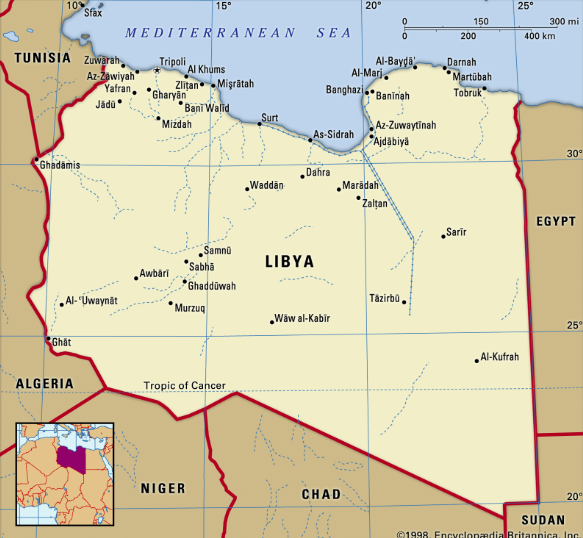
This post highlights seven FCPA enforcement actions concerning conduct (in whole or in part) in Egypt.
The enforcement action against Cyrus Ahsani and Saman Ahsani (the former CEO and Chief Operations Officer of Monaco-based Unaoil) concerned conduct in Iraq, Kazakhstan, Libya, Algeria, Iran, Azerbaijan, Angola, Syria, the Democratic Republic of the Congo, and elsewhere.
As to Libya, the enforcement action concerned various schemes involving foreign government officials including at a state-owned oil and gas company to obtain and retain business for Unaoil and its client companies. The information refers to Libya Official 1, but states that S. Ahsani and others “understood that Libya Official 1 was not an appointed Libyan government official at the time they promised to pay Libya Official 1” but that “Libya Official 1 could exert influence over senior Libyan government officials, including one official who was a close relative of the then head of the Libyan government, and that this senior Libya official’s support or lack of support could determine whether” a company won an award for a project. Based on the same core conduct, Steven Hunter (a former business development manager at Unaoil) resolved an enforcement action.
The enforcement action concerned conduct in Libya and the allegations were: “Between in or about 2005 and in or about 2011, following the lifting of broad economic sanctions, the Libyan State Agencies sought to place substantial funds with financial institutions for investment purposes. These placements were heavily sought after by a number of financial institutions, including Permal [a subsidiary company] and Societe Generale, as well as at least eight U.S.-based financial institutions. By at least 2006, two Permal employees and several Societe Generale employees, together with their co-conspirators, knew that the Libyan Intermediary was paying bribes and providing other improper financial benefits to Libyan government officials in order to secure financial investments for Societe Generale, and willfully agreed to continue to use the Libyan Intermediary despite that knowledge.”
The enforcement action concerned conduct in Libya and the allegations were “Between in or about 2005 and in or about 2011, following the lifting of broad economic sanctions, the Libyan State Agencies sought to place substantial funds with financial institutions for investment purposes. These placements were heavily sought after by a number of financial institutions, including Societe Generale, as well as at least eight U.S.-based financial institutions. By at least 2006, several Societe Generale employees, together with their co-conspirators, knew that the Libyan Intermediary was paying bribes and providing other improper financial benefits to Libyan government officials in order to secure financial investments for Societe Generale, SGA, and others and agreed to continue to use the Libyan Intermediary despite that knowledge.”
The enforcement action concerned conduct in the Democratic Republic of Congo and Libya.
As to Libya, the allegations were that between 2007 and 2010, Och-Ziff engaged Libyan Intermediary as a third-party agent to assist in securing investments from the Libyan Investment Authority (LIA) into the Och-Ziff Hedge Funds. Libyan Intermediary paid bribes to Libyan officials to corruptly influence those officials and thereby obtain investments from the LIA. Och-Ziff entered into a consulting agreement to pay Libyan Intermediary a ‘finder’s fee’ of $3.75 million, which Och-Ziff Employee 3 knew that all or a portion of the fee would be paid to foreign officials in return for influencing the LIA to make a $300 million investment into the Och-Ziff Hedge Funds.”
The enforcement action concerned conduct in China, India, Thailand, Laos, Indonesia, Bosnia, Croatia, Serbia, Slovenia, Slovakia, Iran, Saudi Arabia, Libya, Syria, the United Arab Emirates, Mauritania, Congo, Niger, Madagascar, and Turkey.
As to Libya, the allegations were:“[Between 2004 and 2009] Erhard [a subsidiary of Tyco Waterworks Deutschland GmBH (TWW Germany), an indirect wholly owned subsidiary of Tyco] made payments in the amount of approximately $2,371,094 to at least thirteen of its sales agents in [various countries including Libya] for the purpose of making payments to employees of government customers, and improperly booked the payments as ‘commissions.’ In connection with these improper transactions, TWW Germany earned approximately $4,684,966 in gross profits.”
The enforcement action concerned conduct in Nigeria, Venezuela, Mexico, Kazakhstan, India, Saudi Arabia, the Republic of Congo, and Libya.
As to Libya, the allegations were that Pride Forasol managers authorized payments to a Libya Tax agent in connection with unpaid social security taxes and penalties against Pride Forasol Libya “without adequate assurances that the Libyan Tax Agent would not pass some or all of these fees to” officials of Libya’s social security agency.
The enforcement action concerned conduct in at least 22 countries – including China, Croatia, Egypt, Greece, Hungary, Indonesia, Iraq, Ivory Coast, Latvia, Nigeria, Russia, Serbia and Montenegro, Thailand, Turkey, Turkmenistan, Uzbekistan, Vietnam.
As to Libya, the allegations were: “Daimler’s Corporate Audit Department “discovered three binders located in a safe at MB Turk’s [a Daimler subsidiary in Turkey] offices in Istanbul” that, along with other evidence, demonstrated that “MB Turk made approximately €6.05 million in payments to third parties in connection with vehicle export transactions that involved the sale of vehicles to non-Turkish government customers in [various countries including Libya] in deals with revenues of approximately €95 million.” According to the information, at least €3.88 million of the €6.05 million comprised of “improper payments and gifts […] paid to foreign government officials or to third parties with the understanding that the payments and gifts would be passed on, in whole or in part, to foreign government officials to assist in securing the sale of Daimler vehicles to government customers.”
