

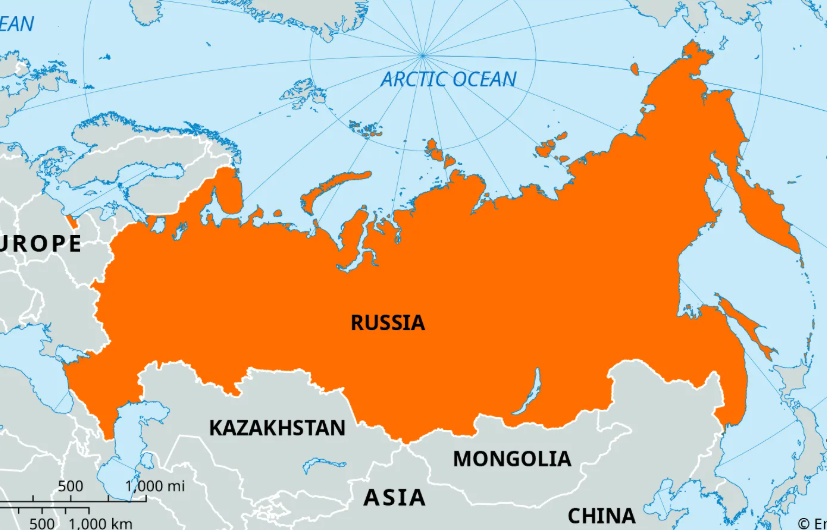
This post highlights approximately 20 FCPA enforcement actions concerning conduct (in whole or in part) in Russia.
The enforcement action concerned conduct in Russia.
The allegations were: “Between May 26, 2015 and May 15, 2020, the Company paid approximately $8.9 million to consultants in Russia in support of the Company’s operations and its efforts to have poker legalized in that country.”
The enforcement action concerned conduct in Turkey, Russia, Brazil, and Colombia.
As to Russia, the allegations were: “From 2011 to 2015, Alexion’s subsidiary in Russia made payments to foreign officials in order to influence the allocation of regional healthcare budgets for Soliris, increase the number of approved Soliris prescriptions, and favorably influence the regulatory treatment of Soliris. The payments were made in a variety of ways, including through the use of a third-party consultant, honoraria, and grants.”
The enforcement action concerned conduct in Russia and China.
As to Russia, the allegations were: “From 2008 through 2013, certain sales employees of the Russian representative office of Juniper’s subsidiary, JNN Development Corp. (“JNN”) secretly agreed with third party channel partners to increase the incremental discount on sales made to customers through those channel partners without passing those increased discounts on to customers. Instead, the channel partners diverted the additional discounts into a fund held by the channel partners for travel and marketing expenses. These off-book funds were referred to as “common funds” and were directed in part by JNN sales representatives. These “common funds” were used in part to pay for customer trips, including trips for government officials, some of which were predominately leisure in nature and had little to no educational or business purpose. Included in the customer travel paid for through the “common fund” were instances of customer travel for foreign officials to various locations where there were no Juniper facilities or industry conferences related to Juniper’s business.”
The enforcement action concerned conduct in Russia and China.
As to Russia, the allegations were: “From 2009 to 2012 in Russia, … Deutsche Bank employees hired relatives at the request of foreign officials in Russia to obtain or retain business or other benefits. […] Russian Referral Hires were sometimes unqualified. In some instances, if requested by the candidate or parent, Deutsche Bank’s London-based global management authorized unqualified Russian Referral Hires to work in London. One Russian Referral Hire performed so poorly in London that he was deemed “a liability to the reputation of the program, if not the firm…” by a London-based human resource employee.”
The enforcement action concerned conduct in Russia.
The allegations were: “In or around 2004, TLI and others … agreed to enter into a corrupt bribery scheme, in which TLI would make corrupt bribery payments to offshore accounts, at the direction and for the benefit of [an individual who worked for TENAM Corp., a wholly-owned subsidiary on TENEX – an entity “indirectly owned and controlled by, and performed functions of, the government of the Russian Federation] in order for TLI to obtain an improper advantage and obtain and retain business with TENEX.” In connection with the bribery scheme, several individuals were also criminally charged.
The enforcement action concerned conduct in Russia.
The allegations were: “From at least 2004 through 2011, Nordion, Inc. violated the books and records and internal accounting controls provisions in connection with payments made to a third party agent to obtain Russian government approval to distribute TheraSphere, Nordion’s liver cancer treatment, in Russia. Nordion failed to record those payments in a manner that accurately and fairly reflected the transactions in its books and records. Nordion also failed to devise and maintain adequate internal accounting controls to provide sufficient reassurances that Nordion funds were used as authorized, that third-party agents were appropriately vetted, and that Nordion adequately trained its employees to conduct business in countries with significant corruption risks.”
The enforcement action concerned conduct in Russia, Ukraine, and Mexico.
As to Russia, the allegations focused on Teva Russia’s relationship with a Russian Company owned, controlled and managed by a Russian Official with influence over the purchase of pharmaceutical products by the Russian government. From 2006 through at least 2012, Teva Russia made “corrupt payments to Russian Official intending that Russian Official would use his official position and ability to influence the Russian government to purchase Copaxone through tender offers.”
The enforcement action concerned conduct in Russia and China.
As to Russia, the allegations were: “From at least 2005 until 2010, AZ Russia employees provided improper incentives to government-employed HCPs [healthcare professionals] in connection with sales of AZN pharmaceutical products.” “Employees at several levels of AZ Russia management directed or condoned their subordinates’ practices of providing improper benefits to government-employed HCPs, which occurred in multiple regions where AZ Russia operates.”
The enforcement action concerned conduct in Russia, Ghana, Israel, Kazakhstan, Ukraine, and Vietnam.
As to Russia, the allegations were that some payment to third parties “were ultimately [paid] to doctors employed by Russian state-owned entities.”
The enforcement action concerned conduct in Russia, Poland and Mexico.
As to Russia, the allegations were: “Between in or about 2000 and 2007, HP Russia and co-conspirators agreed to make and did make improper payments to secure, retain and implement the GPO project [a project to automate the telecommunications and computing infrastructure of the Office of the Prosecutor General of Russia]. Members of the conspiracy structured the deal to create a secret slush fund, which by 2003 totaled approximately ($10 million at then-prevailing exchange rates), at least part of which was intended for bribes, kickbacks, and other improper payments.”
The enforcement action concerned conduct in Russia, Thailand and Vietnam.
As to Russia, the allegations focused on “knowing failure to implement adequate internal accounting controls with respect to Russia … due, at least in part, to the[] desire to continue to obtain and retain contracts with the Russian government. Bio-Rad Russia won 100% of its government contracts when Agent 1 was involved and lost its first major Russian government contract after terminating Agent 1 in or around 2010.”
The enforcement action concerned conduct in China, Indonesia and Russia.
As to Russia, the allegations were: “From 2005 through 2008, through its subsidiary Diebold Self-Service Ltd. (“Diebold Russia”), Diebold also paid bribes on the sale of ATMs to private banks in Russia. These bribes, which totaled approximately $1.2 million, were funneled through a Diebold distributor in Russia. Diebold Russia executed phony service contracts with its distributor to hide and falsely record the payments as legitimate business expenses.”
The enforcement action concerned conduct in Bulgaria, China, Croatia, Czech Republic, Indonesia, Italy, Kazakhstan, Pakistan, Russia, Saudi Arabia, and Serbia.
As to Russia, the allegations were as follows: “In or around October 2005 through on or about December 8, 2005, Pfizer Russia caused payments totaling at least $69,000 to be made to Russian Company 2 [a Russian company that provided certain services to Pfizer HCP and Pfizer Russia, including making improper payments to Russian government officials and other companies on Pfizer HCP’s behalf, in order to conceal the payments] with the understanding that the payments would be provided to individual Russian doctors employed in public hospitals, and that the payments represented 5% of the value of the purchases of Pfizer products in the doctors’ respective government hospitals.”
The enforcement action concerned conduct in China, Brazil, Poland, and Russia.
As to Russia, the allegations were: “Between 2000 and 2005, Lilly-Vostok sold significant amounts of pharmaceutical products to a major Russian pharmaceutical distributor for resale to the Russian Ministry of Health. The pharmaceutical distributor was owned and controlled by an individual who, at the beginning of the distributor’s relationship with Lilly-Vostok, was a close adviser to a member of Russia’s Parliament. In 2003, this official became a member of the upper house of Russia’s Parliament. Throughout the period, this official exercised considerable influence over government decisions relating to the pharmaceutical industry in Russia.
The enforcement action concerned conduct in at least 22 countries – including China, Croatia, Egypt, Greece, Hungary, Indonesia, Iraq, Ivory Coast, Latvia, Nigeria, Russia, Serbia and Montenegro, Thailand, Turkey, Turkmenistan, Uzbekistan, Vietnam.
As to Russia, the allegations were: “between 2000 and 2005” Daimler’s sale of vehicles to Russian government customers was approximately “€64,660,000” and that “in connection with these vehicle sales, DCAR and Daimler made over €3 million in improper payments to Russian government officials employed at their Russian governmental customers, their designess, or to third-party shell companies that provided no legitimate services to Daimler or DCAR with the understanding that the funds would be passed on, in whole or in part, to Russian government officials.”
The enforcement action concerned conduct in Nigeria, Angola, Azerbaijan, Brazil, Kazakhstan, Russia, and Turkmenistan.
As to Russia, the allegations were: “Between in or around 2002 and in or around 2007, Panalpina Russia paid over $7 milion in bribes to Russian government officials responsible for assessing and collecting duties on imported goods. […] The purpose of many of the bribes paid to the Russian government officials was to avoid delays, administrative fines, and other legal action as a result of missing, incomplete or erroneous documentation; to avoid problems arising out of the improper use of a TIP; and to bypass the customs process in total.”
The enforcement action concerned conduct in Venezuela, China, Israel, Bangladesh, Nigeria, Argentina, Vietnam, Russia, Mexico and Iraq.
As to Russia, the allegations were: “From 2004 to 2006, Siemens I&S and OOO Siemens, a regional company in Russia, paid approximately $741,419 in bribes to government officials in connection with a World Bank-funded project for the design and installation of a $27 million traffic control system in Moscow called the Moscow Third Ring Project.
The enforcement action concerned conduct in Kazakhstan, Indonesia, Angola, Russia, Uzbekistan, and Nigeria.
As to Russia, the allegations were: “Between March 1998 and September 2004, Baker Hughes’ wholly-owned subsidiary Baker Petrolite, specializing in sales of anti-corrosion products, made payments to its agent for Kazakhstan, Russia and Uzbekistan (“N Corp.”) totaling nearly $5.3 million on gross revenues estimated at approximately $65 million. These payments were made under circumstances in which Baker Petrolite failed to adequately assure itself that the payments were
not being passed on to employees of state-owned oil companies in order to obtain or retain business for Baker Petrolite. Baker Petrolite recorded such payments on its books and records alternately in accounts described as “commissions” or in accounts described as “cost of goods sold.” “Baker Petrolite conducted no due diligence with respect to N Corp. until December 2001, or three years after N Corp. had first been engaged. When conducted, the due diligence revealed several “red flags,” including that the beneficial owners of N Corp. were unknown and that its business phone number was potentially linked to a property owned by the Russian government.”
The enforcement action concerned conduct in Russia.
Rothrock was a Vice President of the Cooper Division of Allied Products Corporation with responsibility for international sales who caused the company to approve a $300,000 bogus invoice in connection with the sale of equipment to RVO Zarubezhneftestroy (Nestro) and entity owned by the Russian government.
