

DOJ Enforcement Of The FCPA – Year In Review

This previous post highlighted facts and figures from SEC enforcement of the FCPA in 2015.
This post highlights facts and figures from corporate DOJ FCPA enforcement in 2015. (See here for a similar post from 2014, here for a similar post from 2013, here for a similar post from 2012, here for a similar post from 2011, and here from 2010).
When reviewing the statistics below, keep in mind that there were only 2 corporate FCPA enforcement actions in 2015. Thus, certain of the below statistics are largely meaningless, yet nevertheless highlighted for comparative purposes.
Settlement Amounts and Specifics
In 2015, the DOJ brought 2 corporate FCPA enforcement actions (the lowest number of corporate DOJ FCPA enforcement actions since 2006).
By comparison, in 2014, the DOJ brought 7 corporate FCPA enforcement actions; in 2013 the DOJ brought 7 corporate enforcement action; in 2012 the DOJ brought 9 corporate FCPA enforcement actions; in 2011 the DOJ brought 11 corporate enforcement actions; and in 2010 the DOJ brought 17 corporate enforcement actions. (Note: these figures use the “core” approach to FCPA statistics – see here for the prior post – an approach also endorsed by the DOJ – see here).
In the 2 corporate FCPA enforcement actions from 2014, the DOJ collected approximately $24.2 million in criminal fines.
By comparison, in the 7 corporate FCPA enforcement actions from 2014, the DOJ collected approximately $1.25 billion in criminal fines (an all-time record in terms of yearly FCPA settlement amounts); in the 7 corporate FCPA enforcement actions from 2013, the DOJ collected approximately $420 million in criminal fines; in 2012, the DOJ collected approximately $142 million in criminal fines; in 2011, the DOJ collected approximately $355 million in criminal fines ($504 million including the $149 million forfeiture in the Jeffrey Tesler individual enforcement action); and in 2010, the DOJ collected approximately $870 million in criminal fines.
Corporate DOJ FCPA enforcement in 2015 ranged from $17.1 million (Louis Berger) to $7.1 million (IAP Worldwide). Both enforcement actions were DOJ only and involved privately-held companies.
In the 1 corporate FCPA enforcement actions where an analysis was possible, the DOJ agreed to a criminal fine at the minimum range suggested by the sentencing guidelines.
[Note – the IAP Worldwide enforcement action was resolved via an NPA and the DOJ does not set forth a guidelines range in NPAs]
Corporate vs. Individual Prosecutions
Of the 2 corporate DOJ enforcement actions in 2015, 2 (100%) resulted in related DOJ prosecutions of company employees. Notwithstanding this 2015 statistic, as highlighted in this prior post, approximately 75% of DOJ corporate enforcement actions since 2008 have not (at least yet) resulted in any DOJ charges against company employees.
The DOJ announced 8 individual FCPA enforcement actions in 2015 (Harder, Rama, Hirsch/McClung, Garcia, Condrey and Rincon / Shiera) in 6 core actions.
Stay tuned for future posts specifically about DOJ and SEC individual FCPA enforcement actions in 2015.
NPAs / DPAs
In 2015, 2 of the 2 (100%) DOJ corporate enforcement actions were resolved via an NPA (IAP Worldwide) or a DPA (Louis Berger).
By way of comparison, in 2014, 5 of the 7 (71%) DOJ corporate enforcement actions included an NPA or DPA; in 2013, 100% of corporate DOJ enforcement actions involved either an NPA or DPA; in 2012 100% of corporate DOJ enforcement actions involved either an NPA or a DPA; in 2011 82% of corporate DOJ enforcement actions involved either an NPA or DPA; and in 2010 94% of corporate DOJ enforcement actions involved either an NPA or DPA.
Since 2010, approximately 85% of corporate DOJ enforcement actions have involved either an NPA or DPA.
Voluntary Disclosures
Of the 2 DOJ corporate enforcement actions in 2015, 1 enforcement action (50%) was the result of a corporate voluntary disclosure.
[Note – the Louis Berger DPA states as follows: “after the government had made [the company] … aware of a False Claim Act investigation, [the company] conducted an internal investigation, discovered potential FCPA violations, and voluntarily self-reported to the [DOJ] the misconduct.” The origin of the IAP Worldwide action is unclear as the NPA makes no mention of voluntary disclosure or other potential origins of the action.]
By way of comparison, of the 7 corporate DOJ FCPA enforcement actions in 2014, 2 enforcement actions (29%) were the result of corporate voluntary disclosures; in 2013 57% of corporate FCPA enforcement actions were the result of corporate voluntary disclosures or the direct result of a related voluntary disclosure; in 2012, 78% of corporate FCPA enforcement actions were the result of corporate voluntary disclosures or casually related to previous corporate voluntary disclosures; in 2011, 73% of corporate FCPA enforcement actions were the result of corporate voluntary disclosures.
Monitors
Of the 2 corporate DOJ FCPA enforcement actions in 2015, 1 (50%) enforcement action (Louis Berger) resulted in a corporate monitor.
By way of comparison, of the 7 corporate DOJ FCPA enforcement actions in 2014, 1 (14%) resulted in a corporate monitor; of the 7 corporate DOJ FCPA enforcement actions in 2013, 4 enforcement actions (57%) involved a monitor; of the 9 corporate DOJ FCPA enforcement actions in 2012, 3 enforcement actions (33%) involved a monitor; of the 11 corporate DOJ FCPA enforcement actions in 2011, 1 enforcement action (9%) involved a corporate monitor; of the 17 corporate DOJ enforcement actions in 2010, 7 enforcement actions (41%) involved a corporate monitor.
This remainder of this post provides an overview of corporate DOJ FCPA enforcement in 2015.
*****
Louis Berger Int’l. (July 17th)
See here for the prior post
Charges: Conspiracy to violate the FCPA’s anti-bribery provisions
Resolution Vehicle: DPA
Guidelines Range: $17.1 million – $34.2 million
Penalty: $17.1 million.
Disclosure: The DPA states: “after the government had made [the company] … aware of a False Claim Act investigation, [the company] conducted an internal investigation, discovered potential FCPA violations, and voluntarily self-reported to the [DOJ] the misconduct”
Monitor: Yes
Individuals Charged: Yes
IAP Worldwide Services Inc. (June 16th)
See here for the prior post
Charges: Not applicable.
Resolution Vehicle: NPA
Guidelines Range: None set forth in the NPA.
Penalty: $7.1 million.
Disclosure: Unclear, the NPA makes no mention of voluntary disclosure or other potential origins of the action.
Monitor: No
Individuals Charged: Yes
Yates On The Yates Memo
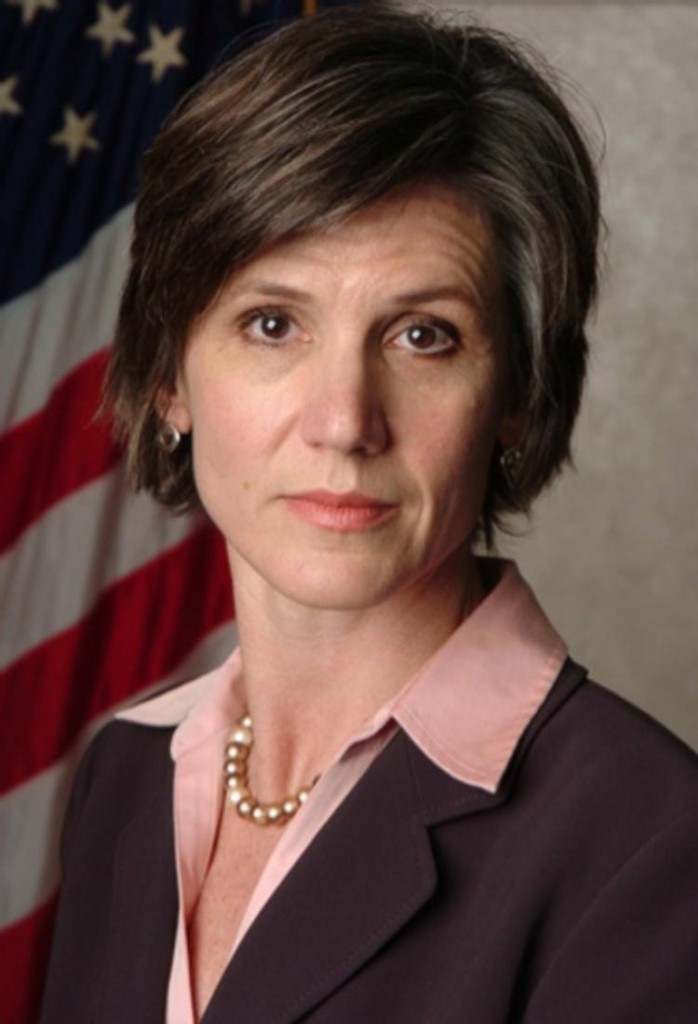
As highlighted in this prior post, in September DOJ Deputy Attorney General Sally Yates delivered this speech and released this memo titled “Individual Accountability for Corporate Wrongdoing” (hereafter the “Yates Memo”). (See here for the video of the speech).
While many viewed the Yates Memo as articulating new DOJ policy, in many respects it did not.
Last week, Yates delivered this speech that elaborated on certain points in the Yates memo and announced that the Yates Memo has been incorporated into the U.S. Attorney’s Manual (USAM). Some are viewing this as another “new” development, but that too is misguided as the USAM has always been the final resting place for DOJ policy memos such as the previous Holder, Thompson, McNulty and Filip memos.
The remainder of this post excerpts portions of Yates’s speech that are likely to be of most interest to FCPA practitioners.
“A little more than two months ago, we issued a new policy designed to ensure that individual accountability is at the heart of our corporate enforcement strategy. In announcing the policy, we emphasized the importance of holding accountable the individuals who commit corporate wrongs for reasons that are fairly obvious – crime is crime and lawbreakers must be held responsible regardless of whether they violate the law on the street corner or in the corner office. We also know that in the white-collar context, one of the most effective ways to ensure this accountability and to deter future misconduct is by pursuing not just corporate entities, but also the individuals through which these corporations act. And so our policy set forth six ways the Justice Department is changing how it does business to ensure that our attorneys and agents make the best possible cases against those individuals.
[…]
[N]ow that a couple of months have passed, I thought it would be helpful to expand a bit on what we are trying to accomplish and how we’re implementing the policy.
Before rolling out the memo in September, a team of senior DOJ attorneys spent months examining the issue – a project that began under former Attorney General Holder and continued under Attorney General Lynch. I’d like to think that the final product reflected the values that were instilled in these senior DOJ attorneys – and instilled in me – during our long careers at the Justice Department. I joined the U.S. Attorney’s office in Atlanta in 1989 and I’ve been with the department ever since. I spent a significant portion of my career handling white-collar prosecutions, as a line Assistant United States Attorney (AUSA), as the supervisor of our white-collar unit, as a U.S. Attorney and now as Deputy Attorney General. I know how challenging these cases can be and I’ve seen how extraordinarily hard our Department of Justice attorneys work to make them happen. That’s part of the reason we decided to adjust our approach. Everyone at the Justice Department wants to hold wrongdoers accountable, all the more so when those wrongdoers use corporations to lie, cheat and steal. But the barriers to a successful white-collar prosecution can be substantial. We needed to clear away some of those barriers and make sure that the department’s own priorities and resources were fully aligned so we could conduct our investigations more effectively and bring the best cases possible.
I’d like to talk a bit about how we’ve implemented the policy into the everyday work of our attorneys. Today, we’re taking a big step forward on that front by issuing revisions to the United States Attorney’s Manual, or the USAM.
As I’m sure many of you know, the USAM is one of the most important documents within the Justice Department community. It is a handbook that contains guidance on everything from initiating an investigation to closing a case and it serves as the foundation for many of the key decisions that DOJ attorneys make during their work. It applies to everyone in the department, regardless of whether they’re an assistant U.S. Attorney out in the field or a trial attorney in Washington. I know I consulted it regularly during my years as a prosecutor.
We don’t revise the USAM all that often and, when we do, it’s for something important. We change the USAM when we want to make clear that a particular policy is at the heart of what all Department of Justice attorneys do and when we want to make sure that certain principles are embedded in the culture of our institution. We also make these revisions as a way of telling the world about our priorities and our values, so that others know what to expect when the Justice Department comes knocking.
The first set of revisions involve the section of the USAM that addresses criminal cases – specifically, corporate criminal cases. Technically, the chapter is called the “Principles of Federal Prosecution of Business Organizations,” but most of you know it as simply the “Filip factors.”
Today we are updating the Filip factors and the written guidance that accompanies these factors, to highlight some important principles from the September policy. The revised factors now emphasize the primacy in any corporate case of holding individual wrongdoers accountable and list a variety of steps that prosecutors are expected to take to maximize the opportunity to achieve that goal. And we are adding language that codifies a number of internal reporting and approval requirements, which are designed to ensure consistency across the Justice Department and allow us to keep track of how these policies are being implemented.
An important component of the individual accountability policy and the new revisions to the factors involves corporate cooperation. This seems to be the policy shift that has attracted the most attention. The new rule in the revised factors is exactly how I laid it out two months ago: if a company wants credit for cooperating – any credit at all – it must provide all non-privileged information about individual wrongdoing. Companies seeking cooperation credit are expected to do investigations that are timely, appropriately thorough and independent and report to the government all relevant facts about all individuals involved, no matter where they fall in the corporate hierarchy.
I would note that this concept — that corporate cooperation includes giving all non-privileged information about the conduct of individuals – is nothing new. It was in the Filip factors long before this most recent policy shift and it is a point has been repeatedly emphasized by department officials, particularly Leslie Caldwell, our terrific Assistant Attorney General of the Criminal Division.
What is new is the consequence of not doing it. In the past, cooperation credit was a sliding scale of sorts and companies could still receive at least some credit for cooperation, even if they failed to fully disclose all facts about individuals. That’s changed now. As the policy makes clear, providing complete information about individuals’ involvement in wrongdoing is a threshold hurdle that must be crossed before we’ll consider any cooperation credit.
Some have claimed that this new cooperation policy will result in unnecessarily broad, costly and time-consuming internal investigations. But when we announced the policy, we made clear that we were not intending for companies to embark on a years-long, multimillion dollar investigation every time a company learns of misconduct. We made clear at the time that we expect investigations to be tailored to the scope of the wrongdoing. We expect cooperating companies to make their best effort to determine the facts with the goal of identifying the individuals involved. As we said previously, if there is any question about the scope of what’s required, you should do what many defense attorneys do now – pick up the phone and discuss is with the prosecutor.
Others have opined that a company that does not have access to all the facts will be at a disadvantage, despite their best efforts to do a thorough and timely investigation. As the corporate entity, the presumption will be that you have access to the evidence. But if there are instances where you do not, or you are legally prohibited from handing it over, then you need to raise these issues with the prosecutor.
Additionally, there is nothing in the new policy that requires companies to waive attorney-client privilege or in any way rolls back the protections that were built into the prior factors. The policy specifically provides that it requires only that companies turn over all relevant non-privileged information and our revisions to the USAM – which left the sections on the attorney-client privilege intact – underscore that point.
But let’s be clear about what exactly the attorney-client privilege means. As we all know, legal advice is privileged. Facts are not. If a law firm interviews a corporate employee during an investigation, the notes and memos generated from that interview may be protected, at least in part, by attorney-client privilege or as attorney work product. The corporation need not produce the protected material in order to receive cooperation credit and prosecutors will not request it. But to earn cooperation credit, the corporation does need to produce all relevant facts –including the facts learned through those interviews—unless identical information has already been provided. We will respect the privilege, but we will also expect companies to respect its boundaries and not to wrongly exploit its legitimate purpose by using it to shield non-privileged information from investigators.
Some have theorized that our new policy will have a chilling effect on employees’ willingness to cooperate in their companies’ internal investigations, thus limiting our ability to find out what really happened. I will acknowledge that our focus on culpable individuals may make some employees nervous. Some may have reason to be nervous. But to the extent that there’s a tension between the interests of the company and the interests of individuals in an internal investigation, that dynamic is nothing new. This tension is reflected in the admonition that corporate counsel give employees that they represent the company not the employee and that the company may provide to the government any information that the employee provides. So these new cooperation rules simply emphasize — for the benefit of companies and prosecutors – the importance of identifying individual wrongdoers in any corporate case.
Understand that we’re not asking companies to pin a scarlet letter on their employees or provide us with prosecutable cases against them in order to get the benefits of cooperation. Cooperation does not require a company to characterize anyone as “culpable.” Cooperation does require that a company provide us with all facts about the all individuals involved.
Two last points on the subject of cooperation. First, timing, as always, is of the essence. A company should come in as early as it possibly can, even if it doesn’t quite have all the facts yet. The new USAM language makes plain that a company won’t be disqualified from receiving cooperation credit simply because it didn’t have all the facts lined up on the first day it began talking with us. Rather, under those circumstances, we expect that cooperating companies will simply continue to turn over the information to the prosecutor as they receive it.
Second, one of the changes made to the USAM today separates what used to be a single factor that covered both a corporation’s voluntary disclosure and its willingness to cooperate into two separate factors – one focused solely on the company’s timely and voluntary disclosure and the second on its cooperation. We made this change to emphasize that while the concepts of voluntary disclosure and cooperation are related, they are distinct factors to be given separate consideration in charging decisions. In recognition of the significant value early reporting holds for us, prompt voluntary disclosure by a company will be treated as an independent factor weighing in the company’s favor.
[…]
We make all of these changes recognizing challenges that they may present. Some have speculated that the new policy may mean that fewer companies cooperate with the government because of some perception that the new standard is too difficult to meet. I suppose that may happen, but I’m not convinced. I have a hard time imagining that it will truly be in a company’s best interest to forego the substantial benefits accorded for cooperation solely to avoid having to provide all the facts about individual conduct. That would seem to be a particularly difficult call for the board of directors of a publicly traded company given the fiduciary duty to the shareholders. But if fewer companies cooperate and our corporate settlements are reduced, we’re okay with that. I will repeat a point I made when we announced this policy: our mission is not to recover the largest amount of money from the greatest number of corporations; our job is to seek accountability from those who break our laws and victimize our citizens.
Here in the audience, we have more than lawyers and bankers; we also have one of the most important constituencies in our efforts to combat corporate misconduct: compliance professionals. You are a crucial partner in the fight against white-collar crime. At DOJ, we don’t want to go after the corporate wrongdoers simply as an end unto itself; we want to decrease the amount of corporate wrongdoing that happens in the first place. We want to restore and help protect the corporate culture of responsibility. That’s only possible with strong compliance programs—and with rigorous internal controls that help companies self-assess and self-correct. It is in our mutual interest to ensure that we root out misconduct, promote fairness and demonstrate that no one is above the law.
At the Justice Department, our ability to do our jobs effectively depends on the public’s confidence in the institutions we represent. The public must believe what I have always known to be true; that we will aggressively pursue wrongdoing in all its forms, no matter who the wrongdoer may be. That means that we must continue to demonstrate that our criminal justice system operates fairly and applies equally and is designed not only to punish misconduct but also to try to stop it from happening again.”
Change Ahead At The DOJ?

In prior years, November has witnessed FCPA policy announcements from the DOJ.
For instance, as highlighted here, in November 2012 the DOJ (and SEC) released the FCPA Guidance. As highlighted here, in November 2010, then Assistant Attorney General Lanny Breuer announced “we are in a new era of FCPA enforcement and we are here to stay.”
According to this Washington Post article, the DOJ may soon release information in “an effort to increase the incentive for companies to be forthcoming about wrongdoing by their officials and give the business community clearer guidance on penalties under the Foreign Corrupt Practices Act.”
Given the frequency in which media reporting on FCPA issues is wrong, incomplete, or out of context, the prudent course (which will be adopted here) is not to react to the media reporting, but to reserve judgment until the DOJ actually releases information.
At present however, the Washington Post reports:
“[C]oncerns within the Justice Department that the prospective change is too lenient on firms that have violated the law have led senior officials in the criminal division to delay its issuance, according to U.S. officials who spoke on the condition of anonymity to describe internal discussions.
“It’s not a bad thing to provide companies with more transparency” on department policy, but the draft policy “lets them off the hook too easily,” said one person familiar with the matter.
The proposed policy strongly recommends that prosecutors should decline to bring charges against a company that voluntarily discloses violations of the FCPA and cooperates with the government in its investigation — including by furnishing information on employees who may have violated the law.
The Justice Department declined to comment.
Under review is the extent to which companies should be excused even for egregious misconduct because they have voluntarily disclosed it, cooperated with the investigation and taken remedial steps.
[…]
The proposal contemplates that the decision not to prosecute could be accompanied by a fine in the form of forfeiture of company profits. But in general the goal is to enhance the incentive for companies to cooperate by providing more certainty that doing so would not result in a stiff penalty or a criminal charge. Also, there would be no statement of facts that lays out the company’s misbehavior as there is now with many resolutions of FCPA investigations.
[…]
The department in general is seeking to boost its ability to battle foreign bribery. Earlier this year, the FBI announced that, in partnership with the Justice Department’s fraud section, it established three international corruption squads, in New York City, Los Angeles and Washington.
And to complement that move, the fraud section will soon add 10 prosecutors to the FCPA unit — increasing the number of line attorneys by more than half.
Nonetheless, there are companies that now weigh the odds of getting caught if they do not come forward with knowledge of a crime. They think “why not just wait to see whether law enforcement — whether here in the U.S. or overseas — discovers the wrongdoing?” said Andrew Weissmann, chief of the fraud section, in a speech in May. “Why not stay mum and see if it gets discovered and then, if necessary, cooperate to mitigate the damage?”
[…]
But some skeptics within the department argue that while giving companies clearer guidance is a good thing, the practical effect of the proposed policy change would be that a greater number of cases that should be pursued would be dropped.
The number of “declinations” — decisions not to prosecute — would rise. “It means that self-reporting and cooperation would be a ticket out of criminal liability for a company, even if the reported misconduct is serious and substantial,” said a second individual familiar with the draft policy.
On the flip side, the individual said, if a company does not self-disclose and a violation is discovered, it is much more likely to get charged. “It’s almost like an amnesty program,” he said. “But if you don’t take advantage of the self-reporting, it ups the stakes for companies who choose to keep quiet.”
Friday Roundup

Alleged bribery at the U.N., former Siemens exec pleads guilty to long-standing charges, scrutiny alerts and updates, quotable, and for the reading stack.
It’s all here in the Friday roundup.
Alleged Bribery at the United Nations
The United Nations does much preaching about bribery and corruption, yet perhaps it should look inward as once again one of its own is alleged to have engaged in bribery and corruption.
This recent criminal complaint charges John Ashe and others with a variety of criminal offenses. Ashe is described as having various positions at the U.N. including serving as the Permanent Representative of Antigua to the U.N. and recently serving as the President of the U.N. General Assembly.
According to the complaint, various other defendants (most of whom are alleged to be naturalized U.S. citizens, as well as a Chinese national who allegedly has a New York-based non-governmental organization) made bribe payments to Ashe in connection with a U.N. sponsored conference center in Macau, China and to influence business interactions with Antiguan government officials.
The alleged bribery is charged under 18 USC 666 (theft or bribery concerning programs receiving federal funds) on account of the U.N. receiving U.S. federal government funds.
However, Ashe is likely a “foreign official” under the FCPA given that the definition of “foreign official” includes individuals associated with “public international organizations” and the U.N. has been designated as such an organization.
Moreover, as highlighted above, the alleged payors of the bribes to Ashe are predominately naturalized U.S. citizens subject to the FCPA’s anti-bribery provisions. The Chinese national defendant is alleged to have engaged in conduct in the U.S. likely sufficient to satisfy the dd-3 prong of the FCPA.
The recent enforcement action is certainly not the first to involve bribery of a U.N. official.
As highlighted here, the Richard Bistrong enforcement action involved bribe payments to, among others, U.N. officials.
For additional coverage of the Ashe charges, see here.
Former Siemens Exec Pleads Guilty
Recently, the DOJ announced that Andres Truppel of Argentina, the former chief financial officer of Siemens S.A. – Argentina (Siemens Argentina), pleaded guilty to conspiring to violate the anti-bribery, internal controls and books and records provisions of the FCPA; and to commit wire fraud.
On social media, some commentators have tried to link the guilty plea to the recent Yates Memo. Such an attempt is off-target as Truppel and other former Siemens executives and agents were criminally charged in December 2011.
As highlighted in this prior post from nearly four years ago, the Siemens Argentina individual enforcement action was brought after the DOJ faced much scrutiny for not bringing any individual enforcement action in connection with a bribery scheme “unprecedented in scale and geographic reach” in which there existed at Siemens a “corporate culture in which bribery was tolerated and even rewarded at the highest levels of the company.” (Those are direct quotes from DOJ/SEC).
This scrutiny occurred, among other places, during the Senate’s November 2010 FCPA hearing in which hearing Chair Senator Arlen Specter gave me this homework assignment regarding the Siemens enforcement action.
As highlighted in the prior post, despite the Siemens Argentina individual enforcement action, the fact remains that only a sliver of the conduct at issue in the 2008 enforcement action against Siemens resulted in individual prosecutions. As alleged by the enforcement agencies, the corruption at Siemens involved more than $1.4 billion in bribes to government officials in Asia, Africa, Europe and the Americas. As alleged (see here) “among the transactions on which Siemens paid bribes were those to design and build metro transit lines in Venezuela; metro trains and signaling devices in China; power plants in Israel; high voltage transmission lines in China; mobile telephone networks in Bangladesh; telecommunications projects in Nigeria; national identity cards in Argentina; medical devices in Vietnam, China, and Russia; traffic control systems in Russia; refineries in Mexico; and mobile communications networks in Vietnam.”
For additional coverage of the Truppel plea, see here and here.
Scrutiny Alerts and Updates
There has never been an FCPA enforcement action against a Canadian company, but recently Kinross Gold Corp (a company with shares listed on the NYSE) stated:
“In August 2013, Kinross received information regarding allegations of improper payments made to government officials and certain internal control deficiencies at its West Africa mining operations. Kinross takes such allegations very seriously and action was immediately taken in accordance with Kinross’ Whistleblower Policy. External legal counsel was immediately retained to conduct an objective internal investigation into the allegations.
In March and December 2014, and July 2015, Kinross received subpoenas from the United States Securities and Exchange Commission (the “SEC”) seeking information and documents on substantially the same subjects as had previously been raised. In December 2014, Kinross received similar requests for information from the United States Department of Justice (the “DOJ”).
Kinross is fully cooperating with the SEC and DOJ and continues to diligently pursue its own internal investigation, which, over the course of the past 25 months, has not identified issues that Kinross believes would have a material adverse effect on the Company’s financial position or business operations. Our internal investigation is ongoing, and additional issues or facts could become known as the investigation continues.
It is important to note that the SEC subpoenas expressly state that: “This investigation is confidential and nonpublic and should not be construed as an indication by the Commission or its staff that any violation has occurred, nor as a reflection upon any person, entity or security.”
Kinross is committed to operating in accordance with the highest ethical standards and conducting business in an honest and transparent manner that is in compliance with the law. Kinross has a longstanding culture of ethical conduct and accountability consistent with its Code of Business Conduct and Ethics and related anti-corruption compliance program.”
Quotable
Informed by my prior experience as an FCPA lawyer in private practice, I have long pinned one of causes for the inexcusable long duration of FCPA inquiries on the high attrition rates at the DOJ and SEC’s FCPA Unit.
Since leaving the DOJ, Paul Pelletier (former Acting Chief and Principal Deputy Chief of the DOJ’s Fraud Section and currently a partner at Mintz Levin) has offered an informed voice on the long duration of DOJ FCPA inquiries. (See here for instance).
Commenting on the Yates Memo in this recent FCPA Blog guest post, Pelletier writes:
“To avoid delay in the efficient and timely prosecution of business entities, implementation of the formal requirements of the Yates Memo will require the deft and even hand of prosecutors, both experienced in investigating and prosecuting complex corporate white collar crime and trained in the methods of real time prosecutions. This unique experience and specific training are required and essential.
From 2002 through 2010, the average Criminal Division tenure of a Fraud Section prosecutor exceeded 5 years and according to the OECD’s most recent Foreign Bribery Report, during that same time frame, the average duration of a foreign bribery investigation measured from the last act of the offense to resolution was approximately 3 years. Commentators have noted an increasingly high and troubling turnover rate in the Fraud Section since 2010, radically altering the average tenure of Section prosecutors. Moreover, since 2010 the average investigatory duration of foreign bribery matters has doubled to more than sixyears.
Whatever explanation may be offered for these jaw dropping statistics, the practical effect is that most FCPA investigations will be passed from prosecutor to prosecutor, almost certainly leading to unnecessarily protracted investigations—perhaps an exclamation point which highlights the critical consequences to FCPA investigations flowing from implementation of the Yates Memo, absent a root cause cure.
Given the formal requirements of the Yates Memo, no matter how good the prosecutors’ intentions or how noble their cause, without the DOJ’s commitment to sustained and focused training combined with a similar effort to retain prosecutors with the experience essential to the success of the endeavor, corporations (including employees and shareholders) caught up in the throes of an FCPA investigation, if they choose to cooperate, are likely to be forced to suffer the untold and unwarranted costs and disruptions of seemingly interminable investigations. That should not be the consequence of DOJ’s renewed focus.”
For the Reading Stack
This recent Wall Street Journal Risk & Compliance Journal article states:
“The Justice Department’s Foreign Corrupt Practices Act unit is focusing its enforcement efforts on quality rather than quantity. Spokesman Peter Carr said after years of handling smaller cases coming from corporate self-reporting, the unit is now putting more at stake and going after blockbuster cases. Initiatives to boost foreign corruption enforcement personnel and resources are being used to go after that high-profile wrongdoing, Mr. Carr said. Many of those programs began years ago. His comments came in response to news that the Department’s anti-bribery efforts were eclipsed by the Securities and Exchange Commission in the third quarter. “The department several years ago handled more cases based on self-reporting by companies, and as a result of that we saw more resolutions, but smaller cases,” Mr. Carr said in an email. “We are currently focusing on bigger, higher impact cases, including those against culpable individuals, both in the U.S. and abroad, and those take longer to investigate and absorb significant resources, but there are a lot of cases out there. In fact, the department is increasing its FCPA resources, and the three new FBI squads focusing on this issue are now staffed and operational.” […] “Our investigations of FCPA cases are as robust as ever, and the resources we dedicate to FCPA cases continue to grow. These are sophisticated cases that can take years to investigate,” Mr. Carr said. “The number of public announcements about filed cases or resolutions will vary over time, but our commitment to FCPA cases is strong.”
*****
A good weekend to all.
And The Apple Goes To …

Fall. The colors are changing and the apples are crisp.
Fitting of the season, the FCPA Professor apple award goes to Matthew Fishbein (Debevoise & Plimpton).
Since the release of the Yates Memo, I’ve commented more than once that those who think the Yates Memo represented something new are misinformed.
Fishbein (who previously served in the U.S. Attorney’s Office for the Southern District of New York as Chief Assistant U.S. Attorney and Chief of the Criminal Division, among other DOJ positions) surely is not among this category.
Indeed, three weeks prior to release of the Yates Memo, Fishbein wrote this article and picks an orchard.
“[T]he lack of individual prosecutions [in most DOJ corporate enforcement actions] is the inevitable consequence of making a potential criminal case out of every news story where something bad occurs. While the needs and interests of companies often lead them to enter into settlements even where there is little evidence that a crime actually was committed, individuals are more likely to test the government’s case – especially if that case rests on questionable footing. This article discusses the context in which corporations cooperate with the government and suggests that the DOJ’s increased emphasis on cooperation against individuals may undermine corporate defense counsel’s ability to obtain or recommend their client’s cooperation in the many marginal cases where evidence of criminal conduct is lacking.
A number of recent statements by top DOJ officials suggest that their explanation for the lack of individual prosecutions is that companies are largely to blame. The DOJ has suggested that by dragging their feet instead of actively cooperating – for example, by hiding behind over-expansive interpretations of foreign data privacy laws or allowing culpable employees to leave the country – companies effectively have put up roadblocks to the prosecution of individuals.
While there may be some examples of companies holding back in their cooperation, a corporation’s conduct during the course of a government investigation is rarely the reason that individuals are not prosecuted. Rather, individuals are not prosecuted for the conduct companies admit because, in many marginal cases, there is insufficient evidence that a crime actually occurred. Why would a company enter into a criminal settlement where the underlying conduct does not give rise to a crime? The answer is simple: companies frequently determine that a “bad” settlement may be a better resolution than a drawn out, litigated victory. And as prosecutors have grown to appreciate the great leverage they hold over corporate entities, they have exercised this leverage in the pursuit of increasingly marginal cases. They do so, in part, because the risk is minimal (the prosecutor’s case is unlikely to be challenged in court) and the reward is great (the corporations pay enormous penalties).
Prosecutors have considerably less leverage over individuals, who, facing the possibility of incarceration and financial devastation in the event of a criminal conviction, are more likely to test the government’s case and put the government at risk of a high-profile loss. Given the extreme public pressure to bring charges against individuals in connection with the financial crisis, it stands to reason that if prosecutors could prove cases against corporate executives, they would bring those cases in a heartbeat. Indeed, Attorney General Holder recently acknowledged that the lack of individual prosecutions in the wake of the financial crisis was “not for lack of trying.”
Faced with a largely unsuccessful record in the pursuit of individual prosecutions after the financial crisis, it appears that, going forward, the DOJ is going to try even harder. According to a senior DOJ official, “[t]he prosecution of individuals – including corporate executives – for white-collar crimes is at the very top of the Criminal Division’s priority list.” Consistent with this goal, a number of DOJ officials have explained that “true cooperation” with a government investigation requires that the corporation identify culpable individuals and provide the government with evidence that implicates them. Without such evidence of individual culpability, corporations will not receive full cooperation credit, even if they do all of the things that traditionally have been viewed as the hallmarks of robust cooperation such as volunteering information not otherwise known to the government, providing documents and witnesses outside the government’s subpoena power, and making productions and disclosures in a timely manner.
[…]
The DOJ’s corporate cooperation policy is in some ways a double-edged sword. In cases where there is clear-cut evidence of wrongdoing, the DOJ’s policy on cooperation makes good sense and should be relatively straightforward in its application: in order to obtain full cooperation credit, it makes sense that companies should have to identify and disclose the information relevant to individual misconduct. This requirement is consistent with the government’s policy on providing cooperation credit for individuals who substantially assist in the prosecution of others. However, the policy presents a real dilemma for companies responding to the marginal, gray-area cases described above, where the company may for business reasons want to reach a settlement even where it has strong defenses, but the absence of evidence of individual culpability may preclude it from receiving the benefits of “full cooperation.”
In these kinds of cases, defense counsel is left facing a host of difficult questions. If a company should make “securing evidence of individual culpability the focus of [its] investigative efforts,” what is it to do when that evidence does not exist? If a company targets its internal investigation toward developing cases against individuals, should individuals be provided with counsel at the outset? If true cooperation “requires identifying the individuals actually responsible for the misconduct,” can a company “truly cooperate” when there are no such responsible individuals? If, in order to receive “full cooperation credit,” a company should emphasize its efforts to obtain evidence of individual culpability, can it still receive “full credit” when those efforts are fruitless? And if securing evidence of individual culpability is a “primary focus” when the government weighs the Filip Factors, will a company be subject to harsher charging decisions or settlement terms simply because no such evidence exists?
Taken together, these questions suggest that a policy designed to incentivize cooperation may have the perverse effect of deterring it: if a company knows that it cannot receive full cooperation credit, it may decide that it is not worth the effort to try; and if individuals know that companies are incentivized to obtain evidence against them, they may be far less willing to cooperate during internal investigations.
Moreover, under the DOJ’s cooperation policy, companies seeking to resolve criminal investigations in marginal cases may actually be penalized when their individual employees did not engage in criminal conduct. In such cases, defense counsel may consider challenging prosecutors to identify what aspect of their investigation was lacking or what evidence of individual culpability should have been uncovered. DOJ officials have said that the government will conduct its own investigations to “pressure test” a company’s internal investigation. If the government’s test reveals no flaws in the company’s investigation, will the government still not provide full cooperation credit?
The DOJ’s policy on cooperation is unlikely to solve the problem that it was likely designed to address, i.e., the lack of individual prosecutions. Although there may be an increase in individual prosecutions in cases of clear wrongdoing, the DOJ’s policy is unlikely to have an impact on the marginal cases, where companies often settle in spite of the evidence – not because of it.
While the needs and interests of companies in reaching settlements have allowed the government to obtain larger and larger settlements in cases where the facts and law likely would not permit them to succeed with a jury, the government must live with the fact that no amount of company cooperation will turn facts that do not provide a basis for individual prosecutions into facts that do. The government either has to accept this – and continue along the path of corporate settlements without individual prosecutions – or stop pursuing investigations and accepting settlements where there are no individuals who have actually committed crimes.”
[The FCPA Apple Award recognizes informed, candid, and fresh thought-leadership on the Foreign Corrupt Practices Act or related topics. There is no prize, medal or plaque awarded to the FCPA Professor Apple Award recipient. Just recognition by a leading FCPA website visited by a diverse group of readers around the world. There is no nomination procedure for the Apple Award. If you are writing something informed, candid and fresh about the FCPA or related topics, chances are high that I will find your work during my daily searches for FCPA content.]