

Many Of The Topics Discussed In The FCPA Guidelines Are Not New

On June 9th, DOJ Deputy Attorney General Todd Blanche issued this memo to the head of the DOJ Criminal Division titled “Guidelines for Investigations and Enforcement of the Foreign Corrupt Practices Act.”
At first blush, it may seem like there are many new topics in the Guidelines.
What is perhaps new is that these topics are actually written down in a DOJ policy document, but as highlighted in this post and future posts, many of the topics discussed in the Guidelines have been happening before our eyes for several years.
For instance, the Guidelines state:
DOJ Criminal Division Head Galeotti On …
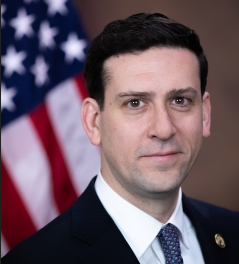
Yesterday, DOJ Criminal Division head Matthew Galeotti gave this speech in which talked about the DOJ’s recently released “Guidelines for Investigations and Enforcement of the Foreign Corrupt Practices Act.” (See here for the prior post) as well as the DOJ “White Collar Enforcement Plan” released last month (see here for the prior post).
Galeotti began:
“The Deputy Attorney General sent me a memorandum, which he publicly released, detailing the new FCPA Enforcement Guidelines called for by the President’s Executive Order. These Guidelines provide evaluation criteria and a non-exhaustive list of factors to balance when deciding whether to pursue an FCPA case.”
DOJ Releases Guidelines For Investigations And Enforcement Of The FCPA

Yesterday, DOJ Deputy Attorney General Todd Blanche issued this memo to the head of the DOJ Criminal Division titled “Guidelines for Investigations and Enforcement of the Foreign Corrupt Practices Act.”
The memo begins:
“On February 10, 2025, President Trump signed Executive Order 14209, titled Pausing Foreign Corrupt Practices Act Enforcement to Further American Economic and National Security (Feb. 10, 2025) (Order), to ensure that the FCPA is not “stretched beyond proper bounds and abused in a manner that harms the interests of the United States,” used “against American citizens and businesses … for routine business practices in other nations,” or enforced in a manner that “harms American economic competitiveness and, therefore, national security.” The Order directs the Department of Justice (Department), through the Attorney General, for a period of 180 days, to “(i) cease initiation of any new FCPA investigations or enforcement actions, unless the Attorney General determines that an individual exception should be made; (ii) review in detail all existing FCPA investigations or enforcement actions and take appropriate action with respect to such matters to restore proper bounds on FCPA enforcement and preserve Presidential foreign policy prerogatives; and (iii) issue updated guidelines or policies [governing investigations and enforcement actions under the FCPA ], as appropriate, to adequately promote the President’s Article II authority to conduct foreign affairs and prioritize American interests, American economic competitiveness with respect to other nations, and the efficient use of Federal law enforcement resources.”
DOJ Talk Over The Years

As highlighted in this prior post, several of the issues discussed in President Trump’s February 10th Executive Order “Pausing” FCPA enforcement had been percolating for many years and discussed by many individuals.
The same is true regarding several of the issues highlighted in the DOJ’s recent policy memo titled “Focus, Fairness, and Efficiency in the Fight Against White-Collar Crime.” (See here for the prior post).
This is particularly true when it comes to the “efficiency” of DOJ investigations.
The recent policy memo states:
A “CEP Declination” Is Still An Enforcement Action

The DOJ recently released a revised version of its Corporate Enforcement and Voluntary Self-Disclosure Policy (CEP), a policy document which “applies to all corporate criminal matters handled by the Criminal Division.”
Similar to prior versions of the CEP, the “best” a business organization can generally hope for under the CEP is an enforcement action.
The CEP states:
The Criminal Division will decline to prosecute a company for criminal conduct when the following factors are met: