

Little New Information In Assistant AG Caldwell’s FCPA Speech

Yesterday, Assistant Attorney General Leslie Caldwell delivered this speech before a Foreign Corrupt Practices Act audience.
To those well-versed on prior DOJ FCPA policy speeches, there was little new in Caldwell’s speech (and you can assess this for yourself by visiting this subject matter tag which highlights every DOJ FCPA policy speech in the public domain over the last several years).
The only “new” item in Caldwell’s speech was her announcement that the DOJ is “preparing to add 10 new prosecutors to the Fraud Section’s FCPA Unit, increasing its size by 50 percent.” But here again, for years the DOJ and/or FBI have been trumpeting the ever increasing persons in their respective FCPA units.
Prior to excerpting, Caldwell’s speech, a few observations about the voluntary disclosure and “secret” FCPA enforcement aspects of Caldwell’s speech.
Voluntary Disclosure
Caldwell stated yesterday:
“[The DOJ] is not reliant on corporate self-reporting in the FCPA or any other context—indeed, the majority of our FCPA cases are investigated and prosecuted without a voluntary disclosure …”.
As noted in this December 2014, the DOJ previously said that it does not track voluntary disclosure statistics. However, as noted in the post, FCPA Professor does based on information in the DOJ’s own resolution documents. The statistics (current as of the date in the post) were as follows.
- Since 2011, there have been 31 core corporate DOJ FCPA enforcement actions. 17 of the enforcement actions (55%) have been based on voluntary disclosures per the DOJ’s own resolution documents. This 55% figure actually under-represents the impact of voluntary disclosures on the DOJ’s FCPA enforcement program because several other FCPA enforcement actions (for instance against Smith & Nephew and Biomet) are generally viewed as “fruits” of a prior voluntary disclosure (Johnson & Johnson). Moreover, the Bilfinger enforcement action was the direct result of the prior Willbros enforcement action (an enforcement action based on a voluntary disclosure).
“Secret” FCPA Enforcment
For years, there have been whispers in the FCPA space about “secret” FCPA enforcement actions. As noted in this prior post, the 2012 FCPA Guidance seemed to confirm such whispers as the Guidance stated:
- “Historically, DOJ had, on occasion, agreed to DPAs with companies that were not filed with the court. That is no longer the practice of DOJ.”
- The Guidance also suggested that the DOJ has used non-prosecution agreements in individual FCPA-related case (e.g., “If an individual complies with the terms of his or her NPA, namely, truthful and complete cooperation and continued law-abiding conduct, DOJ will not pursue criminal charges.” The Guidance also states that “in circumstances where an NPA is with a company for FCPA-related offenses, it is made available to the public through DOJ’s website.” (emphasis added). This statement suggests that when an NPA is with an individual for FCPA-related offenses, the agreement is not made public.
In yesterday’s speech, Caldwell stated:
“We usually publicly announce corporate resolutions and pleas, and make the documents available on our website.” (emphasis added).
This statement only deepens the mystery surrounding apparent “secret” FCPA enforcement and the irony is that Caldwell’s statement was made in the same speech in which she stated “greater transparency benefits everyone.”
The remainder of this post excerpts Caldwell’s speech.
“I appreciate the opportunity to talk with you today about the Justice Department’s (DOJ) increasing attention to the investigation and prosecution of international corruption under the FCPA.
In 1977, when Congress enacted the FCPA, it called the “payment of bribes to influence the acts or decisions of foreign officials…unethical [and] counter to the moral experience and values of the American public.” In the investigations leading to the act’s passage, Congress uncovered more than $300 million—or nearly $1.2 billion in 2015 dollars—in bribes paid by American companies to foreign officials.
Unfortunately, in the intervening 38 years, corruption has not disappeared. In fact, as globalization increases, there is some evidence that corruption has as well. The FCPA has, however, helped bring to justice some of the largest-scale perpetrators of economic corruption, and in 2014, companies paid more than $1.5 billion in corporate FCPA penalties to DOJ alone. And that does not include payments made to other U.S. and foreign entities. Clearly, our work to uphold the “moral experience and values of the American public” remains unfinished.
As you may know, that work is led by a team of federal prosecutors in the Criminal Division’s Fraud Section. They are joined in this fight against international corruption by their colleagues in the Asset Forfeiture and Money Laundering Section—known as AFMLS—which pursues prosecutions against institutions and individuals engaged in money laundering, Bank Secrecy Act violations and sanctions violations.
AFMLS attorneys also seek the forfeiture of proceeds of high-level foreign corruption through the relatively new Kleptocracy Asset Recovery Initiative. The two units complement each other in their efforts to hold both bribe payers and bribe takers accountable for their criminal conduct.
I would like to talk with you today about our ongoing efforts to enhance the Criminal Division’s ability to root out and prosecute corruption, and also to provide increased transparency about the division’s decision-making.
During this past year, we increased our FCPA resources, including by adding three new fully-operational squads to the FBI’s International Corruption Unit that are focusing on FCPA and Kleptocracy matters. We are also preparing to add 10 new prosecutors to the Fraud Section’s FCPA Unit, increasing its size by 50 percent. These new squads and prosecutors will make a substantial difference to our ability to bring high-impact cases and greatly enhance the department’s ability to root out significant economic corruption.
In addition to increased resources directed to FCPA cases, one of my priorities in the Criminal Division has been to increase transparency regarding charging decisions in corporate prosecutions.
Greater transparency benefits everyone. The Criminal Division stands to benefit from being more transparent because it will lead to more illegal activity being uncovered and prosecuted. This is in part because if companies know the consideration they are likely to receive from self-reporting or cooperating in the government’s investigation, we believe they will be more likely to come in early, disclose wrongdoing and cooperate.
On the flip side, companies can also better evaluate the consequences they might face if they do not merit that consideration. In both ways, transparency helps achieve the deterrent purpose of the FCPA because comparatively opaque or unreasoned enforcement action can make it more difficult for companies to make their own rational decisions about how to react when they learn of a bribe.
Transparency also helps to reduce any perceived disparity, in that companies can compare themselves to other similarly-situated companies engaged in similar misconduct. There are often limits to how much we can disclose about our investigations and prosecutions—particularly for investigations in which no charges are brought—but we are trying to be more clear about our expectations in corporate investigations and the bases for our corporate pleas and resolutions.
Let me provide some examples to illustrate this point.
Just a few months ago, the former co-CEO of PetroTiger pleaded guilty to conspiring to violate the FCPA. He joined his fellow co-CEO and the company’s former general counsel in being convicted of bribery and fraud charges after a DOJ investigation that revealed a scheme to secure a $39 million oil-services contract for PetroTiger through bribery of Colombian officials. This was serious misconduct that went to the very top of the company, and in a typical case, criminal charges for the company may well also have been appropriate.
We learned about this misconduct through voluntary disclosure by PetroTiger, however. And after that self-disclosure, the company fully cooperated with the department’s investigation of the misconduct and of the individuals responsible for it. As you likely know, the department ultimately declined to prosecute the company, or to seek any NPA (non-prosecution agreement) or DPA (deferred prosecution agreement) with it, even though we clearly could have done so.
By contrast, in December of last year—about a month after I last addressed this conference—Alstom S.A., the French power company, pleaded guilty to violating the FCPA. In fact, Alstom was sentenced just last week. Alstom admitted to its criminal conduct and agreed to pay a penalty of more than $772 million, the largest foreign bribery resolution with the Justice Department ever. In addition, Alstom’s Swiss subsidiary pleaded guilty to conspiracy to violate the anti-bribery provisions of the FCPA. Two U.S.-based subsidiaries also admitted to conspiring to violate the FCPA and entered into deferred prosecution agreements. The investigation resulted in criminal charges against five individuals, including four corporate executives, in connection with the bribery scheme. To date, four of those individuals have pleaded guilty.
Given the significant scope of the misconduct in that case—including the involvement of corporate executives—it is fair to say that the factors we look at in these cases weighed in favor of some kind of criminal disposition. And it would also be fair to point out that what was missing in those factors was any strong argument, of the type that PetroTiger was able to make, for prosecutorial consideration for Alstom’s own efforts to mitigate the misconduct. Rather, unlike PetroTiger, Alstom did not voluntarily disclose the misconduct and refused to cooperate with our investigation until years later, after we had already charged company executives.
When we talk about this kind of credit for mitigation in FCPA corruption cases, we cannot talk simply about “cooperation.” Cooperation is only one element of mitigation. In our view, a company that wishes to be eligible for the maximum mitigation credit in an FCPA case must do three things: (1) voluntarily self-disclose, (2) fully cooperate and (3) timely and appropriately remediate.
When a company voluntarily self-discloses, fully cooperates and remediates, it is eligible for a full range of consideration with respect to both charging and penalty determinations.
Of course, in some cases the scope or seriousness of the criminal activity or the company’s history will mandate a criminal resolution, but in those cases it will be even more important for the company to present the strongest possible mitigation. And companies that fail to self-disclose but nonetheless cooperate and remediate will receive some credit. But that credit for cooperation and remediation will be measurably less than it would have been had the company also self-reported.
Let me walk through now in more detail the elements of those three factors.
First, as I have said before, companies for the most part have no obligation to self-disclose criminal wrongdoing to the Justice Department. That has not changed. And we are not reliant on corporate self-reporting in the FCPA or any other context—indeed, the majority of our FCPA cases are investigated and prosecuted without a voluntary disclosure and sometimes, as in the Alstom case, without corporate cooperation.
As time passes and the world continues to shrink, we have more and more sources of information about FCPA violations, ranging from whistleblowers, to foreign law enforcement, to competitors, to current and former employees, the foreign media, and others. So if you discover an FCPA violation that you opt not to self-report, you are taking a very real risk that we will one day find out, or that we already know, and you will not be eligible for the full range of potential mitigation credit.
That said, we recognize that companies often are reluctant to self-report FCPA violations, especially when they believe that we may not otherwise learn of the misconduct. And we also recognize that FCPA investigations present challenges for us that make them different in some important ways from other types of white collar crime.
By their nature, overseas bribery schemes can be especially difficult to detect, investigate and prosecute. Individuals who violate the FCPA and relevant evidence often are located overseas—sometimes in jurisdictions with which we have limited relationships. FCPA violations often involve one or more third parties, such as resellers or agents, also located overseas. Money often moves through multiple offshore accounts, usually in the names of shell corporations. The transactions almost always are concealed in some fashion from the company’s books and records. And the company often is much better-positioned than the Justice Department to get to the bottom of things in an efficient and timely fashion.
For these reasons, voluntary self-disclosure in the FCPA context does have particular value to the department. Because of that, we want to encourage self-disclosure by making clear that, when combined with cooperation and remediation, voluntary disclosure does provide a tangible benefit.
What do I mean by voluntary self-disclosure? I mean that within a reasonably prompt time after becoming aware of an FCPA violation, the company discloses the relevant facts known to it, including all relevant facts about the individuals involved in the conduct.
To qualify, this disclosure must occur before an investigation—including a regulatory investigation by an agency such as the SEC—is underway or imminent. And disclosures that the company is already required to make by law, agreement or contract do not qualify.
Second, in line with the focus on individual accountability for corporate criminal conduct announced earlier this year by Deputy Attorney General Sally Yates, companies seeking credit must affirmatively work to identify and discover relevant information about the individuals involved through independent, thorough investigations.
Companies cannot just disclose facts relating to general corporate misconduct and withhold facts about the individuals involved. And internal investigations cannot end with a conclusion of corporate liability, while stopping short of identifying those who committed the underlying conduct.
In addition to identifying the individuals involved, full cooperation includes providing timely updates on the status of the internal investigation, making officers and employees available for interviews—to the extent that is within the company’s control—and proactive document production, especially for evidence located in foreign countries.
Some have expressed concern that we now expect companies to conduct more extensive—and expensive—investigations to obtain credit for cooperating. That is not the case. As I have said before, we are not asking companies to boil the ocean.
As always, we continue to expect investigations to be thorough and tailored to scope of the wrongdoing, and to identify the wrongdoing and the wrongdoers. We expect cooperating companies to make their best effort to uncover the facts with the goal of identifying the individuals involved. To the extent companies and their counsel are unclear about what this means, we remain willing to maintain an open dialogue about our interests and our concerns, which should help save companies from aimless and expensive investigations.
A company that does not have access to all the facts, despite its best efforts to do a thorough and timely investigation, will not be at a disadvantage. Our presumption is that the corporate entity will have access to the evidence, but if there are instances where you do not, or you are legally prohibited from handing it over, then, again, you need to explain that to us. And know that we will test the accuracy of your assertions.
We, of course, recognize that we sometimes can obtain evidence that a company cannot. We often can obtain from third parties evidence that is not available to the company. Also, we know that a company may not be able to interview former employees who refuse to cooperate in a company investigation. Those same employees may provide information to us, whether voluntarily or through compulsory process. Likewise, there are times when, for strategic reasons, we may ask that the company stand down from pursuing a particular line of inquiry. In these circumstances, the company of course will not be penalized for failing to identify facts subsequently discovered by government investigators.
Finally, remediation includes the company’s overall compliance program as well as its disciplinary efforts related to the specific wrongdoing at issue. For example, we will consider whether and how the company has disciplined the employees involved in the misconduct. We will also examine the company’s culture of compliance including an awareness among employees that any criminal conduct, including the conduct underlying the investigation, will not be tolerated.
A well-designed and fully-implemented compliance program is key. Such a program should have sufficient resources relative to the company’s size to effectively train employees on their legal obligations and to uncover misconduct in its earliest stages. Compliance personnel should be sufficiently independent so that they are free to report misconduct even when committed by high-ranking officials.
Because this area is nuanced, the Fraud Section has recently retained an experienced compliance counsel to help assess these programs. She has many years of experience in the private sector assisting global companies in different industries build and strengthen compliance controls. We look forward to her insights on issues such as whether the compliance program truly is thoughtfully designed and sufficiently resourced to address the company’s compliance risks and whether proposed remedial measures are realistic and sufficient. She also will be interacting with the compliance community to seek input about ways we can work together to advance our mutual interest in strong corporate compliance programs.
Let me reiterate: there is no requirement that a company self-disclose, fully cooperate or remediate FCPA offenses, and failure to do those things, or to do them to the standards I have described here, in and of itself, does not mean that charges will be filed against a company any more than it would with respect to an individual. But when it comes to serious, readily-provable offenses, companies seeking a more lenient disposition on the basis that they took steps to mitigate the offense after it was discovered are on notice of what the Criminal Division looks for when we consider these mitigating factors.
Just as we expect transparency from companies seeking prosecutorial consideration for mitigating an FCPA offense, we are doing our best to act in kind. We recognize that information about the bases for our corporate guilty pleas and resolutions is an important reference point for companies that are evaluating whether to self-disclose a violation or cooperate.
In each of our corporate resolutions—be it a guilty plea, NPA or DPA—we aim to provide a detailed explanation of the key factors that led to our decision. These include a detailed recitation of the misconduct, as publicly admitted by the company and the corporation’s cooperation—if any—and remedial measures. We usually publicly announce corporate resolutions and pleas, and make the documents available on our website.
We know that the overwhelming majority of companies try to do the right thing the overwhelming majority of the time. And we applaud the efforts of corporate counsel and executives alike in establishing and enforcing FCPA compliance programs to prevent violations. I think we can all agree that the FCPA’s ultimate goal – like that of the other criminal statutes we enforce on a daily basis – is not the prosecution and punishment of individuals and companies engaged in bribery as a business practice but rather an end to corruption before it begins. I would much prefer to report lower figures in terms of FCPA prosecutions and penalties in future years if it meant less corruption were occurring.
By increasing the size of our FCPA force and by incentivizing early reporting and thorough compliance programs through increased transparency, we are making progress towards that goal. With the help of companies and their counsel, we can get there sooner. To that end, we look forward to continuing the dialogue of which this conference is a part.”
Enforcement Officials Speak On Compliance And Individual Accountability

This post summarizes two recent speeches by DOJ/SEC enforcement officials that touched upon topics relevant to Foreign Corrupt Practices Act enforcement.
In the first speech, Assistant Attorney General Leslie Caldwell, speaking at a financial industry event, focused her comments on compliance and the DOJ’s new compliance attorney position.
In the second speech, SEC Chair Mary Jo White talked about SEC enforcement strategies.
Caldwell’s Speech
As indicated above, Caldwell focused her comments on compliance and the DOJ’s new compliance attorney position. For prior posts on these topics, see here and here including why the DOJ should be in favor of a compliance defense. See also “Revisiting a Foreign Corrupt Practices Act Compliance Defense.”
Caldwell stated in pertinent part:
Internal Compliance Officers Perform a Critical Function
[Compliance officers] are often the first line of defense against [legal violations] Prosecutors cannot be everywhere, and by the time the Criminal Division gets involved, it’s usually too late to stop criminal activity. Well before a grand jury subpoena is served or a witness is interviewed, compliance officers like you can and do step in and stop issues from becoming problems down the road.
As much as full-throated compliance programs are essential to preventing fraud and corruption, the quality and effectiveness of a compliance program is also an important factor that prosecutors consider in determining whether to bring charges against a business entity that has engaged in some form of criminal conduct.
In this after the fact review, the department looks closely at whether compliance programs are simply “paper programs,” or whether the institution and its culture actually support compliance. We look at pre-existing programs, as well as what remedial measures a company took after discovering misconduct – including efforts to implement or improve a compliance program.
Criminal Division’s Compliance Counsel
Over the past twenty years or so, the very notion of “compliance” has been evolving rapidly. Most companies, and maybe especially in the financial sector, have placed more and more emphasis on building strong compliance structures. Programs have become more sophisticated and more industry and company-specific.
Companies increasingly have tailored compliance programs that make sense not just for their industries but also for their business lines, their risk factors, their geographic regions and the nature of their work force, to name a few.
Unfortunately, a surprising number of companies still lack rigorous compliance programs. And even more companies have what appear to be good structures on paper, but fail in practice to devote adequate resources and management attention to compliance.
Still other companies fail to consider obvious risks, even in important parts of their businesses. […]
To be sure, it’s important for institutions to be mindful of regulatory priorities and guidance in devising and carrying out a tailored, risk-based compliance program. But a narrow, cramped view of compliance – that it requires only adherence to specific regulations – ultimately will inure to the company’s detriment. […]
I believe that the Criminal Division has gotten much better at evaluating compliance programs over the years. We understand that there is no “one size fits all” compliance program. We understand that there are vast differences in the quality and effectiveness of programs, even among similar companies. We have gotten better at suggesting tailored reforms to compliance programs when we resolve a corporate matter.
But we are prosecutors, not compliance professionals. So, as you may be aware from press coverage, the Criminal Division has hired a compliance counsel to work in the Fraud Section. While it’s too early to talk about specifics – her first day in the office is tomorrow – I can tell you generally what we’re thinking about.
We want to get the benefit of the expertise of someone with significant high-level compliance experience across a variety of industries, which this person has. Our goal is to have someone who can provide what I’ll call a “reality check.”
First, the compliance counsel will help us assess a company’s program, as well as test the validity of its claims about its program, such as whether the compliance program truly is thoughtfully designed and sufficiently resourced to address the company’s compliance risks, or essentially window dressing.
Second, she will help guide Fraud Section prosecutors when they are seeking remedial compliance measures as part of a resolution with a company, whether by prosecution or otherwise. We don’t want to impose unrealistic, unnecessary or unduly burdensome requirements on companies. At the same time, we want to make sure that appropriate compliance enhancements are included when they are needed.
We understand that no compliance program is foolproof. We also appreciate that the challenges of implementing an effective compliance program are compounded by the ever-increasing cross-border nature of business and of criminal activity.
Many [companies] operate all over the world. They are creating products and delivering services not only here in the United States but overseas and are operating across many different legal regimes and cultures.
For this reason, we have chosen a compliance counsel who has the experience and expertise to examine a compliance program on a more global and a more granular level.
I want to correct one impression that has been expressed elsewhere. Some have suggested that our retention of a compliance counsel is an indication that the department is moving toward recognizing or instituting a “compliance defense.” That is not the case.
Rather, the Criminal Division will continue to review companies’ compliance programs as one of the many factors to be considered when deciding whether to criminally charge a company or how to resolve criminal charges. Our hiring of a compliance counsel should be an indication to companies about just how seriously we take compliance.
Hallmarks of an Effective Compliance Program
You’re likely wondering what metrics this compliance counsel will use to assess a particular program. And I’ll talk about that in a moment, but first I want to put your mind at ease about something.
The vast majority of compliance violations do not result in criminal prosecution. Rather, the Criminal Division pursues charges when the offending conduct is intentional and particularly egregious or pervasive.
We’re not interested in prosecuting mistakes or accidents, or bad business judgments. And we are not looking to prosecute compliance professionals. To the contrary, we view you as the good guys and as our allies. And we want to make sure that when we review a pre-existing compliance program, or suggest remedial measures, that we get it right.
So, what will the compliance counsel do? She will help us evaluate each compliance program on a case-by-case basis – just as the department always has – but with a more expert eye, and she will work with our prosecutors to assess:
- Does the institution ensure that its directors and senior managers provide strong, explicit and visible support for its corporate compliance policies?
- Do the people who are responsible for compliance have stature within the company? Do compliance teams get adequate funding and access to necessary resources? Of course, we won’t expect that a smaller company has the same compliance resources as a Fortune-50 company.
- Are the institution’s compliance policies clear and in writing? Are they easily understood by employees? Are the policies translated into languages spoken by the company’s employees?
- Does the institution ensure that its compliance policies are effectively communicated to all employees? Are its written policies easy for employees to find? Do employees have repeated training, which should include direction regarding what to do or with whom to consult when issues arise?
- Does the institution review its policies and practices to keep them up to date with evolving risks and circumstances? This is especially important if a U.S.-based entity acquires or merges with another business, especially a foreign one.
- Are there mechanisms to enforce compliance policies? Those include both incentivizing good compliance and disciplining violations. Is discipline even handed? The department does not look favorably on situations in which low-level employees who may have engaged in misconduct are terminated, but the more senior people who either directed or deliberately turned a blind eye to the conduct suffer no consequences. Such action sends the wrong message – to other employees, to the market and to the government – about the institution’s commitment to compliance.
- Does the institution sensitize third parties like vendors, agents or consultants to the company’s expectation that its partners are also serious about compliance? This means more than including boilerplate language in a contract. It means taking action – including termination of a business relationship – if a partner demonstrates a lack of respect for laws and policies. And that attitude toward partner compliance must exist regardless of geographic location.
[…]
These are just some of the elements of a strong compliance program. When the Criminal Division evaluates a company’s compliance policy during an investigation, we look not only at how the policy reads on paper, but also at the messages conveyed to employees, including through in-person meetings, emails, telephone calls and compensation. We look at whether, as a whole, a company tolerated compliance failures year after year because the alternative would have meant a reduction in revenues or profits.”
White’s Speech
Regarding individual prosecutions, White stated:
“Any discussion of strong enforcement tools must include a discussion of our priority of pursuing individuals. Personal accountability, of course, is a basic tenet of law enforcement. And individual accountability, particularly at the most senior levels, is a core part of our enforcement program because firms can only act through their people and it is people to whom we are trying to send our strong message of deterrence. While some cases, because of the available evidence or charges, are appropriate to bring only against companies, we must always look to identify and charge those people who are responsible for their company’s wrongdoing. In Fiscal Year 2015, about two-thirds of our substantive actions included charges against individuals.
Redress for wrongdoing can never be seen merely as a cost of doing business made good by cutting a corporate check. When people fear for their own reputations, careers, or pocketbooks, they are more likely to stay in line. So when investigating misconduct, our staff first looks at the individual conduct and works out to the entity, rather than starting with the entity as a whole and working in.
And when we do bring charges against individuals, we consider, in addition to tough charges and penalties, our remedies to prevent future wrongs as well. One of our most potent tools is an order imposing a bar on an individual – a bar from, for example, working in the securities industry or serving on the board of a public company. Such an order can reduce the likelihood that the defendant can defraud and victimize the public again.”
As detailed in this post, approximately 80% of corporate SEC FCPA enforcement actions since 2008 have not resulted in any related enforcement action against a company employee.
Friday Roundup

More on the Yates Memo, scrutiny alerts, survey says, and FCPA reform. It’s all here in the Friday roundup.
More on the Yates Memo
Once again a private company has marketed a public official to drive attendance to its paid event.
Earlier this week, Assistant Attorney General Leslie Caldwell delivered this speech reiterating various aspects of the “Yates Memo.” Caldwell stated:
“[O]ur focus on individuals stems from the reality that corporations act through human beings, and that justice usually requires identifying those responsible for criminal conduct and holding them personally accountable. Prosecuting the corporate entity, and imposing a fine and other impersonal conditions, simply is not enough – in most instances – to fully punish and, more importantly, deter corporate misconduct.”
Regarding the cooperation credit aspects of the “Yates Memo,” Caldwell stated:
“We recognize, however, that a company cannot provide what it does not have. And we understand that some investigations – despite their thoroughness – will not bear fruit. Where a company truly is unable to identify the culpable individuals following an appropriately tailored and thorough investigation, but provides the government with the relevant facts and otherwise assists us in obtaining evidence, the company will be eligible for cooperation credit. We will make efforts to credit, not penalize, diligent investigations. On the flip side, we will carefully scrutinize and test a company’s claims that it could not identify or uncover evidence regarding the culpable individuals, particularly if we are able to do so ourselves.
As I have said before, it is not our intent to outsource our investigation of corporate wrongdoing to companies and their outside advisors. As in the past, we will not sit idle, waiting for a company to conduct or complete its investigation. Regardless of a company’s cooperation, federal agents and prosecutors will conduct thorough investigations. If, through this process, we are able to identify the culpable individuals when the company itself did not do so, as well as evidence that would support the charging and prosecution of those individuals, we will assess whether that evidence truly was unavailable to the company.
We, of course, recognize that we sometimes can obtain evidence that a company cannot. We often can obtain from third parties evidence that is not available to the company. Also, we know that a company may not be able to interview former employees who refuse to cooperate in a company investigation. Those same employees may provide information to us, whether voluntarily or through compulsory process. Likewise, there are times when, for strategic reasons, we may ask that the company stand down from pursing a particular line of inquiry. If so, the company will not be penalized for failing to identify facts subsequently discovered by government investigators.”
Caldwell also answered questions after the speech. It appears that this Q&A was recorded and the same private company put the Q&A behind its paywall.
It’s just plain wrong that a private company is selling the words of public officials. It ought to stop.
Scrutiny Alerts
Transocean
As highlighted here, in 2010 as part of the CustomsGate enforcement actions, Transocean resolved a $20.7 million FCPA enforcement action (involving a DOJ and SEC component) concerning alleged conduct in Nigeria.
Bloomberg reports:
“Transocean Ltd., the world’s largest offshore rig contractor, is being linked for the first time to the corruption probe of Petroleo Brasileiro SA, the state-owned energy giant at the center of Brazil’s biggest corporate scandal. A former executive at Brazil’s state-run oil company has testified to receiving what he says were payments made by someone claiming to be a Transocean agent in exchange for a rig-operation contract from Petrobras.”
SNC-Lavalin
This CBCNews report goes in-depth regarding new allegations in a civil suit concerning SNC-Lavalin. According to the article:
“Top executives for years endorsed bribes and lavish gifts — including a yacht and even prostitutes — to win contracts from Libya’s Gadhafi regime.”
To cement ties, [the complaint] alleges specific SNC executives signed off on or approved numerous favours to help Gadhafi, including:
- providing SNC staff and hiring university professor as tutors;
- helping to obtain a Canadian visa;
- considering appointing Saadi Gadhafi an SNC vice-president;
- officially sponsoring his Italian Serie A professional soccer team.
One of the largest expenses included the purchase of a Palmer Johnson yacht worth $38 million for Saadi Gadhafi “organized and validated by CFO Laramée and approved by the then CEO Lamarre.” Saadi Gadhafi visited Canada in 2008, and SNC Lavalin picked up the bill — more than $2 million.”
Survey Says
KPMG recently conducted a worldwide online survey of corporate risk leaders to find out the strengths and weaknesses of their companies’ programs to combat bribery and corruption. According to the survey responses:
“There is a sharp increase in the proportion of respondents who say they are highly challenged by the issue of Anti-Bribery Compliance (ABC) compared with a survey KPMG conducted four years earlier.
As companies continue to globalize, management of third parties poses the greatest challenge in executing ABC programs.
Despite the difficulty of monitoring their business dealings with third parties, more than one third of the respondents do not formally identify high-risk third parties. More than half of those respondents with right to-audit clauses over third parties have not exercised the right.
ABC considerations are accorded too low a priority by companies preparing to acquire, or merge with, other corporations across borders.
Respondents complain they lack the resources to manage ABC risk.
A top-down risk assessment would help companies set priorities, but executives admit that an ABC risk assessment is one of their companies’ top challenges.
Data analytics is an increasingly important and cost-effective tool to assess ABC controls. Yet only a quarter of respondents use data analysis to identify violations and, of those that do so, less than half continuously monitor data to spot potential violations.”
FCPA Reform
The U.S. Chamber of Commerce recently released this document outlining its policy priorities. Included in the lengthy document was the following: “work to reform the Foreign Corrupt Practices Act by supporting changes to enforcement practices.”
*****
A good weekend to all.
The Yates Memo
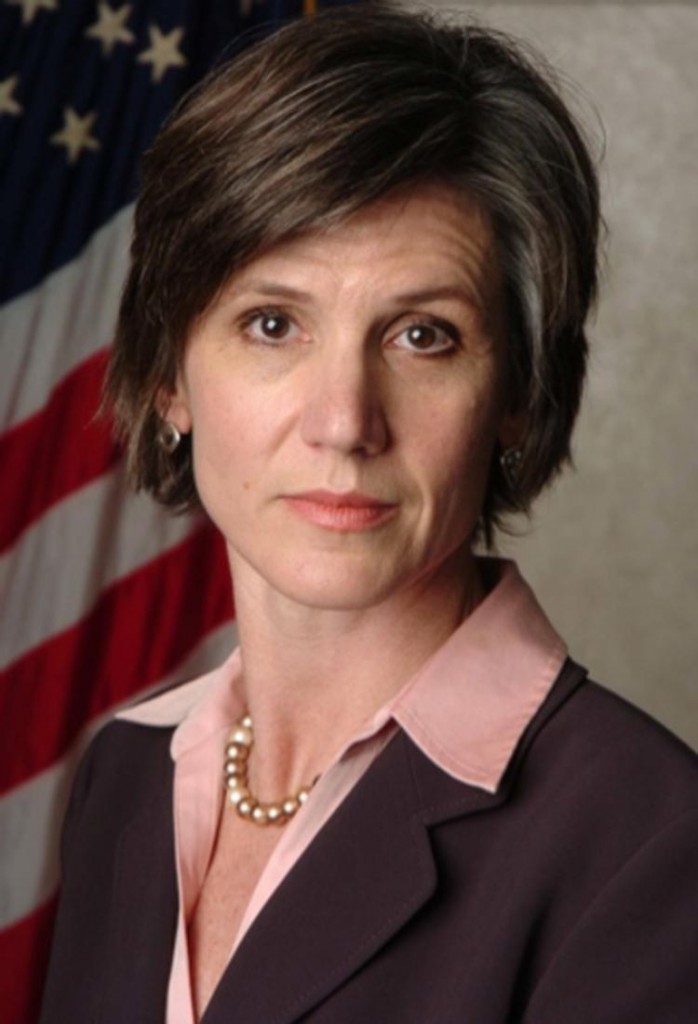
September has traditionally been an active month for Department of Justice policy statements and speeches.
Keeping this tradition alive, earlier this week DOJ Deputy Attorney General Sally Yates delivered this speech and released this memo titled “Individual Accountability for Corporate Wrongdoing” (hereafter the “Yates Memo”). (See here for the video of the speech).
While many will likely view the Yates Memo as articulating new DOJ policy it really does not.
Rather, the Yates Memo continues the DOJ’s rhetoric as to the importance of individual prosecutions and is substantively similar to this September 2014 speech delivered by then Principal Deputy Attorney General Marshall Miller and this September 2014 speech delivered by then Attorney General Eric Holder.
In any event, the Yates Memo has already attracted substantial press (see here, here and here for instance) and will no doubt be the focus of numerous law firm client alerts in the near future. The Yates Memo is the latest in a long-line of DOJ policy memos. (See here for the 1999 “Holder Memo,” here for 2003 “Thompson Memo,” here for the 2006 “McNulty Memo” and here for the 2008 “Filip Memo”).
The Yates Memo repeats the following DOJ rhetoric:
“One of the most effective ways to combat corporate misconduct is by seeking accountability from the individuals who perpetrated the wrongdoing. Such accountability is important for several reasons: it deters future illegal activity, it incentivizes changes in corporate behavior, it ensures that the proper parties are held responsible for their actions, and it promotes the public’s confidence in our justice system.”
This is rhetoric because the reality is that few DOJ corporate enforcement actions result in any related charges against company employees. In the FCPA context, as noted in this prior post, between 2008-2014, 75% of DOJ corporate enforcement actions have not (at least yet) resulted in any DOJ charges against company employees.
The Yates Memo then states as follows.
“There are, however, many substantial challenges unique to pursuing individuals for corporate misdeeds. In large corporations, where responsibility can be diffuse and decisions are made at various levels, it can be difficult to determine if someone possessed the knowledge and criminal intent necessary to establish their guilt beyond a reasonable doubt. This is particularly true when determining the culpability of high-level executives, who may be insulated from the day-to-day activity in which the misconduct occurs. As a result, investigators often must reconstruct what happened based on a painstaking review of corporate documents, which can number in the millions, and which may be difficult to collect due to legal restrictions.
These challenges make it all the more important that the Department fully leverage its resources to identify culpable individuals al all levels in corporate cases. To address these challenges, the Department convened a working group of senior attorneys from Department components and the United States Attorney community with significant experience in this area. The working group examined how the Department approaches corporate investigations, and identified areas in which it can amend its policies and practices in order to most effectively pursue the individuals responsible for corporate wrongs. This memo is a product of the working group’s discussions.
The measures described in this memo arc steps that should be taken in any investigation of corporate misconduct. Some of these measures are new, while others reflect best practices that are already employed by many federal prosecutors. Fundamentally, this memo is designed to ensure that all attorneys across the Department are consistent in our best efforts to hold to account the individuals responsible for illegal corporate conduct.
The guidance in this memo will also apply to civil corporate matters. In addition to recovering assets, civil enforcement actions serve to redress misconduct and deter future wrongdoing. Thus, civil attorneys investigating corporate wrongdoing should maintain a focus on the responsible individuals, recognizing that holding them to account is an important part of protecting the public fisc in the long term.
The guidance in this memo reflects six key steps to strengthen our pursuit of individual corporate wrongdoing, some of which reflect policy shifts and each of which is described in greater detail below: (l) in order to qualify for any cooperation credit, corporations must provide to the Department all relevant facts relating to the individuals responsible for the misconduct; (2) criminal and civil corporate investigations should focus on individuals from the inception of the investigation; (3) criminal and civil attorneys handling corporate investigations should be in routine communication with one another; ( 4) absent extraordinary circumstances or approved departmental policy, the Department will not release culpable individuals from civil or criminal liability when resolving a matter with a corporation; (5) Department attorneys should not resolve matters with a corporation without a clear plan to resolve related individual cases, and should memorialize any declinations as to individuals in such cases; and (6) civil attorneys should consistently focus on individuals as well as the company and evaluate whether to bring suit against an individual based on considerations beyond that individual’s ability to pay.”
The remainder of this post highlights specifics in the Yates Memo as to the above six topics and includes in italics portions of Yates’s speech relevant to the specific topic.
The Yates Memo states:
1. To be eligible for anv cooperation credit, corporations must provide to the Department all relevant facts about the individuals involved in corporate misconduct.
In order for a company to receive any consideration for cooperation under the Principles of Federal Prosecution of Business Organizations, the company must completely disclose to the Department all relevant facts about individual misconduct. Companies cannot pick and choose what facts to disclose. That is, to be eligible for any credit for cooperation, the company must identify all individuals involved in or responsible for the misconduct at issue, regardless of their position, status or seniority, and provide to the Department all facts relating to that misconduct. If a company seeking cooperation credit declines to learn of such facts or to provide the Department with complete factual information about individual wrongdoers, its cooperation will not be considered a mitigating factor pursuant to USAM 9-28.700 el seq. Once a company meets the threshold requirement of providing all relevant facts with respect to individuals, it will be eligible for consideration for cooperation credit. The extent of that cooperation credit will depend on all the various factors that have traditionally applied in making this assessment (e.g., the timeliness of the cooperation, the diligence, thoroughness, and speed of the internal investigation, the proactive nature of the cooperation, etc.).
This condition of cooperation applies equally to corporations seeking to cooperate in civil matters; a company under civil investigation must provide to the Dcpaiiment all relevant facts about individual misconduct in order to receive any consideration in the negotiation. For example, the Department’s position on “full cooperation” under the False Claims Act, 31 U.S.C. § 3729(a)(2), will be that, at a minimum, all relevant facts about responsible individuals must be provided.
The requirement that companies cooperate completely as to individuals, within the bounds of the law and legal privileges, see USAM 9-28.700 to 9-28.760, docs not mean that Department attorneys should wait for the company to deliver the information about individual wrongdoers and then merely accept what companies provide. To the contrary, Department attorneys should be proactivcly investigating individLtals at every step of the process – before, during, and after any corporate cooperation. Department attorneys should vigorously review any information provided by companies and compare it to the results of their own investigation, in order to best ensure that the information provided is indeed complete and docs not seek to minimize the behavior or role of any individual or group of individuals.
Department attorneys should strive to obtain from the company as much information as possible about responsible individuals before resolving the corporate case. But there may be instances where the company’s continued cooperation with respect to individuals will be necessary post-resolution. In these circumstances, the plea or settlement agreement should include a provision that requires the company to provide information about all culpable individuals and that is explicit enough so that a failure to provide the information results iu specific consequences, such as stipulated penalties and/or a material breach.”
In her speech, Yates stated:
“[T]o the average guy on the street, this might not sound like a big deal. But those of you active in the white-collar area will recognize it as a substantial shift from our prior practice. While we have long emphasized the importance of identifying culpable individuals, until now, companies could cooperate with the government by voluntarily disclosing improper corporate practices, but then stop short of identifying who engaged in the wrongdoing and what exactly they did. While the companies weren’t entitled to full credit for cooperation, they could still get credit for what they did do and that credit could be enough to avoid indictment.
The rules have just changed. Effective today, if a company wants any consideration for its cooperation, it must give up the individuals, no matter where they sit within the company. And we’re not going to let corporations plead ignorance. If they don’t know who is responsible, they will need to find out. If they want any cooperation credit, they will need to investigate and identify the responsible parties, then provide all non-privileged evidence implicating those individuals.
While this is new for the corporate world, there’s nothing radical about the concept. It’s the same rule we apply to cooperators in any other type of criminal investigation. A drug trafficker can decide to flip against his co-conspirators. He can proffer to the government the full scope of the criminal scheme. He can take the stand for the government and testify against a dozen street-level dealers. But if he has information about the cartel boss and declines to share it, we rip up his cooperation agreement and he serves his full sentence. The same is true here. A corporation should get no special treatment as a cooperator simply because the crimes took place behind a desk.
…
This new cooperation requirement does not mean that DOJ will sit back and wait for the company to deliver the information about individual wrongdoers and then merely accept what companies provide. To the contrary, department attorneys will be actively investigating individuals at every step of the process – before, during and after any corporate cooperation. Department attorneys will be vigorously testing information provided by companies and comparing it to the results of our own investigation to ensure that it is indeed complete and that it doesn’t seek to minimize the role of any one person or group of individuals.
Building on this point, a company should not assume that its cooperation ends as soon as it settles its case with the government. Going forward, corporate plea agreements and settlement agreements will include a provision that requires the companies to continue providing relevant information to the government about any individuals implicated in the wrongdoing. A company’s failure to continue cooperating against individuals will be considered a material breach of the agreement and grounds for revocation or stipulated penalties.
And one final note on this point. The purpose of this policy is to better identify responsible individuals, not to burden corporations with longer or more expensive internal investigations than necessary. We are not asking companies to “boil the ocean,” so to speak, and embark upon a multimillion-dollar investigation every time they learn about misconduct. We expect thorough investigations tailored to the scope of the wrongdoing. So for all the defense lawyers in the room – and I know there are plenty of you – keep this in mind. If you are representing a corporation and there’s a question about the scope of what’s required, you can do what many defense attorneys do now – pick up the phone and discuss it with the prosecutor.”
The Yates Memo states:
2. Both criminal and civil corporate investigations should focus on individuals from the inception of the investigation.
Both criminal and civil attorneys should focus on individual wrongdoing from the very beginning of any investigation of corporate misconduct. By focusing on building cases against individual wrongdoers from the inception of an investigation, we accomplish multiple goals. First, we maximize our ability to ferret out the full extent of corporate misconduct. Because a corporation only acts through individuals, investigating the conduct of individuals is the most efficient and effective way to determine the facts and extent of any corporate misconduct. Second, by focusing our investigation on individuals, we can increase the likelihood that individuals with knowledge of the corporate misconduct will cooperate with the investigation and provide information against individuals higher up the corporate hierarchy. Third, by focusing on individuals from the very beginning of an investigation, we maximize the chances that the final resolution of an investigation uncovering the misconduct will include civil or criminal charges against not just the corporation but against culpable individuals as well.
In her speech, Yates stated:
“One of the things we have learned from experience is that it is extremely difficult to build a case against individuals, civil or criminal, unless we focus on individuals from the very beginning. For example, if an investigation starts as a civil inquiry into the company and interviews are conducted and documents gathered with a focus on corporate liability, it is often challenging for our attorneys to then go back at the conclusion of the civil matter and build a criminal case against individuals. This is particularly true not only because of the sheer passage of time, but also because individual criminal liability often hinges on proving a level of criminal intent much more demanding than what was required in the civil case.
To address this problem, the department yesterday instructed its attorneys that, going forward, they are to focus on individuals from the start of an investigation, regardless of whether the investigation begins civilly or criminally. Moreover, once a case is underway, the inquiry into individual misconduct can and should proceed in tandem with the broader corporate investigation. Delays in the corporate case will no longer suffice as a reason to delay pursuit of the individuals involved.”
The Yates Memo states:
3. Criminal and civil attorneys handling corporate investigations should be in routine communication with one another.
Early and regular communication between civil attorneys and criminal prosecutors handling corporate investigations can be crucial to our ability to effectively pursue individuals in these matters. Consultation between the Department’s civil and criminal attorneys, together with agency attorneys, permits consideration of the full range of the government’s potential remedies (including incarceration, fines, penalties, damages, restitution to victims, asset seizure, civil and criminal forfeiture, and exclusion, suspension and debarment) and promotes the most thorough and appropriate resolution in every case. That is why the Department has long recognized the importance of parallel development of civil and criminal proceedings. See USAM 1-12.000.
Criminal attorneys handling corporate investigations should notify civil attorneys as early as permissible of conduct that might give rise to potential individual civil liability, even if criminal liability continues to be sought. Further, ifthcre is a decision not to pursue a criminal action against an individual – due to questions of intent or burcleu of prool~ for example criminal attorneys should confer with their civil counterparts so that they may make an assessment under applicable civil statutes and consistent with this guidance. Likewise, if civil attorneys believe that an individual identified in the course of their corporate investigation should be subject to a criminal inquiry, that matter should promptly be referred to criminal prosecutors, regardless ofthe current status ofthe civil corporate investigation.
Department attorneys should be alert for circumstances where concurrent criminal and civil investigations of individual misconduct should be pursued. Coordination in this regard should happen early, even if it is not certain that a civil or criminal disposition will be the end result for the individuals or the company.
In her speech, Yates stated:
“The best way to ensure that criminal prosecutors don’t need to go back and build a new case after the civil attorneys finish their inquiry – or vice versa – is to make sure that everyone’s talking to each other from the very beginning. And so we are directing our civil and criminal attorneys to collaborate to the full extent permitted by law at all stages of the investigation. The Department of Justice has access to a wide range of enforcement remedies – from civil penalties to lengthy prison sentences – and the only way to leverage our full authority is by ensuring early and regular communication. To make sure nothing slips through the cracks, we’re formalizing these lines of communication. Going forward, regardless of whether a corporate case begins as a civil or criminal inquiry, the DOJ attorneys initially handling the matter will be responsible for notifying the “other side of the house” about the investigation. As the case proceeds, civil and criminal attorneys will be in regular contact. If prosecutors decide not to bring criminal charges against individuals, they will need to notify their civil counterparts, who can make an independent assessment of civil liability. And if civil attorneys identify individuals during their investigation who should be subject to a criminal inquiry, they will be expected to promptly refer the matter to criminal prosecutors, regardless of the current status of the civil corporate investigation.”
The Yates Memo states:
4. Absent extraordinary circumstances, no corporate resolution will provide protection from criminal or civil liability for any individuals.
There may be instances where the Department reaches a resolution with the company before resolving matters with responsible individuals. In these circumstances, Department attorneys should take care to preserve the ability to pursue these individuals. Because of the importance of holding responsible individuals to account, absent extraordinary circumstances or approved departmental policy such as the Antitrust Division’s Corporate Leniency Policy, Department lawyers should not agree to a corporate resolution that includes an agreement to dismiss charges against, or provide immunity for, individual officers or employees. The same principle holds true in civil corporate matters; absent extraordinary circumstances, the United States should not release claims related to the liability of individuals based on corporate settlement releases. Any such release of criminal or civil liability clue to extraordinary circumstances must be personally approved in writing by the relevant Assistant Attorney General or United States Attorney.
5. Corporate cases should uot be resolved without a clear plan to resolve related individual cases before the statute of limitations expires and declinations as to individuals in such cases must be memorialized.
If the investigation of individual misconduct has not concluded by the time authorization is sought to resolve the case against the corporation, the prosecution or corporate authorization memorandum should include a discussion of the potentially liable individuals, a description of the current status of the investigation regarding their conduct and the investigative work that remains to be done, and an investigative plan to bring the matter to resolution prior to the end of any statute of limitations period. If a decision is made at the conclusion of the investigation not to bring civil claims or criminal charges against the individuals who committed the misconduct, the reasons for that determination must be memorialized and approved by the United States Attorney or Assistant Attorney General whose office handled the investigation, or their designees.
Delays in the corporate investigation should not affect the Department’s ability to pursue potentially culpable individuals. While every effort should be made to resolve a corporate matter within the statutorily allotted time, and tolling agreements should be the rare exception, in situations where it is anticipated that a tolling agreement is nevertheless unavoidable and necessary, all efforts should be made either to resolve the matter against culpable individuals before the limitations period expires or to preserve the ability to charge individuals by tolling the limitations period by agreement or court order.
In her speech, Yates stated:
“The fourth and fifth policies relate to how we resolve cases. As I mentioned earlier, delays in corporate investigations should not delay our ability or willingness to resolve related cases against individuals. In most instances, this will mean that we resolve cases with individuals before or at the same time that we resolve the matter against the corporation. If, however, DOJ attorneys decide it is necessary to resolve the corporate case first, they will only be permitted to do so once they have demonstrated a clear plan to their supervisors for resolving the related individual cases – promptly and before the statute of limitations expires. If at the conclusion of the investigation the DOJ attorneys decide not to bring charges against individuals, they will be expected to memorialize their justification and then obtain approval from the U.S. Attorney or the Assistant Attorney General overseeing the investigation. Likewise, we are instructing our attorneys that they should not release individuals from civil or criminal liability when resolving a matter with corporation, except under the rarest of circumstances. When such circumstances do arise, the litigating attorneys will be required to obtain written approval from the relevant U.S. Attorney or Assistant Attorney General. We will be monitoring these approval processes closely, in no small part so we can more readily identify whatever trends are limiting our ability to pursue individual cases.”
The Yates Memo states:
6. Civil attorneys should consistently focus on individuals as well as the company and evaluate whether to bring suit against an individual based on considerations beyond that individual’s ability to pay.
The Department’s civil enforcement efforts are designed not only to return government money to the public fisc, but also to hold the wrongdoers accountable and to deter future wrongdoing. These twin aims – of recovering as much money as possible, on the one hand, and of accountability for and deterrence of individual misconduct, on the other – are equally important. In certain circumstances, though, these dual goals can be in apparent tension with one another, for example, when it comes to the question of whether to pursue civil actions against individual corporate wrongdoers who may not have the necessary financial resources to pay a significant judgment.
Pursuit of civil actions against culpable individuals should not be governed solely by those individuals’ ability to pay. In other words, the fact that an individual may not have sufficient resources to satisfy a significant judgment should not control the decision on whether to bring suit. Rather, in deciding whether to file a civil action against an individual, Department attorneys should consider factors such as whether the person’s misconduct was serious, whether it is actionable, whether the admissible evidence will probably be sufficient to obtain and sustain a judgment, and whether pursuing the action reflects an important federal interest. Just as our prosecutors do when making charging decisions, civil attorneys should make individualized assessments in deciding whether to bring a case, taking into account numerous factors, such as the individual’s misconduct and past history and the circumstances relating to the commission of the misconduct, the needs of the communities we serve, and federal resources and priorities.
Although in the short term certain cases against individuals may not provide as robust a monetary return on the Department’s investment, pursuing individual actions in civil corporate matters will result in significant long-term deterrence. Only by seeking to hold individuals accountable in view of all of the factors above can the Department ensure that it is doing everything in its power to minimize corporate fraud, and, over the course of time, minimize losses to the public fisc through fraud.
In her speech Yates stated:
“Sixth and final, we’re broadening the focus of our civil enforcement strategy. Generally speaking, when a criminal prosecutor is deciding whether to charge an individual, he or she consults with the department’s principles of federal prosecution, which lays out various considerations, including the nature and seriousness of the offense and the impact of the crime on its victims. While some of our civil litigators have routinely pursued individuals, others have not – primarily because they have focused on the likelihood of financial recovery from their investigative targets. This was an understandable practice, given that monetary sanctions are the most common form of relief in civil case, but it naturally prioritized large-scale corporate investigations over civil enforcement actions against the individuals who perpetrated the wrongdoing.
There is real value, however, in bringing civil cases against individuals who engage in corporate misconduct, even if that value cannot always be measured in dollars and cents. Civil enforcement actions, like criminal prosecutions, hold wrongdoers accountable for their actions and deter future wrongdoing. While we may not be able to satisfy the entire judgment with an individual’s resources, if that individual is liable, we can take what they have and ensure that they don’t benefit from their wrongdoing. These individual civil judgments will also become part of corporate wrongdoers’ resumes that will follow them throughout their careers. And by holding individuals accountable, we can change corporate culture to appropriately recognize the full costs of wrongdoing, rather than treating liability as a cost of doing business – a change that will protect public resources over the long term.
Beyond that, our civil attorneys recognize that they have an obligation to protect not only the public fisc, but also the public itself. So, going forward we will be pursuing civil actions against corporate wrongdoers even if those wrongdoers don’t have the financial resources to satisfy a significant money judgment. And our civil lawyers will be looking at factors similar to those considered by our criminal prosecutors, such as the individual’s misconduct, past history and the circumstances relating to the commission of the misconduct, in deciding whether to bring suit. An individual’s financial resources will be only one consideration in that assessment, rather than a determinative factor.
We are going to continually reexamine our practices to ensure that we’re doing everything we can to hold corporate wrongdoers accountable. Despite this, there will still be cases where we don’t have the evidence necessary to establish an individual’s criminal intent beyond a reasonable doubt. And regardless of public demand, we will never bring charges against anyone unless we are satisfied that the individual is in fact guilty of a crime. That is the core of our responsibility and promise to the American people. And I should be clear: while these policy shifts are effective immediately, the public won’t see the impact of these steps over night. Some of these policies will affect cases that are only beginning now and may take years to become public. In the coming weeks and months, we’ll be providing additional training and guidance to our prosecutors to help them take full advantage of these policy shifts. Next week, for example, I will be convening a national training conference in Washington for experienced white collar prosecutors and civil litigators from across the department to discuss these new policies and other practical ways to enhance our efforts to hold corporate wrongdoers accountable.”
In concluding her speech, Yates stated:
“We make these changes recognizing the challenges that they may present. Some corporations may decide, for example, that the benefits of consideration for cooperation with DOJ are not worth the costs of coughing up the high-level executives who perpetrated the misconduct. Less corporate cooperation could mean fewer settlements and potentially smaller overall recoveries by the government. In addition, individuals facing long prison terms or large civil penalties may be more inclined to roll the dice before a jury and consequently, we could see fewer guilty pleas.
Only time will tell. But if that’s what happens, so be it. Our mission here is not to recover the largest amount of money from the greatest number of corporations; our job is to seek accountability from those who break our laws and victimize our citizens. It’s the only way to truly deter corporate wrongdoing.
At the Department of Justice, our ability to fulfill our responsibilities – to advocate for victims, to vigorously pursue misconduct, to seek justice in all its forms – depends on public confidence in the institutions we represent. But the public’s confidence is not something to be assumed or expected; it is something that we must earn and be vigilant in maintaining over time. We do that by relentlessly pursuing wrongdoing, no matter who those wrongdoers may be. The men and women of the Department of Justice have always embraced this challenge, as both an opportunity and a privilege and once again, we embrace the task presented here. There is one system of justice, demanding that all be held accountable when laws are broken. We look forward to the work that will be required as we seek greater accountability from those who use corporations to lie, cheat and steal. It won’t always be easy, but we’re ready for it. Our nation and its citizens deserve nothing less.”
Friday Roundup
Scrutiny alerts and updates, quotable, and for the reading stack. It’s all here in the Friday Roundup.
Scrutiny Alerts and Updates
Net1
As highlighted here, in 2012 Net1 UEPS (a South African telecommunications company with shares traded on a U.S. exchange) disclosed that it had received information requests from the DOJ and SEC following South African media reports concerning civil litigation in that country by an unsuccessful bidder of a telecommunications contract.
As highlighted here, in 2013 Net1 announced: “[A] full bench of the South African Supreme Court of Appeal (“Appeal Court”) unanimously ruled that the tender process followed by the South African Social Security Agency (“SASSA”) in awarding a contract to Net1’s wholly owned subsidiary Cash Paymaster Services (Proprietary) Limited (“CPS”) was valid and legal.”
Recently, the company disclosed as follows.
“[We have] received a letter from the Foreign Corrupt Practices Act unit of the Division of Enforcement of the U.S. Securities and Exchange Commission (“SEC”), advising the Company as follows:
“We have concluded the investigation as to Net 1 UEPS Technologies, Inc. Based on the information we have as of this date, we do not intend to recommend an enforcement action by the Commission against Net 1 UEPS Technologies, Inc. We are providing this notice under the guidelines set out in the final paragraph of Securities Act Release No. 5310, which states in part that the notice “must in no way be construed that the party has been exonerated or that no action may ultimately result from the staff’s investigation” […]
“The investigation commenced in December 2012 following the award of the SASSA national contract to us in January 2012,” said Dr. Serge Belamant, Chairman and CEO of Net1. “It commenced largely as a result of one of the losing bidders for the contract, Barclays Africa’s subsidiary AllPay, referring unsubstantiated South African press articles alleging irregularities in the tender process to the U.S. Department of Justice. We believe that AllPay was responsible for instigating those media allegations. This resulted in the DOJ and SEC initiating investigations into alleged FCPA and disclosures violations. This letter from the SEC is an important step in the Company clearing its name and is in line with the total absence of any findings of irregularities against Net1 by any South African Court or Regulator resulting from actions pursued by AllPay over the past three years,” he concluded.
The separate investigation into these matters initiated by Net1 itself with the South African Police’s Commercial Crimes unit is expected to be concluded shortly.
It is the Company’s understanding that the DOJ investigation remains open at this time.”
Electrobras
As noted here:
“Brazil’s state-run power company Centrais Eletricas Brasileiras SA has hired U.S. law firm Hogan Lovells to assess possible cases of corruption in some of the projects the company is involved in. Eletrobras, as the company is known, said in a filing to the Brazilian market regulator that the law firm will check whether there were practices which violated the U.S. Foreign Corrupt Practices Act. The projects to be scrutinized will be selected based on their financial relevance to the company and on their relationships with construction companies already being investigated by Brazilian authorities in the so-called Operation Car Wash, focused on state-run oil company Petrobras. Eletrobras also said that internal units assigned to investigate possible wrongdoings are progressing with evaluations and that it will inform investors of their findings as soon as they are available.”
SOCO International
The British oil and gas company with ADRs traded on a U.S. exchange was recently the subject of this New York Times article:
“[A]ccording to documents obtained by Global Witness, an advocacy group, SOCO appears to have paid tens of thousands of dollars to a Congolese Army officer who has been accused of leading a brutal campaign against those objecting to the company’s oil exploration in the nature reserve, Virunga National Park. Over the course of two weeks during the spring of 2014, according to the documents, the officer, Maj. Burimba Feruzi, received at least $42,250 in payments from a local bank account associated with SOCO. That is the equivalent of 30 years of salary for the army officer, according to Global Witness.”
Quotable
Earlier this week Assistant Attorney General Leslie Caldwell spoke at the Annual Association of Certified Fraud Examiners Global Fraud Conference. In pertinent part, she stated:
“The threats posed by international corruption cannot be overlooked. Corruption renders countries less safe and less stable. Corruption thwarts economic development, traps entire populations in poverty and undercuts credible justice systems.
International corruption also inhibits the ability of American companies—and others—to compete overseas on a level playing field. Once bribery and corruption take hold, fair and competitive business practices are eliminated.
A timely example of how corruption can infect international business practices is the FIFA case recently charged by the U.S. Attorney’s Office of the Eastern District of New York. In that case, nine FIFA officials and five corporate executives have been charged with various offenses, including racketeering conspiracy, in connection with a 24-year scheme to enrich themselves through the corruption of international soccer. The Criminal Division’s Office of International Affairs has worked closely with the lead FIFA prosecutors to obtain evidence from numerous countries across the globe. Swiss authorities have opened a separate, parallel probe into FIFA, relating to the selection of World Cup hosts. We are sharing evidence and collaborating closely with governments around the world in connection with the ongoing investigation. This worldwide effort is a profound illustration of the success that can be achieved through a truly global coalition.
In many ways, the FIFA case is very much like the Foreign Corrupt Practices Act (FCPA) cases the Criminal Division is regularly investigating and prosecuting to attack illegal conduct in the global marketplace. These cases protect markets from corruption and the artificial influences of bribery, and ensure that American companies—indeed, all companies—can compete fairly and freely across international boundaries.
But make no mistake: fighting corruption is not some service we provide to the global community; this is a fight in which we have critical international allies. Far from acting as the world’s corruption police, the United States is part of a formidable and growing coalition of international enforcement partners who together combat corruption around the world—at home as well as abroad—that threatens each of our nations.
It is not just the United States that is recognizing the importance of foreign bribery laws. There is a growing chorus of countries voicing support for the fight against this type of corruption. More and more countries are joining international bodies—like the Organisation for Economic Co-operation and Development—that provide uniform standards for the criminalization of bribery of foreign public officials in international business transactions. This type of collaboration is critical if we are going to have a meaningful impact on international corruption.
[…]
At the same time that we work to combat corruption overseas, we are also increasing our efforts to ensure that American borders do not protect criminals or their assets. In this regard, the Justice Department launched the Kleptocracy Asset Recovery Initiative in 2010. The initiative relies on the use of U.S. civil forfeiture actions to recover the proceeds of foreign official corruption that pass through the United States.
More simply, it takes the monies and assets stolen by foreign despots and kleptocrats and returns them to the people harmed. This initiative protects the integrity of the U.S. financial system from use by corrupt officials and denies those officials the ability to enjoy luxuries purchased in the United States at the expense of the populations they purport to serve.
In many ways, the Criminal Division’s FCPA enforcement program and our Kleptocracy Initiative are really two sides of the same anti-corruption coin. We bring those who pay bribes to justice, no matter how rich and powerful they are. But by itself, that is not enough. We also attack corruption at its source, by prosecuting and seizing the assets of the corrupt officials who betray the trust of their people.”
[…]
The United States is not going to overcome the threat posed by global corruption and international organized crime by going it alone. The Department of Justice is never going to serve as the world’s global police force. But we can—and I believe we should—lead by example: by vigorously investigating and prosecuting international corruption and organized crime when it violates U.S. laws, and by sustaining and increasing our commitment to international collaboration in our nations’ shared struggle to safeguard our markets, our networks and our citizens.
Under my leadership, the Criminal Division will remain steadfastly committed to forging and growing our international partnerships as we fight the scourge of international corruption and organized crime.”
*****
This recent Global Investigations Review article highlights comments made by Matthew Queler ( assistant chief of the DoJ’s FCPA unit) concerning the hiring of so-called princelings (a hiring practice that has resulted in FCPA scrutiny of a variety of companies in the financial services sector). Queler’s comments reminded me of reading an article from the Onion in that he basically said its OK to hire princelings so long as it is legal and we at the DOJ determine what legal is.
For the Reading Stack
From Morrison & Foerster’s most recent Anti-Corruption Developments alert.
“DOJ Revokes Non-Prosecution Agreement (NPA). As we previously reported, Assistant Attorney General Leslie Caldwell publicly stated last month that DOJ would “not hesitate to tear up a DPA or NPA and file criminal charges” if a company breaches its agreement. AAG Caldwell’s statement was likely intended to foreshadow DOJ’s May 20, 2015 announcement that it had revoked an NPA with a corporate defendant, the first action of this kind since the revocation of a DPA with Aibel Group Limited in November 2008. In 2012, DOJ entered into an NPA with UBS AG in which DOJ declined to prosecute the bank for any crimes related to its submission of interest rates for LIBOR and other rate benchmarks. In return, the company was required to abide by several conditions during the pendency of the NPA, including the requirement that it “commit no United States crime whatsoever.” DOJ revoked the NPA after (according to the factual statement attached to the guilty plea) the company “engaged in deceptive FX trading and sales practices.” Although not an FCPA case, the revocation of the NPA in this case is relevant to FCPA enforcement because DOJ’s Fraud Section, which has exclusive authority to bring criminal FCPA cases, was involved in the decision. There are a number of reasons to find this action unfair to companies where, as here, the company implemented an enhanced compliance program, and once it found issues, it brought them forward voluntarily to the Antitrust Division (indeed, qualifying for immunity under the Leniency Program). In other words, the company undertook an enhanced compliance program as it promised to do and then it brought the matter forward, as DOJ has repeatedly encouraged companies to do, only to be punished for it. DOJ’s action, thus, presents a potential disincentive to well-meaning companies to report problems discovered as a product of the enhanced compliance program implemented in the wake of a DOJ resolution.”