

A Look At The “FEPA Report”

The Foreign Extortion Prevention Act states that:
“not later than 1 year after the date of enactment … and annually thereafter, the Attorney General in consultation with the Secretary of State as relevant, shall submit to the Committee on the Judiciary and the Committee on Foreign Relations of the Senate and the Committee on the Judiciary and the Committee on Foreign Affairs of the House of Representatives, and post on the publicly available website of the Department of Justice, a report:
“(A) focusing, in part, on demands by foreign officials for bribes from entities domiciled or incorporated in the United States, and the efforts to foreign governments to prosecute such cases; (B) addressing United States diplomatic efforts to protect entities domiciled or incorporated in the United States from foreign bribery, and the effectiveness of those efforts in protecting such entities; (C) summarizing major actions taken under this section in the previous year, including enforcement actions taken and penalties imposed; (D) evaluating the effectiveness of the Department of Justice in enforcing this section; and (E) detailing what resources or legislative action the Department of Justice needs to ensure adequate enforcement of this section.”
Recently, duplicate letters (to various members of Congress) were put on the DOJ’s website. (See here).
Checking In On FEPA

Several prior posts (here, here, here) have discussed various aspects of the Foreign Extortion Prevention Act (FEPA) – a law enacted in 2023 to – as the narrative goes – fill a “gap” in the FCPA given that the FCPA only captures the-so-called “supply” side of foreign bribery and not the so-called “demand-side” of foreign bribery.
Whether FEPA was even needed was an open question as the DOJ has long used other criminal statutes (most often money laundering laws) to criminally charge “foreign officials” in connection with alleged bribery schemes.
Even so, if you advocated for a new law and marshalled it through the legislative process, you probably want to see the law enforced.
A Fishy Situation
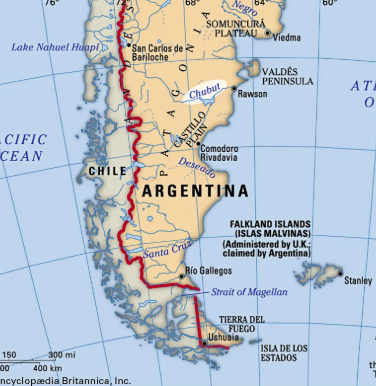
An interesting civil action was recently filed in federal court in California by Red Chamber Co. (a world leader in the fishing industry and one of the largest global suppliers of shrimp) against Grupo Profand S.L. (a multinational company headquartered in Spain engaged in the fishing, processing, and commercialization of seafood products).
The complaint begins:
“This case is about economic espionage, corporate subterfuge, and government corruption in Argentina that has resulted and will continue to result in a sever domestic injury suffered in California to one of the largest and most respected family-owned businesses in the United States.”
A “Foreign Official” Is Sentenced To Approximately 13 Years For Money Laundering

When the Foreign Extortion Prevention Action (FEPA) was enacted in late 2023 it was portrayed by some as filling a legal gap given that the Foreign Corrupt Practices Act only captures the supply side of “bribery” and not the “demand side” (the “foreign officials” who receive or request bribes).
Like many things written in the FCPA (and related) space, the assertion lacked context because it ignored the fact that the Department of Justice has long used other criminal statutes (most often money laundering laws) to criminally charge “foreign officials” in connection with alleged bribery schemes before and even after FEPA was enacted. (See here).
Thus, was there really a meaningful “gap” that FEPA was actually filling?
The latest example concerns Omar Ambuila (pictured – a Colombian national employed by the Colombian Tax and Customs Directorate).
Is The DOJ Really Going To “Vigorously Enforce” FEPA?

In a recent speech, DOJ Principal Deputy Assistant Attorney General Nicole Argentieri noted that the DOJ plans “to vigorously enforce” the Foreign Extortion Prevention Act (FEPA).
Time will tell of course, but I have serious doubts that the DOJ will “vigorously enforce” FEPA.
Most FCPA enforcement actions which charge or find violations of the FCPA’s anti-bribery provisions involve an alleged “foreign official” who received things of value. Certain other actions may involve situations in which a “foreign official” was promised something of value in which the “foreign official” agreed to receive or accept the thing of value.