

After Judge Asks DOJ’s Star Witness “Did You Have A Hallucination?” Sigelman Pleads Guilty To Substantially Reduced Charges
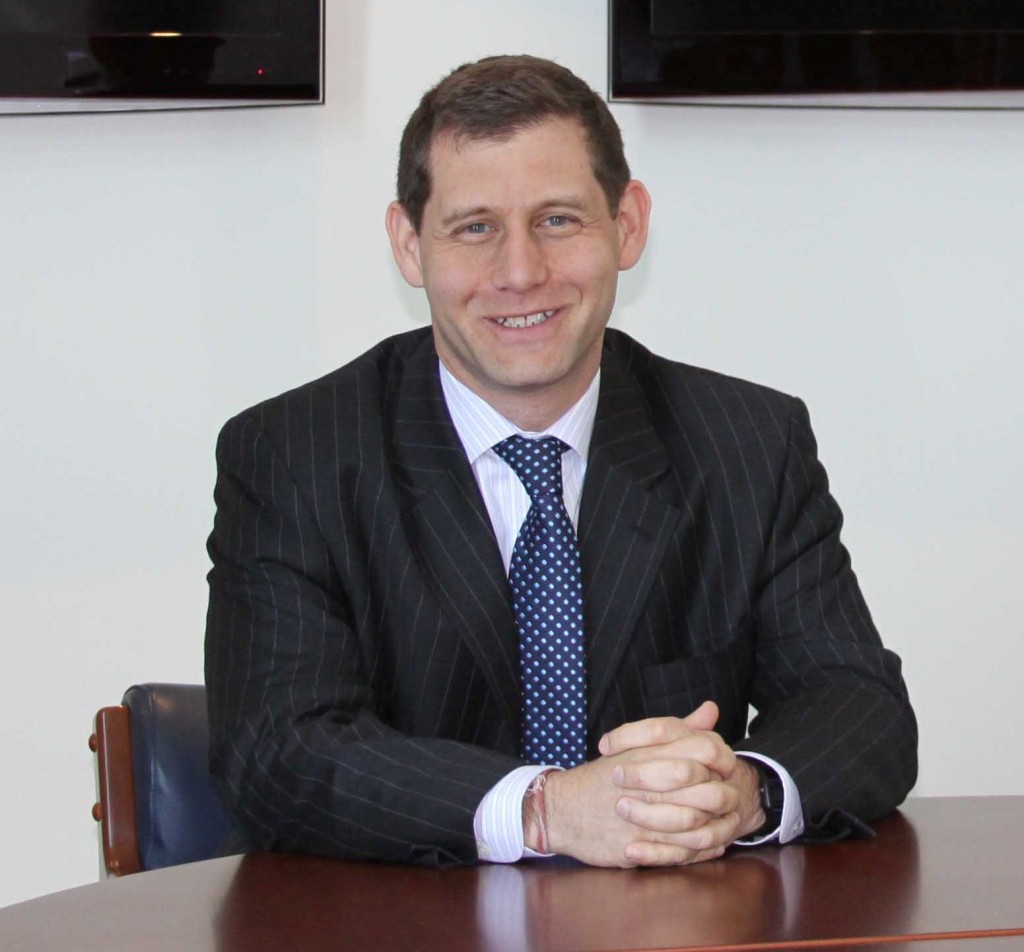
As recently highlighted, for the first time since its trial court debacles in 2011 and 2012, the DOJ was being put to its burden of proof in an individual Foreign Corrupt Practices Act enforcement action.
U.S. v. Joseph Sigelman (pictured at right) was in the early stages of trial when last Thursday the DOJ’s star witness Gregory Weisman (an individual who previously pleaded guilty to the same core conduct and was cooperating with the DOJ in the hopes of achieving a lower sentence) ran into some problems on the witness stand.
In short, Weisman acknowledged giving false testimony during the trial (see here for the transcript and here and here for additional media coverage) prompting federal court judge Joseph Irenas (D.N.J.) to ask Weisman “did you have a hallucination?”
The trial ended for the week as the DOJ contemplated what to do next.
The DOJ of course can control if it is ultimately put to its burden of proof and can effectively pull a case if it feels it will not prevail.
This is what the DOJ did in the so-called Carson cases (see here and here) after the trial court judge issued a pro-defense jury instruction concerning knowledge of status of foreign official. Last year, the SEC did something similar in an enforcement action against Mark Jackson and David Ruehlen – see here.
Yesterday the DOJ effectively pulled its case against Sigelman when it offered the defendant a plea agreement to substantially reduced charges.
In its superseding indictment, the DOJ charged Sigelman with six criminal charges (conspiracy, money laundering, and several substantive FCPA charges) as well as various forfeiture counts. Sigelman, the father of young children, faced up to 20 years in prison if convicted on all counts.
As noted in this DOJ release, Sigelman pleaded guilty to a single count of conspiracy to violate the FCPA. The release, which predictably does not mention the debacle that took place last Thursday, states:
“Sigelman admitted to conspiring with co-CEO Knut Hammarskjold, PetroTiger’s former general counsel Gregory Weisman, and others to make illegal payments of $333,500 to David Duran, an employee of the Colombian national oil company, Ecopetrol. Sigelman admitted to making the payments in exchange for Duran’s assistance in securing a $45 million oil services contract for PetroTiger.”
In this plea agreement, the DOJ stated as follows.
“This Office and Joseph Sigelman agree that, pursuant to Federal Rule of Criminal Procedure l l(c)(l)(C), the sentence to be imposed on Joseph Sigelman, should be as follows: (1) a range from a non-custodial term of probation up to 12 months and one day of incarceration; (2) a fine to be determined by the Court; (3) a term of supervised release of not more than three years; (4) a special assessment of $100; and (5) agreed-upon payment in the amount of $239,015.54 pursuant to 18 U.S.C. § 3663(a)(3)” [which represents a restitution payment to PetroTiger].
UPDATE: Sigelman was sentenced today to probation and will not serve any jail time.
Was the DOJ’s prosecution of Sigelman a success?
Or did Sigelman, mindful of the significant adverse consequences under the Sentencing Guidelines for putting the DOJ to its burden of proof and potentially losing, do what most risk-adverse individuals would do?
I have my own conclusion and you can draw your own.
For additional media coverage of Sigelman’s plea see here from the Wall Street Journal. As noted in the article:
“William Jacobson, a former federal FCPA prosecutor, said the plea agreement “sounds quite generous.” “It sounds like the government had proof problems at the end of the day,” said Mr. Jacobson, who is now an attorney at Orrick Herrington & Sutcliffe LLP.”
See also here from Bloomberg:
“The Justice Department claimed victory on Monday in the abruptly concluded foreign-bribery trial of Miami businessman Joseph Sigelman. But a close look at Sigelman’s guilty plea reveals a prosecution in disarray and a defendant who will walk away with minimal punishment.
Sigelman, the founder and former chief executive of a Colombian oil field-services provider called PetroTiger, pleaded guilty in federal court in Camden, N.J., to conspiring to pay bribes to an official of the Colombian national oil company in violation of the Foreign Corrupt Practices Act (FCPA). Or that’s what the Justice Department emphasized in a triumphant-sounding press announcement listing no fewer than seven federal prosecutors, including the assistant U.S. attorney general in charge of the department’s criminal division.
In fact, with its case rapidly deteriorating, the government agreed to let Sigelman plead to a single count of failing to supervise his employees adequately—a felony akin to criminal negligence. At his sentencing Tuesday, Sigelman faces a sentence of up to a year and a day in prison but is more likely to get probation for a period of one to several years.
That’s a striking victory for the defense, given that Sigelman, 43, originally faced a prison sentence of 20 years. Just before the trial began on June 1, the Justice Department offered him a deal that would have included a 10-year prison sentence; Sigelman refused that deal. If he receives a term of probation, he would have to check in regularly with federal authorities but otherwise could return to his international business activities with few if any restrictions.”
Yesterday’s DOJ release further stated:
“The case was brought to the attention of the department through a voluntary disclosure by PetroTiger, which fully cooperated with the department’s investigation. Based on PetroTiger’s voluntary disclosure, cooperation, and remediation, among other factors, the department declined to prosecute PetroTiger.”
Friday Roundup

FCPA trial starts, scrutiny alerts, ripples, and job alert. It’s all here in the Friday roundup.
FCPA Trial Starts
The DOJ is rarely put in a position to actually prove FCPA offenses.
Sure, there have been some DOJ successes in recent years, but more often than not the DOJ has failed when put to its burden of proof. See here for the article “What Percentage of DOJ FCPA Losses Is Acceptable?” See this prior post for the six most recent instances of the DOJ being put to its burden of proof.
Earlier this week, the first criminal FCPA trial since 2012 began in New Jersey. The defendant is former PetroTiger CEO Joseph Sigelman. For media coverage of the beginning of the trial, see here and here.
As noted by Bloomberg:
“[O]pening arguments confirmed that the government’s case against Sigelman relies heavily on the testimony of the defendant’s former lawyer. Under pressure from the FBI, the lawyer, Gregory Weisman, implicated Sigelman in wrongdoing and then tried to get his former client to incriminate himself during a covertly recorded conversation.
Lead prosecutor Patrick Stokes, who heads the Justice Department’s FCPA unit, told the jury in his opening remarks that Weisman’s testimony—supplemented by surveillance tape of the witness’s encounter with Sigelman in December 2012—would demonstrate that the defendant knew he had broken the law and was afraid of getting caught. At one point during the December 2012 conversation, Sigelman demanded that Weisman lift his shirt to show he wasn’t wearing a wire. Weisman complied. Sigelman didn’t notice, however, that the FBI had equipped his former attorney with a “button camera” that captured the entire episode.
Sigelman’s behavior, Stokes told the jury, was “something an innocent man doesn’t do.”
In fact, when viewed in its entirety, the grainy undercover tape is ambiguous. When Weisman informed Sigelman that the FBI was asking questions about their actions in Colombia, Sigelman said: “Whatever this is about, I’m ready to be with you.”
“And I’m with you, but I’m extremely scared,” Weisman responded.
“I don’t think there’s anything to be concerned about,” Sigelman said. “We paid a guy. We paid a consultant. … The point is, this wasn’t a bribe in any way, shape, or form.”
In his opening argument yesterday, Sigelman’s defense attorney, William Burck, a partner with the law firm Quinn Emanuel Urquhart & Sullivan, told the jury: “We want you to see that tape.” Burck indicated that in cross-examining government witnesses, he would show jurors that in its zeal to find corruption, the Justice Department has transformed a series of corporate and personal entanglements into a criminal conspiracy that never existed. If anyone was truly trying to fight corruption at PetroTiger, it was Sigelman, the defense lawyer said. Resentful of Sigelman’s finger-pointing, the company’s board turned the tables and fed information to U.S. prosecutors, making the ex-CEO out to be the villain, Burck added.”
For a main issue in the case (the status of Colombia’s Ecopetrol S.A.) , see this prior post.
For additional coverage of the trial, see here.
Scrutiny Alerts
CBCNews reports:
“[Canadian authorities] are investigating allegations from a whistleblowing accountant at [Toronto Stock Exchanged]-listed mining company MagIndustries that his bosses paid bribes to officials in the Republic of Congo to win approvals tied to a potash mine development in that country. According to newly unsealed court documents, the RCMP’s sensitive and international investigations unit raided the Toronto offices of MagIndustries in January. The company has been developing a $1.5-billion potash mine and processing facility in the West African country for several years. Search warrant materials obtained by CBC News tell a cautionary tale about the company, which is registered in Toronto but controlled by Chinese interests since a takeover in 2011. Those investors and managers are now ensnared in an international police bribery investigation. The RCMP believe four top executives with the company, including CEO Longbo Chen who took over in 2012, ignored warnings from Canadian financial advisers and signed off on a string of illegal payments to Congolese officials.”
Bloomberg reports:
“Prosecutors investigating Brazil’s largest corruption scandal say they notified the U.S. Department of Justice of evidence that at least four foreign companies allegedly paid bribes to win Petroleo Brasileiro SA contracts. The allegations are against units or affiliates of Samsung Heavy Industries Co., Skanska AB, AP Moeller-Maersk A/S and Toyo Engineering Corp., Carlos Lima, the senior prosecutor in a nine-member task force, said in an interview. Companies could face charges in Brazil that would restrict local operations as well as possible sanctions under the U.S. Foreign Corrupt Practices Act, he said last week from Curitiba, Brazil.”
Ripples
Further evidence of FCPA ripples (in other words – how settlement amounts in an actual FCPA enforcement action are often only a relatively minor component of the overall financial consequences that can result from FCPA scrutiny or enforcement in this new era).
Moody’s Investors Service recently downgraded Key Energy Services.
Among the reasons? According to this release:
“The negative outlook reflects significant ongoing cash expenditures (~$59 million as of Q1-2015) associated with the ongoing Foreign Corrupt Practices Act (FCPA) investigations, the uncertainty around final resolution of these legal matters and the severity of any potential penalties or fines that could further pressure liquidity and credit metrics.”
See here for here for the full article “Foreign Corrupt Practices Act Ripples”
Job Alert
Exactech (a company based in Gainesville, Fla. that develops and markets orthopaedic implant devices, related surgical instruments and biologic materials and services to hospitals and physicians) is looking for a Senior Director of Legal to “to provide legal expertise to guide the company’s actions and transactions with particular emphasis on its Anti-Corruption Compliance program.” See here for the full job description.
*****
A good weekend to all.
The Coming Battle Over The Status Of Ecopetrol

As recently highlighted here by the Wall Street Journal, the Foreign Corrupt Practices Act criminal trial of former PetroTiger CEO Joseph Sigelman, originally scheduled to begin this week, was “pushed back for two months to allow him assistance from an unlikely ally: the former Colombian official he is accused of bribing.” As noted in the article, “Mr. Sigelman is accused of paying David Duran, a former official at Colombia’s Ecopetrol SA to win business for his oil services company, PetroTiger.”
This November 2014 post highlighted how Sigelman is challenging various aspects of the DOJ’s case, including its interpretation and application of the “foreign official” element to Ecopetrol. Similar to previous “foreign official” challenges, the DOJ argued that the dispute is an issue of fact inappropriate for pre-trial disposition. Accordingly, as in the previous “foreign official” challenges, the “foreign official” issue is moving to other phases of the case.
Recently the DOJ and Sigelman filed motions foreshadowing the evidence the parties intend to offer to prove or disprove whether Ecopetrol is an “instrumentality” of the Colombian government and thus whether Duran is a “foreign official” under the FCPA.
Although not binding in the Sigelman case pending in federal court in New Jersey, approximately one year ago in U.S. v. Esquenazi, the 11th Circuit concluded, in a case of first impression at the appellate level, that “an ‘instrumentality’ [under the FCPA] is an entity controlled by the government of a foreign country that performs a function the controlling government treats as its own.” (emphasis added).
In this letter the DOJ provides notice that it may call (1) Alejandro Linares Cantillo and (2) Carlos Mantilla McCormick to provide expert testimony. In pertinent part, the letter states:
Alejandro Linares Cantillo
Mr. Linares is the Vice President for Legal Affairs and General Counsel of Ecopetrol S.A., and he has been in this position since October 2014. Mr. Linares’s testimony is based on his training, education, and experience as described in his curriculum vitae, including his experience at Ecopetrol S.A. (“Ecopetrol”), as well as his review of relevant material including, but not limited to, Ecopetrol’s Forms 20-F filed with the U.S. Securities and Exchange Commission, Colombian laws and regulations, scholarly articles and books, and Ecopetrol company materials. If called as a witness, Mr. Linares would generally testify about the history, business, and structure of Ecopetrol over time. Mr. Linares would also testify about the Colombian government’s control of Ecopetrol and the company’s functions as a government-controlled entity, particularly as it relates to the Mansarovar contract at issue in this case. More specifically, if called as a witness, we anticipate Mr. Linares would testify to the following:
In Colombia, the state owns all hydrocarbon reserves. To ensure proper management and supply of hydrocarbon resources to the nation, the Colombian government has adopted laws, regulations, and policies to ensure an appropriate supply of energy to the nation while responsibly maintaining the nation’s hydrocarbon resources. It effectuates these goals through various agencies and state-controlled entities, including Ecopetrol.
Ecopetrol was originally incorporated by the Colombian government on August 25, 1951, as the Empresa Colombiana de Petróleos S.A. It functioned as a governmental industrial and commercial company responsible for administering Colombia’s hydrocarbon resources.
The company’s legal form has evolved since its inception. For example, in 1970, the company adopted its first by-laws, ratifying its nature as a stateowned industrial and commercial company linked to the Ministry of Mines and Energy and fiscally supervised by the Office of the General Controllership.
In 2003 the government restructured Empresa Colombiana de Petróleos into a 100% state-owned corporation by shares linked to the Ministry of Mines and Energy and renamed the company Ecopetrol S.A. (hereinafter referred to as “Ecopetrol” regardless of time period).
In 2006 the legal nature of Ecopetrol was changed to one of a mixed economy corporation, linked with the Ministry of Mines and Energy and funded by Colombian government and private capital.
The Republic of Colombia is required by law to own at least 80% of the outstanding voting shares of Ecopetrol. In 2009 and 2010 the government owned roughly 90% of the outstanding voting shares, and it currently owns roughly 88.5% of Ecopetrol’s outstanding voting shares. Ecopetrol has had American Depository Shares trading on the New York Stock Exchange since 2008.
In 2003 the Colombia government created the National Hydrocarbons Agency (NHA), and the government granted the NHA authority over, among other things, the design, promotion, negotiation, conclusion, tracking, and management of new exploration and exploitation of Colombian hydrocarbon resources. The Ministry of Mines and Energy continues to administer the overall oil policy and planning coordination, and together with the Oil and Gas Regulation Commission it also regulates the downstream sector.
Prior to December 31, 2003, Ecopetrol exercised administrative, industrial, and commercial powers over Colombian hydrocarbon resources owned by the Republic of Colombia.
After December 31, 2003, as a mixed economy company, Ecopetrol retained authority to engage in industrial and commercial activities, under the indirect control of the Colombian government, with respect to, among other things, the exploration, exploitation, transportation, and supply and marketing of Colombian hydrocarbon resources, as well as related concessions, assets, and real estate. It does so as an association contracts administrator in the commercial sphere on behalf of the Colombian government.
Ecopetrol has also retained certain administrative functions with regard to association contracts it entered into prior to December 31, 2003, including the Mansarovar contract at issue in this case. Administrative functions retained by Ecopetrol after December 31, 2003, with respect to association contracts include, but are not limited to, the following: management, development, and negotiation of exploration and exploitation rights in connection with hydrocarbon resources; overseeing the advancement of programs that benefit the communities in the areas of influence of the contracts; managing the Colombian government’s share of moneys and in-kind resources obtained from the exploitation of hydrocarbon resources; and managing and disposing of the assets and real estate associated with exploration and exploitation of hydrocarbon resources at the end of the Association contracts.
Ecopetrol may extend association contracts, at its sole discretion, which is an administrative function. If Ecopetrol refuses to extend an association contract, the right to exploit the hydrocarbon reserves that are the subject of the contract would revert to Ecopetrol, and Ecopetrol would have the right to exploit those reserves for an indefinite period at no additional cost to it.
Ecopetrol is the largest company in Colombia as measured by revenue, assets, and shareholder’s equity. It is also the main producer and supplier of fuel and refined products in Colombia. In recent years it has contributed approximately 15% of the Colombian government’s annual revenues through royalties, taxes and dividends, and it remains the single largest source of revenue for the government. Oil production and exports account for a significant part of Colombia’s economy. Ecopetrol accounts for a significant percentage of Colombia’s oil production, exports of crude oil, imports of refined oil products, and refining capacity.
Ecopetrol owns outright 42% of the total crude oil pipeline shipping capacity in Colombia, and in conjunction with partners 99% of the total product pipeline shipping capacity in Colombia. The Colombian government controls and regulates the pipelines through the Ministry of Mines and Energy by establishing hydrocarbon transportation tariffs and transportation regulations.
Ecopetrol is the only producer of asphalt in the country and accounts for nearly all domestic consumption.
Ecopetrol owns and manages nearly all oil refining capacity in Colombia. Because domestic demand outstrips domestic refining capacity, Ecopetrol also imports refined oil products, including gasoline. The Colombian government, by means of The Oil Prices Stabilization Fund, may control the price of gasoline and other fuels by setting prices for them domestically through the Ministry of Mines and Energy below prices in the international market. The government makes payments to refiners and importers, principally Ecopetrol, to account for any fuel price differential, in favor of Ecopetrol, caused by these domestic fuel price subsidies. The government controls the timing of such payouts to Ecopetrol and other refiners and importers.
While the Colombian government enjoys the advantages of a natural monopoly over many aspects of the management, development, and supply of hydrocarbon resources in Colombia through its control of Ecopetrol, it also restricts Ecopetrol’s market share in other areas. For example, the government prohibits Ecopetrol from owning more than 25% of any natural gas transportation company.
The Colombian government’s budget is set in part based on expected revenues from Ecopetrol. As a result of falling world prices of crude oil, it is anticipated that Ecopetrol’s revenues and profits will decline in 2015, and the Colombian government has had to cut its budget for 2015.
In addition to exerting control over Ecopetrol through law, regulation, and policy, Colombia controls Ecopetrol through its majority shareholding position, through which it directly appoints a majority of the board of directors and indirectly the chief executive officer. The board consists of nine members. As the majority shareholder, the Colombian government has the right to elect the majority of the directors. Ecopetrol’s by-laws establish that three of its directors will be the Minister of Mines and Energy, the Minister of Finance, and the Director of the National Planning Agency. The board also has the authority to hire and fire the chief executive officer of the company.
As the majority shareholder in Ecopetrol, the Colombian government may propose and approve decisions that are in furtherance of its own economic and political interests that do not necessarily benefit minority shareholders and may not be in the interest of Ecopetrol. It may also approve dividends at the ordinary general shareholders’ meeting, notwithstanding the interest of minority shareholders, in an amount that results in Ecopetrol having to reduce its capital expenditures, thereby negatively affecting Ecopetrol’s prospects, results of operations and financial condition.
In order for Ecopetrol to issue debt in international or Colombian markets with a tenor greater than one year, or incur any other form of indebtedness, the Ministry of Finance and Public Credit must first authorize the issuance of such debt and register any external debt with the Colombian Central Bank. The Colombian government has the authority to refuse to approve such issuances. These restrictions do not apply to private companies.
Ecopetrol reserves the right to plead sovereign immunity under the U.S. Foreign Sovereign Immunities Act of 1976 with respect to actions brought against it under U.S. or state securities laws.
The Office of the Controller General (“OCG”) is a government institution that acts as the highest form of fiscal control in Colombia. It is charged with ensuring the proper management of public resources and funds. The OCG has oversight responsibility for various public entities in Colombia, including Ecopetrol. As a state-controlled entity, Ecopetrol is subject to review by the OCG and has reporting requirements to it regarding the management of public funds or resources. OCG may bring actions against Ecopetrol’s employees for mismanagement of public funds or resources.
The Office of the Inspector General of Colombia (“OIG”) is an independent public institution with authority over public conduct of those in authority or exercising a public function. The OIG is charged with overseeing public officials’ performance, intervening in defense of the legal order, public funds, and fundamental rights, and instituting disciplinary actions against public officials. Ecopetrol employees are subject to the purview of the OIG.
The National Accounting Office of the Colombian government adopted accounting principles for state-owned entities in 2007 known as the Regime of Public Accounting (“RCP”). RCP differs in some regards from the accounting principles required for private enterprises. Ecopetrol has been required to prepare its financial statements in accordance with RCP since 2008. In its Form 20-F, Ecopetrol refers to this accounting regime as Colombian Government Entity GAAP.
Ecopetrol is subject to the jurisdiction of Colombia’s administrative court system. Disputes between Ecopetrol and private companies must be addressed within the administrative court system, whereas disputes between private parties are handled within Colombia’s ordinary court system.
Ecopetrol’s employees are subject to prosecution under Colombia’s laws against public corruption.
Ecopetrol is subject to Colombia’s Transparency Law, which applies to entities that exercise a public function. This law is similar to the Freedom of Information Act in the U.S.
As a government-controlled entity, Ecopetrol is required to unilaterally terminate contracts with contractors who finance terrorist activities. Private companies are not subject to this requirement.
Ecopetrol is controlled by the Colombian government. Ecopetrol functions as an instrumentality of the state, including as an industrial and commercial operator with respect to exploring, exploiting, transporting, and supplying hydrocarbon resources for the Colombian state. Ecopetrol also functions as an instrumentality of the state through its administrative functions in connection with association contracts entered into prior to December 31, 2003, including the Mansarovar contract at issue in this case. Ecopetrol also manages public resources.
Carlos Mantilla McCormick
Mr. Mantilla is the Vice President of Hydrocarbon Contracts of the NHA, and he has been in this position since 2014. Mr. Mantilla’s testimony is based on his training, education, and experience as described in his curriculum vitae, including his experience at NHA, as well as his review of relevant material including, but not limited to, Colombian laws and regulations and NHA materials. If called as a witness, Mr. Mantilla would generally testify about the history and structure of the NHA since its inception in 2003 to present, as well as the history and background of Ecopetrol as further described above in the description of Mr. Linares’s anticipated testimony. Mr. Mantilla would also testify about the Colombian government’s control of Ecopetrol and the functions that Ecopetrol and the NHA have performed and continue to perform, as described in greater detail above. More specifically, if called as a witness, we anticipate Mr. Mantilla would testify to the following:
In 2003, Colombia created the NHA and granted the NHA authority over, among other things, the design, promotion, negotiation, conclusion, tracking, and management of new exploration and exploitation of Colombian hydrocarbon resources.
After December 31, 2003, Ecopetrol continued to administer substantial hydrocarbon resources covered by association contracts with third parties, and it remained the government’s principal instrument of engaging in commercial and industrial activity in the hydrocarbon market. The NHA took over certain administrative and regulatory functions from Ecopetrol in the upstream sector, except as to those resources covered by Ecopetrol’s association contracts entered into prior to December 31, 2003. Ecopetrol has retained certain administrative functions with regard to association contracts it entered into prior to December 31, 2003, including the Mansarovar contract at issue in this case.
As a state-controlled entity, Ecopetrol is charged with exploring, extracting, processing, transporting, and marketing Colombia’s hydrocarbon resources. It is also charged with the administration of hydrocarbon resources related to association contracts entered into prior to December 31, 2003, as well as exploiting those resources and others administered by other agencies as an operator in the commercial sphere as an instrumentality of the Colombian government.
Ecopetrol is still a counterparty to the contracts that it signed before January 1, 2004, including the Mansarovar contract at issue in this case. Those contracts have clauses providing, at Ecopetrol’s sole option, for extensions. If Ecopetrol were to refuse to extend one of those contracts, the right to exploit the hydrocarbon reserves that are the subject of the contract would revert to Ecopetrol, and Ecopetrol would have the right to exploit those reserves for an indefinite period at no additional cost to it.
After NHA was created, Ecopetrol continued to perform administrative functions with regard to association contracts and performed many of the same governmental functions with respect to those contracts after NHA was created that it had performed before NHA was created.
NHA sets oil prices for exploration and production contracts that it controls, but has no role in setting prices for association contracts controlled by Ecopetrol. With regard to exploration and production contracts, NHA establishes plans related to drilling, budget, extraction, general rules, and contracting. In association contracts maintained by Ecopetrol, Ecopetrol carries out those functions, and NHA has no role in those decisions.
NHA plays no part in approving contracts with service providers with respect to association contracts, and it has no role in ensuring that private companies that sign association contracts with Ecopetrol adhere to their agreements. Ecopetrol had that responsibility before NHA was created and has retained that responsibility. NHA has certain authority over all oil fields, and thus has limited functions with respect to association contracts, including: NHA conducts technical inspections of all oil fields in Colombia. Once an association contract ends, Ecopetrol may continue to maintain the oil fields that the contract covered. To do so, Ecopetrol must submit a petition for NHA’s approval to continue to administer the oil fields covered by the contract. Ecopetrol is the only company that may submit such a petition. Royalties that are paid for oil extraction are set by NHA.
NHA has significant authority over exploration and production contracts signed after December 31, 2003.
In this letter, Sigelman’s defense counsel provides notice of the expert testimony it intends to offer. In pertinent part, the letter states:
Justice Carlos G. Arrieta
We anticipate that Justice Arrieta will offer testimony regarding Ecopetrol, including the functions it performed between 2009 and 2010 and its relationship with the Republic of Colombia (“Colombia”) during that period. This testimony is expected to include Ecopetrol’s history, the laws and regulations bearing on its functions and its relationship with Colombia, Ecopetrol’s internal governance and operations, and the role of Ecopetrol’s employees. Justice Arrieta has already provided one declaration in this matter, […] and we expect that his testimony at trial will be consistent with and supplemental to that declaration.
Justice Arrieta is qualified to offer this testimony on the basis of his education, professional training, academic research, and experience in administrative law. His extensive judicial experience includes terms as Justice on Colombia’s State Council (Colombia’s highest court for administrative law disputes) and as adjunct Justice on Colombia’s Constitutional Court (Colombia’s highest court for constitutional law matters). In addition, he served for four years as Colombia’s Attorney Inspector General. Justice Arrieta’s private practice experience includes litigation and client advisory services related to administrative law issues prevalent in the oil and gas industry. He also acts as an arbitrator in disputes arising from public and commercial contracts. Additionally, Justice Arrieta was a professor of law at the Los Andes School of Law in Bogota, Colombia, for many years and served as the school’s Dean from 1986-89.
Professor David R. Mares
We anticipate that Professor Mares will offer testimony regarding the characteristics and relative autonomy of various nationally-owned and private oil and gas companies, including Ecopetrol. Professor Mares is also expected to provide testimony regarding the political, social, and economic factors influencing the creation and/or privatization of national oil companies. Professor Mares is qualified to offer this testimony on the basis of his extensive academic research of Latin American energy issues. In addition to his current teaching position at the University of California, San Diego, Professor Mares is the Baker Institute Scholar for Latin American Energy Studies at Rice University. Professor Mares has also held teaching posts at El Colegio de Mexico; the Universidad de Chile; FLACSO Ecuador; Harvard University; Stanford University; and a fellowship at the Oxford Institute for Energy Studies. In the course of his scholarship, Professor Mares has written or edited nine books, as well as hundred journal articles, book chapters, and reports. Professor Mares’s teaching includes classes on energy politics.
Justice Jorge A. Gomez
We anticipate that Justice Gomez will offer testimony regarding Colombia’s criminal laws and procedure, including the effects of certain criminal penalties. Justice Gomez is expected to provide testimony as to the penalty of debarment from performing public functions as well as to the effect of such penalty on crimes against the public administration of Colombia, such as bribery. Justice Gomez is qualified to offer this testimony on the basis of his education, professional training, academic research, and experience. His professional background includes extensive judicial experience, including terms on the Criminal Section of Colombia’s Supreme Court of Justice (Colombia’s highest court for criminal matters) as well as appellate and trial courts with jurisdiction over criminal matters. In addition, Justice Gomez’s private practice experience focuses on criminal law matters. He has taught Colombian criminal law at several universities and published academic articles in Colombian legal journals.
*****
Sigelman’s trial in U.S. District Court, District of New Jersey – Camden, is scheduled to begin on June 1st.
Friday Roundup
Hollywood film studios, more FBI agents, asset recovery, quotable, and for the reading stack. It’s all here in the Friday roundup.
Hollywood Film Studios
A recent Wall Street Journal article went in-depth regarding the FCPA scrutiny of Hollywood film studios doing business in China. According to the article, Sony received a subpoena from the SEC in June 2013 regarding possible violations of the U.S. Foreign Corrupt Practices Act. The article states:
“The SEC’s questions to Sony dealt primarily with potential bribery related to the release of “Resident Evil: Afterlife” in China in 2010, according to email communication between Sony’s in-house and outside legal counsel. A Sony-led investigation that followed the SEC subpoena examined the company’s distribution efforts more broadly, the emails show. The subpoena indicates an escalation of an inquiry that began in 2012 when the SEC requested that every major studio voluntarily provide information about their movie-distribution practices in China, a request that was publicly reported at the time. However the SEC’s specific concerns weren’t disclosed nor was it previously known that the agency had stepped up its probe with a subpoena. Sony documents show that the SEC refers to its probe as “In the Matter of Lions Gate Entertainment Corp,” indicating that the rival Hollywood studio behind “The Hunger Games” has been asked questions as well.”
Many FCPA enforcement actions have, as a root cause, a foreign trade barrier or distortion. This appears to be true in the case of the Hollywood film studios. As stated in the article, the companies ran into “China’s quota and censorship systems to secure distribution for their films in that country.” According to the article:
“Hollywood studios are barred from distributing films on their own in China, but instead work with the state-owned China Film Group to secure one of the 34 highly coveted spots offered each year for imported movies. [Third party distribution firms] help studios navigate the bureaucracy.”
More FBI Agents
The Wall Street Journal reports:
“The Federal Bureau of Investigation’s foreign corruption program will more than triple the number of agents focused on overseas bribery this year to more than 30 from around 10, according to bureau officials. The agents will focus on both sides of corruption, hunting down executives that pay off foreign officials, while also helping other nations recoup funds stolen by corrupt leaders. The FBI usually can’t directly arrest corrupt foreign leaders, but at the request of foreign law enforcement the bureau can help locate funds stolen by kleptocrats. […] “With the growing global economy and the growing nature of international commerce with globalization of more companies and economies, it’s creating more opportunities for the potential of FCPA and corruption,” said Joseph Campbell, assistant director of the bureau’s criminal division, in an interview. The newly assigned agents will work out of field offices in New York, Washington, D.C., San Francisco, Los Angeles, Miami and Boston, with backup from forensic analysts and other specialists in headquarters, which is also located in the capital. Currently, the bureau’s foreign anti-corruption field agents are managed out of a field office in Washington, D.C. and split their time while pursuing other white collar crimes, bureau officials said.”
Asset Recovery
As part of its Kleptocracy Asset Recovery Initiative, the DOJ recently announced the filing of a “civil forfeiture complaint seeking the forfeiture of nine properties worth approximately $1,528,000 that were allegedly purchased with funds traceable to a $2 million bribe paid by a Honduran information-technology company to the former Executive Director of the Honduran Institute of Social Security.”
According to the DOJ:
“From 2010 to 2014, Dr. Mario Roberto Zelaya Rojas, 46, of Tegucigalpa, Honduras, served as the Executive Director of the Honduran Institute of Social Security (HISS), a Honduran Government agency that provides social security services, including workers’ compensation, retirement, maternity, and death benefits. According to allegations in the forfeiture complaint, Zelaya solicited and accepted $2.08 million in bribes from Compania De Servicios Multiples, S. de R. L. (COSEM) in exchange for prioritizing and expediting payments owed to COSEM under a $19 million contract with HISS. Zelaya also allegedly instructed COSEM to make bribe payments to two members of the Board of Directors of HISS charged with overseeing the COSEM contract. To conceal the illicit payments, COSEM allegedly sent the bribes through its affiliate company, CA Technologies. As further alleged in the complaint, the bribe proceeds were then laundered into the United States and used by Zelaya and his brother, Carlos Alberto Zelaya Rojas, to acquire real estate in the New Orleans area. Certain properties were titled in the name of companies nominally controlled by Zelaya’s brother in an effort to conceal the illicit source of the funds as well as the beneficial owner. The current action seeks forfeiture of nine properties acquired with the proceeds of Zelaya’s alleged bribery scheme.”
In the DOJ’s release, Assistant Attorney General Leslie Caldwell stated:
“Our action today highlights how the Criminal Division’s Kleptocracy Initiative, with our network of law enforcement partners around the globe, will trace and recover the ill-gotten gains of corrupt officials. Criminals should make no mistake: the United States is not a safe haven for the proceeds of your crimes. If you hide or invest your stolen money here, we will use all the legal tools we have to find it and seize it.”
Quotable
In this Global Investigations Review article, Timothy Dickinson (Paul Hastings and a veteran of the FCPA bar) states:
“Ten years ago, I would have been happy to bet anyone a doughnut that I could accurately define what a foreign official is. Now, with various court definitions and a lack of clarity from the DoJ, I fear I might actually lose my doughnut.”
In this piece about the SEC’s internal controls enforcement theories, Michael Shepard (Hogan Lovells) states:
“Beneath the surface of these developments [the increased use of the internal controls provisions] is a disconnect about what the internal controls provisions actually require. The government — and especially the SEC — has settled on an interpretation of the internal controls provision that is at odds with the understanding of many in-house finance professionals about what internal controls are intended to address. Ask corporate finance professionals about internal controls at their companies and you will likely get an answer about processes designed to protect the company’s assets at a level that would materially impact the company’s financial statements. Ask your friendly neighborhood SEC investigator about internal controls and you will instead get inquiries about the exponentially smaller level of amounts of money that would be enough to influence a low-paid public official in a poor third-world country. Not only is the SEC looking at controls on a more microscopic level, but its predilection to pursue internal controls charges sometimes seems based on an interpretation of the FCPA that borders on strict liability. Circumstantial evidence of a bribery violation — such as evidence that some money may have left the company without proper authorization or accounting records — translates for the SEC into proof that the company’s controls were inadequate. Statutory elements of reasonableness and scienter get short shrift in a world in which the SEC aggressively pushes internal controls charges, and the vast majority of companies remain predisposed to settle.”
Reading Stack
Paul Barrett at Bloomberg BusinessWeek goes in-depth about the FCPA charges pending against Joseph Sigelman in an article titled “Does This Man Look Like a Felon to You?”
From the New Yorker, “Can Corruption Be Erradicated?”
“[C]orruption has always permeated so many fields of human endeavor that it may be not a corruption of anything—but, rather, a regrettable feature of our natural condition. Accountable government is an ideal, to be sure. It may also be an aberration.”
[O]ur conceptual vocabulary for understanding [corruption], let alone combatting it, remains conspicuously meagre. The very term “corruption” is so inclusive as to be almost meaningless, encompassing bribery, nepotism, bid-rigging, embezzlement, extortion, vote-buying, price-fixing, protection rackets, and a hundred other varieties of fraud.”
From Bloomberg BNA “As FCPA Complexity Increase, Corporate Interest in Self-Disclosure Wanes.”
*****
A good weekend to all.
Friday Roundup
From the dockets, cleared, when the dust settles, outreach, and quotable. It’s all here in the Friday roundup.
From the Dockets
Sigelman
This recent post highlighted the motion to dismiss filed by Joseph Sigelman. Among other things, Sigelman challenged the DOJ’s interpretation and application of the “foreign official” element in regards to Ecopetrol, the alleged “the state-owned and state-controlled petroleum company in Colombia.”
On December 30th, U.S. District Judge Joseph Irenas denied the motion (as well as addressed other motions) in a 1 page order.
Hoskins
This recent post highlighted the motion to dismiss filed by Lawrence Hoskins. Among other things, the motion argued that the indictment “charges stale and time-barred conduct that occurred more than a decade ago; it asserts violations of U.S. law by a British citizen who never stepped foot on U.S. soil during the relevant time period; and, it distorts the definition of the time-worn legal concept of agency beyond recognition.”
In this December 29th ruling, U.S. District Court Judge Janet Arterton (D. Conn.) denied the motion to dismiss concluding that factual issues remain as to the disputed issues.
Cleared
Remember Kazuo Okada and Universal Entertainment Corp. They were at the center of a boardroom battle royal with Wynn Resorts in which a Wynn sanctioned report stated:
“Mr. Okada, his associates and companies appear to have engaged in a longstanding practice of making payments and gifts to his two (2) chief gaming regulators at the Philippines Amusement and Gaming Corporation (“PAGCOR”), who directly oversee and regulate Mr. Okada’s Provisional Licensing Agreement to operate in that country. Since 2008, Mr. Okada and his associates have made multiple payments to and on behalf of these chief regulators, former PAGCOR Chairman Efraim Genuino and Chairman Cristino Naguiat (his current chief regulator), their families and PAGCOR associates, in an amount exceeding $110,000.” The report categorizes this conduct as “prima facie violations” of the FCPA.
Universal recently issued this release which states:
“The Prosecutor General of the Philippines has proposed to the Secretary of Justice to terminate the investigation into the groundless suspicion that our group may have offered bribes to officials of Philippine Amusement and Gaming Corporation …”.
When The Dust Settles
It is always interesting to see what happens when the dust settles from an FCPA enforcement action (see here for the prior post).
A portion of the recent Alstom enforcement action alleged improper payments in connection with power projects with the Bahamas Electricity Corporation (“BEC”), the state-owned and state-controlled power company.
According to the Nassau Guardian “Attorney General Allyson Maynard-Gibson said The Bahamas has requested information from the US regarding the allegations, including the identity of the alleged bribe taker.”
This follow-up report states:
“Former Bahamas Electricity Corporation (BEC) board member Philip Beneby said on Tuesday he would find it hard to believe that any member of the board accepted bribes from a French power company to swing BEC contracts its way. […] “The allegation is stating that a member of the board received some kickback, but it’s kind of strange to me that a member of the board would receive a kickback if the board unanimously agreed that the contract be awarded to Hanjung out of Korea, then only to find out later that the Cabinet overturned the board’s decision. So that decision to not award Hanjung from Korea the contract came from the Cabinet, not from the board.” According to Beneby and former minister with responsibility for BEC, Bradley Roberts, in 2000 the board of BEC unanimously voted to award a generator contract to Hanjung Co. out of South Korea, but that decision was overturned by the then Ingraham Cabinet, which decided to award the contract to Alstom (then ABB). […] Former deputy prime minister Frank Watson was the minister at the time responsible for BEC. He said the decision to award the contract to Alstom was a Cabinet decision that involved no bribery. Watson insisted he was unaware of any claims that a bribe had been paid with respect to the award of that particular contract. Beneby, who is the proprietor of Courtesy Supermarket, said he remembers the event quite well as it was the first time a board decision was overturned.”
As explored in this prior post, many FCPA enforcement actions assume an actual casual link between alleged payments and obtaining or retaining business. However, the reality is that such a casual link is not always present.
Outeach
This event notice from the New England Chapter of the National Defense Industrial Association caught my eye.
“FBI Seminar on FCPA and International Corruption: Outreach to Industry Education Session
Join us for an engaging morning seminar to learn how to be compliant with the Foreign Corrupt Practices Act (FCPA). The FBI’s International Corruption Unit (ICU) is conducting private sector outreach and education to support a new initiative. The FBI recognizes the importance of forging new partnerships and strengthening existing relationships to help level the playing field for US businesses competing internationally. By fostering better understanding of FCPA requirements, the FBI and private sector can join forces more efficiently to fight international corruption and ensure fair global markets and a strong US economy.
The FBI is excited to showcase five pillars of FCPA compliance in their program: Private Sector Outreach, Training and Education, Dedicated Personnel, Domestic and International Partnerships and Proactive Enterprise Theory Investigations. Utilizing the five pillars approach, the FBI is gaining new momentum and expertise.
Additionally, the FBI will discuss new analysis outlining bribery hotspots and trends. Using charts and graphs the FBI will examine the latest bribe payment techniques, who is paying bribes and who is accepting bribes. Specific regions of the world will be discussed along with the various risks associated with doing business in these areas.
Lastly, the FBI will present a guest speaker who violated the FCPA, cooperated with the FBI and eventually was incarcerated for his crimes. This segment will provide a unique and impactful insight into the rationalization of an employee who paid bribes, despite knowledge and training on FCPA.The FBI is looking forward to the opportunity to discuss best practices and enhance FCPA compliance with industry partners”
Quotable
This recent Forbes article ask “isn’t it strange that the U.S. gets to fine Alstom, a French company, for bribery not in the U.S.?” The article concludes:
“It’s most certainly not good economics that one court jurisdiction gets to fine companies from all over the world on fairly tenuous grounds. Who would really like it if Russia’s legal system extended all the way around the world? Or North Korea’s? And I’m pretty sure that the non-reciprocity isn’t good public policy either. Eventually it’s going to start getting up peoples’ noses and they’ll be looking for ways to punish American companies in their own jurisdictions under their own laws. And there won’t be all that much that the U.S. can honestly do to complain about it, given their previous actions.”
That is pretty much what Senator Christopher Coons said during the November 2010 Senate FCPA hearing. “”Today we the only nation that is extending extraterritorial reach and going after the citizens of other countries, we may someday find ourselves on the receiving end of such transnational actions.”
In a recent speech, Stuart Alford QC (Joint Head of Fraud at the Serious Fraud Office) addressed the following question: “why have there been no Bribery Act prosecutions; is this Act really being taken seriously?” In response to his own question, Alford stated, in pertinent part:
“The Bribery Act is not retrospective. Therefore, for conduct to be criminal under the Act it has to have been undertaken after 1 July 2011. Often conduct of this type takes some time to surface; and, once it does, it takes time to investigate. SFO cases must, by definition, be serious or complex and they very often include international parties and conduct. While the SFO is always striving to investigate criminal conduct in as timely a way as possible, these types of cases will take some time to move through the process of investigation and on to prosecution.
The Bribery Act represented a very significant shift in setting the standards for the more ethical corporate culture I referred to a moment ago. When one looks at legislation of this kind, both here and abroad, one can see that a flow of prosecutions can take time to develop. We only have to look at the 1977 Foreign Corrupt Practices Act in the USA, to see that it took many years for that work to build up a head of steam, and not really until the turn of the century did we start to see the level of prosecutions that we do now.”
Spot-on and consistent with my own observations on July 1, 2011 when the Bribery Act went live.
Top Book Review
International Policy Digest recently compiled its top book reviews of 2014. On the list is the following.
Review of Mike Koehler’s ‘The Foreign Corrupt Practices Act in the New Era’
By John Giraudo
If you care about the rule of law, ‘The Foreign Corrupt Practices Act in the New Era’ by Mike Koehler, is one of the most important books you can read—to learn how it is being eroded. Professor Koehler’s book may not make it to the top of any summer reading list, but it is a must read for people who care about law reform.
For more information on the book, see here.
*****
A good weekend to all.