

A Focus On SOEs

Trade barriers and distortions are often the root causes of “bribery” and a reduction in “bribery” will not be achieved without a reduction in trade barriers and distortions.
The recent 2025 National Trade Estimate Report on Foreign Trade Barriers makes for an interesting read (or browse as it is 397 pages).
Among other things, the NTE report “classifies foreign trade barriers in 14 categories. These categories cover measures and policies that restrict, prevent, or impede the international exchange of goods and services, U.S. foreign direct investment, or U.S. electronic commerce.”
Bribery Of A U.S. “SOE” Official
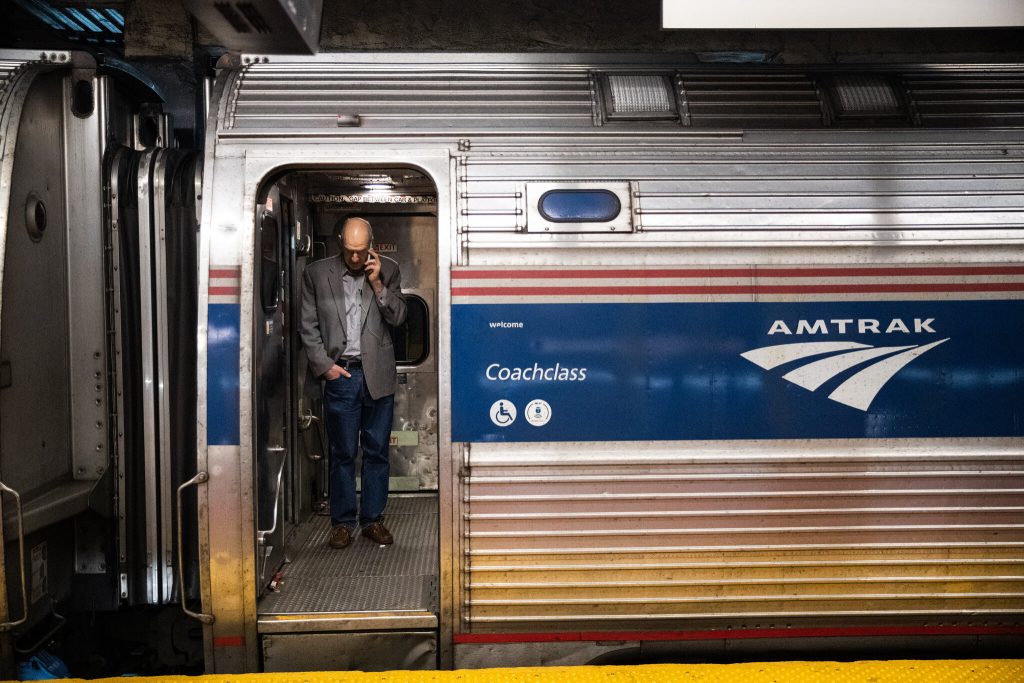
Last week, the DOJ announced criminal charges against Mark Snedden (the owner of Mark 1 Restoration) for, among other things, conspiracy to commit federal program bribery.
According to the DOJ, the company (the “Contractor”) was awarded a $58 million contract by Amtrack to be the main contractor on a facade repair and restoration project at Amtrak’s 30th Street Station in Philadelphia. Pursuant to the contract, the Contractor was prohibited from “offer[ing] to any Amtrak employee, agent, or representative any cash, gift, entertainment, commission, or kickback for the purpose of securing favorable treatment with regard to award or performance of any contract or agreement.”
A Focus On SOEs
I recently came across a report titled “The Size and Sectoral Distribution of State-Owned Enterprises” published by the OECD Working Party on State Ownership and Privatization Practices.
The 2017 report is a bit dated, but interesting nevertheless.
Unfortunately, the report can’t be downloaded without a purchase, so this post will capture screenshots of various findings.
The “Foreign Officials” Of 2022

A “foreign official.”
Without one, there can be no FCPA anti-bribery violation (civil or criminal). Who were the alleged “foreign officials” of 2022?
This post highlights the alleged “foreign officials” from 2022 corporate DOJ and SEC FCPA enforcement actions.
There were ten corporate FCPA enforcement actions in 2022. Of the ten actions, seven (70%) involved, in whole or in part, employees of alleged state-owned or state-controlled entities (“SOEs).
Friday Roundup
An on-point editorial, the former DOJ Fraud Chief on voluntary disclosures, and for the reading stack.
On-Point Editorial
“Government enforcers always need to be watched, especially when their business targets are politically unpopular. Then the feds think they can get away with anything.” So begins a recent Wall Street Journal editorial (here) on the Supreme Court’s recent oral arguments in Gabelli v. SEC – a case in which the five year limitations period under 28 U.S.C. § 2462 is squarely before the court (see here for SCOTUS Blog coverage). Gabelli is a case to watch given that the limitations period in most SEC FCPA enforcement actions would seemed to be stretched.
Former DOJ Fraud Chief on Voluntary Disclosures
Recently the online news site Main Justice interviewed former DOJ Fraud Section chief Steven Tyrrell (see here for the video). Much of the interview was about voluntary disclosures. Tyrrell stated that he is “certain” there have been so-called declinations that are “simply not public” where companies did not voluntary disclose, but had extensive remediation and cooperation. In the interview Tyrrell also agreed that the declination examples in the recent FCPA Guidance – all of which had voluntary disclosure as an apparent factor – was likely an enforcement agency attempt to encourage more voluntary disclosures. Tyrrell stated that voluntary disclosure “should not be the be all and end all” in any case.
Once again, selective government information as to FCPA enforcement designed to achieve policy objectives of the enforcement agencies.
For The Reading Stack
Some recommended reading on FCPA jurisdictional issues, Chinese SOEs, and an additional year in review.
Jurisdictional Issues
The current edition of the ABA International Law News has a great article by Debevoise & Plimpton attorneys Sean Hecker and Margot Laporte titled “Should FCPA ‘Territorial’ Jurisdiction Reach Extraterritorial Proportions?”
As to FCPA enforcement actions against foreign entities and individuals for conduct that occurred overseas with only minimal U.S. contacts, the authors ask “whether the United States is the appropriate authority to prosecute such cases, where the evidence, witnesses, and conduct are located overseas and where alternative jurisdictions often have an even greater interest in enforcement.”
As to Judge Leon’s rejection of the DOJ’s expansive jurisdictional theory in the Africa Sting prosecution of Pankesh Patel (see here for the prior post), the authors state as follows. “This decision, which suggests a requirement of physical presence in the United States in connection with an allegedly corrupt act, call into question much of the DOJ and SEC’s expansive construction of territorial jurisdiction over foreign entities and individuals under the FCPA. Until additional courts speak to the issue, however, the DOJ and SEC are unlikely to back off their more expansive views of jurisdiction.”
As alluded to in the article, additional courts are poised to speak on jurisdictional issues as to foreign actors. (See here for general discussion of motions to dismiss pending in SEC enforcement actions against former Maygar Telekom executives Elek Straub, Andras Balogh and Tamas Morvai and former Siemens executive Herbert Steffen).
Chinese SOEs
Interested in Chinese SOEs? How can you not be if your interested in FCPA issues. If so, see here for a recent Wall Street Journal article titled “China’s Investments Prompt Call for New Rules.” The article details investments by Chinese companies, including SOEs, in the U.S. over the past several years and states as follows – “according to a U.S. congressional commission, state-owned companies accounted for 90% of the value of Chinese investments in the U.S. industrial-machinery, aerospace, automobile and logistics industries between 2007 and the third quarter of 2011.” The article also notes as follows. “Even figuring out which Chinese operations qualify as state-controlled can be tough.”
Year in Review
Miller & Chevalier recently published (here) its FCPA Winter Review 2013. The review highlights developments from Q4 of 2012, reviews 2012 enforcement trends, and looks forward to 2013. [Note, Miller & Chevalier keeps its FCPA statistics differently from the “core” approach described here].
*****
A good weekend to all.