

What Should Happen When A U.S. Official Receives Bribes From A Foreign Company?

The U.S. has brought FCPA enforcement actions against U.S. companies for bribing foreign officials.
The U.S. has brought FCPA enforcement actions against foreign companies for bribing foreign officials (in some cases “domestic officials” as it relates to the foreign company at issue).
The U.S. recently enacted a new law – the Foreign Extortion Prevention Act – capturing the so-called demand side of bribery which provides a path for the U.S. to prosecute foreign officials who receive or demand bribe payments.
U.S. Congressman And Wife Charged With Bribery

The Foreign Corrupt Practices Act concerns bribery of foreign officials.
This post concerns bribery of U.S. officials.
Last week the DOJ announced that U.S. Congressman Enrique Roberto “Henry” Cuellar (D-TX) and his wife, Imelda Cuellar, were criminally charged with participating in two schemes involving bribery, unlawful foreign influence, and money laundering.
Thinking Of The FCPA And FEPA In Reverse

A public official corruptly demanded, sought, received, and accepted something of value from a company in return for being influenced in the performance of an official act – specifically agreeing to help influence the award of a contract to a company who provided the official with the thing of value.
Sounds like a relatively straight-forward Foreign Corrupt Practices Act enforcement action and a fact scenario ripe for enforcement under the recently enacted Foreign Extortion Prevention Act (FEPA).
However, the above fact scenario does not involve a foreign official who demanded and received payments from a U.S. company, but rather a U.S. official who demanded and received payments from a South Korean company. (See here for the recent DOJ release).
U.S. Senator Charged With Bribery Offenses
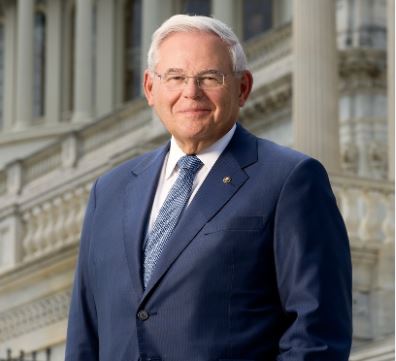
Last week the DOJ announced that an indictment was unsealed charging U.S. Senator Robert Menendez (D-N.J.), his wife Nadine Menendez, and three New Jersey businessmen, Wael Hana, Jose Uribe, and Fred Daibes with participating in a years-long bribery scheme.
According to the DOJ release:
“Between 2018 and 2022, Menendez and Nadine Menendez agreed to and did accept hundreds of thousands of dollars’ worth of bribes from Hana, Daibes, and Uribe. These bribes included gold, cash, a luxury convertible, payments toward Nadine Menendez’s home mortgage, compensation for a low-or-no-show job for Nadine Menendez, home furnishings, and other things of value.”
Ninth Circuit Concludes That Bribery Means More Than Just 18 USC 201

As highlighted in this post, recently the Second Circuit concluded in U.S. v. Ng Lap Seng that just because 18 U.S.C. 201 (the so-called domestic bribery statute) and the FCPA (as well as other statutes) all concern bribery does not therefore mean that all bribery statutes have the same elements or interpretations.
Recently, the Ninth Circuit concluded the same thing in U.S. v. Heon-Cheol Chi. (See here for the decision).
The decision sets forth the following relevant background: