

About Those Provisions Mentioned In The Recent Opinion Procedure Release

The recent DOJ FCPA Opinion Procedure Release (see here for the prior post) involved a U.S. based company (a provider of training events and logistical support) which held a contract with a U.S. government agency to establish training events in which the company provides logistical support for foreign government personnel.
As stated in the release: “this logistical support, in turn, includes providing stipend payments to foreign officials who attend these training events. The stipends are intended to pay for meals that are not required to be served during the event, along with driving mileage costs for certain event participants.” In connection with these events, the company proposed to pay certain stipend amounts to a U.S. Government Officer, which the U.S. Officer will subsequently deliver to foreign officials.”
According to the release, the U.S. Government advised the company that “the stipends are authorized by a particular United States law: the Foreign Assistance Act of 1961 – specifically Sections 129 and 636.”
Curious as to these provisions?
I was too and here is what they say in pertinent part:
The Challenges Of Detection And Prevention

This type of post has been published several other times. (See here and here for instance).
Senseless acts of violence have little in common with alleged Foreign Corrupt Practices Act offenses – except of course both can involve criminal activity.
A common thread though is often the challenges of detection and more importantly prevention.
For instance, Robert Card (the coward who murdered several individuals recently in Maine) was well known to law enforcement and other U.S. government actors.
GE Healthcare Discloses FCPA Scrutiny

In early 2023, General Electric Company (GE) “spun off” GE Healthcare Technologies Inc. (GE Healthcare).
In this quarterly filing, GE Healthcare – which describes itself as a “leading global medical technology, pharmaceutical diagnostics, and digital solutions innovator,” disclosed:
“From time to time, we make self-disclosures regarding our compliance with the Foreign Corrupt Practices Act (“FCPA”) and similar laws to relevant authorities who may pursue or decline to pursue enforcement proceedings against us. We, with the assistance of outside counsel, made voluntarily self-disclosures to the U.S. Securities and Exchange Commission (“SEC”) and the U.S. Department of Justice (“DOJ”) beginning in 2018 regarding tender irregularities and other potential violations of the FCPA relating to our activities in certain provinces in China.”
This Week On FCPA Professor

FCPA Professor has been described as “the Wall Street Journal concerning all things FCPA-related,” and “the most authoritative source for those seeking to understand and apply the FCPA.”
Set forth below are the topics discussed this week on FCPA Professor.
An issue often missing from discussions that there more be more enforcement of the FCPA or FCPA-like laws is how much more? In other words, what is the denominator. (See here).
When Rhetoric Does Not Match Reality
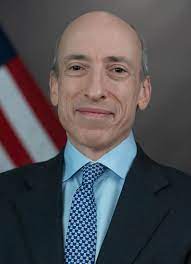
Do SEC enforcement officials realize that words they speak often are contradicted by the reality of SEC’s enforcement program?
For instance, SEC Chair Gary Gensler (pictured) recently gave this speech in which he talked about the SEC’s enforcement enforcement program using five themes: Economic Realities, Accountability, High-Impact Cases, Process, and Positions of Trust.
As to accountability, Gensler stated: [n]othing motivates individuals and firms quite like accountability. We use all of the tools in our toolkit to hold bad actors accountable—including bars, penalties, injunctions, undertakings, and litigating where appropriate.”