

In mid-2022, Stericycle (an Illinois based medical waste disposal company) resolved a net $59 million parallel DOJ and SEC Foreign Corrupt Practices Act enforcement action (see here and here for prior posts).
In the words of the DOJ: “From in or about and between at least 2011 and 2016, Stericycle, through certain of its employees and agents, knowingly and willfully conspired and agreed with others to corruptly offer and pay approximately $10.5 million in bribes to, and for the benefit of, foreign officials in Brazil, Mexico, and Argentina in order to obtain and retain business and other advantages for and on behalf of Stericycle. Stericycle earned approximately $21.5 million in profits from the corrupt scheme and through its corruptly obtained and retained government contracts.”
In February 2024 the DOJ criminally charged Mauricio Gomez Baez based on the same core conduct. (See here for the prior post). As alleged in the information, Gomez Baez (a Mexican citizen and resident of Miami) worked for Stericycle as the Senior Vice President of Stericycle’s Latin American (LATAM) division whose business responsibilities included oversight and management of Stericycle LATAM and certain of Stericycle subsidiaries, including acquisitions, operations, finance, and sales.
The information charged conspiracy to violate the FCPA’s anti-bribery provisions and alleged that Gomez Baez, LATAM Executive 1 (described as a Mexican citizen based in Mexico who was an executive of Stericycle LATAM and reported to Gomez Baez) and their co-conspirators bribed “Mexican, Brazilian, and Argentinian officials to obtain and retain contracts and other business advantages on behalf of and for the benefit of Stericycle.”
Gomez Baez pled guilty in 2024 and was sentenced to seven months in prison, followed by three years supervised release, and ordered to pay a $250,000 fine.
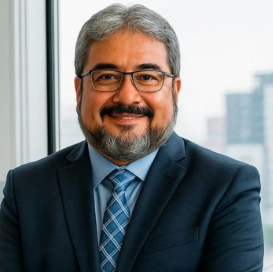
In March 2024, the DOJ also criminally charged Abraham Cigarroa Cervantes (pictured – a Mexican citizen described as a former finance director of the Latin America division of Stericycle) in connection with the same bribery schemes. (See here for the prior post).
As stated in the DOJ release:
“Between 2011 and 2016, Abraham Cigarroa Cervantes, 51, of Mexico, and others allegedly caused hundreds of bribe payments to be made to government officials in Brazil, Mexico, and Argentina to obtain and retain business and to secure improper advantages for Stericycle, a U.S. securities issuer, in connection with providing waste management services. As part of the scheme, employees at Stericycle’s offices in Mexico, Brazil, and Argentina allegedly made bribe payments, typically in cash, and calculated the amount of the bribes as a percentage of underlying contract payments made by or owing from a government customer. In all three countries, Cigarroa and his co-conspirators allegedly tracked the bribe payments through spreadsheets and described the bribes through code words and euphemisms. To conceal the corrupt payments, Cigarroa and others allegedly maintained false books, records, and accounts that did not accurately and fairly reflect the transactions and dispositions of Stericycle’s assets, causing Stericycle to falsely record bribe payments as legitimate expenses in its consolidated books, records, and accounts. Cigarroa also allegedly submitted and maintained falsified Sarbanes-Oxley certifications and business unit representation letters falsely attesting that the books, records, and accounts were accurate.”
Cigarroa was charged with one count of conspiracy to violate the Foreign Corrupt Practices Act’s (FCPA) anti-bribery provisions and one count of conspiracy to violate the FCPA’s books and records provisions.
According to the court docket, Cigarroa was recently arrested, arraigned, and plead not guilty. A $1.5 million bond was paid and trial is scheduled for June 1st.
According to this article, Cigarroa was arrested in December 2025 in Argentina while hiking with his family in Patagonia.
According to the article:
“[T]he arrest took place on Monday, December 23, 2025, at the Río Don Guillermo International Border Crossing, after he crossed from Chile into southern Argentina. The operation was coordinated between local security forces, Argentine judicial authorities, and international agencies, acting on an Interpol alert.
[…]
After the accusation became public, the former executive went on the run. For months, his whereabouts were unknown until records surfaced of his stay in Uruguay, where he resided in exclusive areas of Punta del Este. Finally, his trail led to Argentine Patagonia.
[…]
The businessman was on vacation with his family and had planned to travel to El Calafate. His arrest in Argentina opened a separate chapter in Chile, where an investigation was launched because the businessman entered and left the country without anyone noticing that he was wanted by Interpol.”
