

This post is from Andrew Feldman (Feldman Firm PLLC).
Since President Trump issued the Executive Orders “pausing” the enforcement of the FCPA, lots of large law firms decried the potential end of the FCPA and worried that there would be a steep decline in FCPA investigations and prosecutions. Attorney General Pam Bondi had also emphasized that the FCPA should be used to prosecute narcotraffickers, not foreign nationals engaged in extraterritorial conduct which poses no threat to American interests.
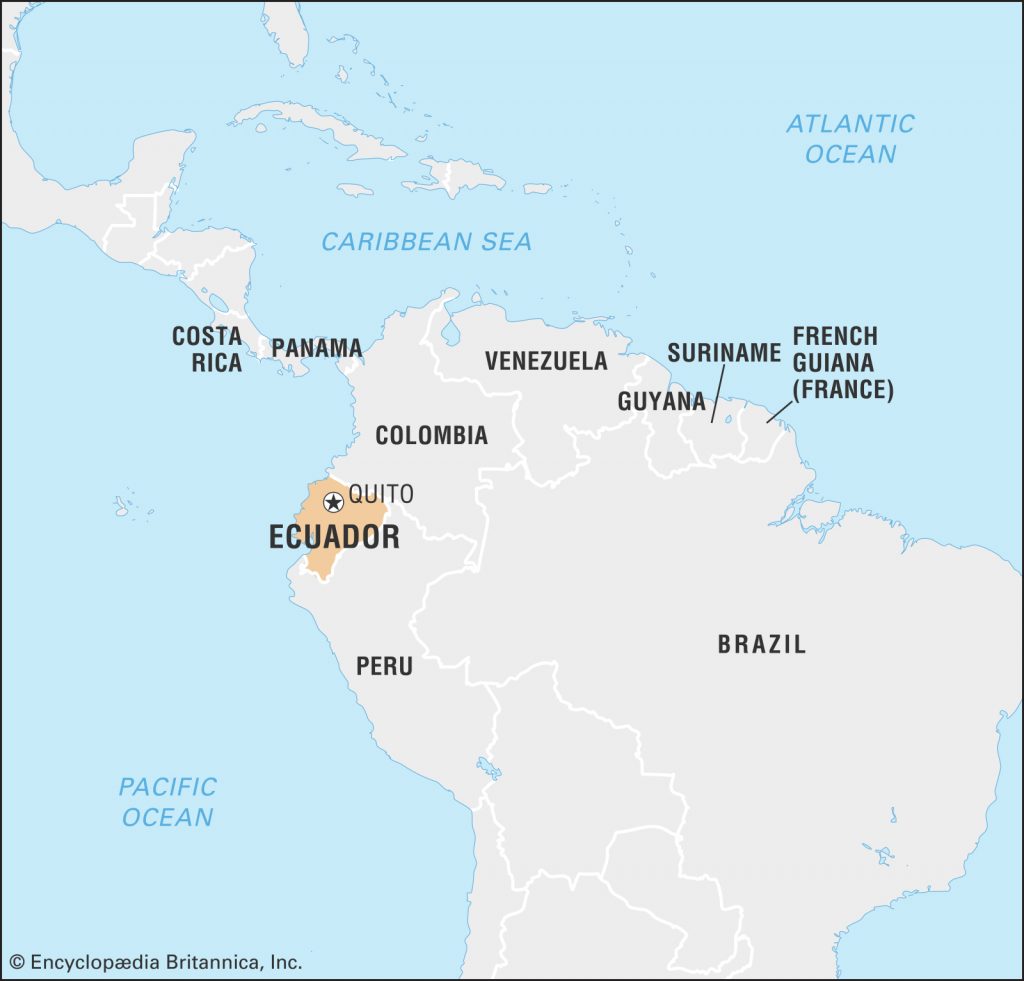
In mid-March of this year and in the heart of this FCPA pause panic, the government travelled to Costa Rica to extradite the Firm’s client, Cristian Patricio Pintado Garcia. Mr. Pintado is an Ecuadorian national with no status in the United States who had been indicted in 2022 for violations of the FCPA and money laundering. Mr Pintado had been languishing in a Costa Rican prison since August of last year when he was arrested shortly after traveling from Ecuador.
The charges related to a scheme between 2013 and 2018 that involved bribing officials at the top of Ecuadorian state-controlled insurance agencies known as Seguros Sucre in exchange for reinsurance business. The bribes were paid to Seguros Sucre to ensure that H.W. Wood and Tysers, multinational reinsurance brokers, obtained significant reinsurance contracts for Seguros Sucre’s insurance policies. The indictment alleged that Pintado, along with Esteban Merlo and others, facilitated those payments.
Once Cristian arrived on U.S. soil, Cristian made his first appearance in federal court. Cristian insisted on a speedy trial and a trial date of May. There were two significant legal issues in Cristian’s case.
First, would the government be able to prove that Seguros Sucre was an instrumentality of a foreign government sufficient to state an FCPA violation for sending monies to the president of Seguros Sucre, Juan Ribas?
The FCPA includes “instrumentality” under the FCPA definition of a “foreign official.” 15 U.S.C. Section 78dd-2(h)(2)(A). And, United States vs. Esquenazi, 752 F.3d 912 (11th Cir. 2014) outlines the test for what constitutes an “instrumentality of a foreign government” as follows:
First Prong – Whether the foreign government “controls” the entity
- Foreign government’s formal designation of that entity;
- Whether the government has a majority interest in the entity;
- The government’s ability to hire and fire the entity’s principals;
- The extent to which the entity’s profits, if any, go directly into the government fisc;
- The extent to which the government funds the entity if it fails to break even; and
- The length of time that these “indicia” have existed, e.g. the length of the government’s control over the entity.
Second Prong – Whether the entity performs a function the controlling government treats as its own.
- Whether the entity has a monopoly over the function it provides;
- Whether the government subsidizes the costs associated with the entity providing services;
- Whether the entity provides services to the public at large in the foreign country; and
- Whether the public and the government of that foreign country generally view the entity to be performing a government function.
Juan Ribas was the only “foreign official” prosecuted in the United States in connection with the offense conduct and who was the beneficiary of the bribes. Mr. Ribas, however, is not an elected official of a government. He was the chairman of Seguros Sucre S.A. and was elected by a board of directors. Seguros Sucre is partially owned by the government and although a quasi-private entity performs public functions and therefore may be considered an instrumentality of a foreign government under this Circuit’s decision in Esquenazi.
Second, was Pintado an agent of Esteban Merlo (a domestic concern) after U.S. vs. Hoskins, 902 F. 3d 69, 83-84 (2d. Cir. 2018)? Hoskins holds that the government cannot prosecute persons like Pintado, under a conspiracy theory or for substantive FCPA violations, unless Pintado falls into one of three discrete categories circumscribed by the FCPA (issuer, domestic concern or agent of domestic concern, or a person who engages in certain conduct while in the territory of the US).
These were the only theories upon which the government could have moved forward on the FCPA based counts against Pintado.
Ultimately though, Mr Pintado entered into a plea agreement with the government in which Mr. Pintado agreed that his potential sentencing range based on applicable sentencing guidelines was between 63 and 71 months. Mr. Pintado also agreed to a forfeiture amount of 2.8 million dollars. Very significantly, Mr. Pintado did not pay any money to the government and Mr. Pintado did not cooperate with the government.
The sentence of time served (10 months) was therefore unusually lenient when compared to many of the other Seguros Sucre defendants, including Carlos Polit and Juan Ribas, who received sentences ranging from 5 to 10 years. Mr. Ribas also cooperated as did many other Seguros Sucre defendants. Esteban Merlo, the lead defendant in Mr. Pintado’s case, however, received a sentence of 5 months. Unlike Pintado though, Mr. Merlo cooperated extensively with the government. The government acknowledged these sentencing disparities and the lack of cooperation but did not oppose Mr. Pintado’s request for time served.
And so, 24 hours after his sentencing Mr. Pintado was released to the custody of ICE and, through coordination between the FBI and ICE, Pintado was on a plane to Quito 24 hours later to reunite with his wife and his 3 children.
