

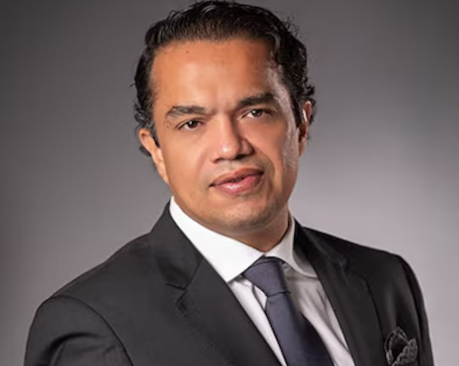
In August 2025, the DOJ announced a Foreign Corrupt Practices Act enforcement action concerning an alleged bribery scheme in Mexico. (See here for the prior post).
The indictment charged Ramon Alexandro Rovirosa Martinez (a citizen of Mexico and a lawful permanent resident of Texas) and Mario Alberto Avila Lizarraga (a citizen of Mexico and lawful permanent resident of Texas) for their roles in an alleged bribery scheme to retain and obtain business related to Petróleos Mexicanos (PEMEX), the state-owned oil company of Mexico, and PEMEX Exploración y Producción (PEP), PEMEX’s wholly owned exploration and production subsidiary.
In summary fashion, the indictment alleged:
“Beginning at least in or around June 2019 and continuing through at least in or around October 2021, ROVIROSA and AVILA, together with others known and unknown to the Grand Jury, engaged in a bribery scheme in which they offered, paid, promised to pay, and authorized the payment of, bribes in the form of cash payments, luxury items, and other things of value, to and for the benefit of foreign officials in Mexico, including Foreign Official #1 [employed by PEMEX as a senior internal audit manager assigned to PEP] Foreign Official #2 [employed by PEMEX as a procurement coordinator] and Foreign Official #3 [employed by PEMEX and PEP within a division responsible for management of services relating to land infrastructure] in exchange for those foreign officials taking certain actions, using their influence within PEMEX and PEP to affect and influence the acts and decisions of PEMEX and PEP, and providing improper advantages, in order for ROVIROSA and AVILA to obtain and retain business from PEMEX and PEP for certain of the Mexico Energy Companies, in violation of the FCPA.
ROVIROSA’s and AVILA’s conduct resulted in Foreign Official #1, Foreign Official #2, and Foreign Official #3 taking actions that included, but were not limited to:
a. Bribes for Audit Closure and Payment from PEMEX and PEP:
Directing other PEMEX and PEP employees, including at least one of Foreign Official #1’s subordinates in PEMEX’s internal audit function, to resolve an audit relating to three of the Mexico Energy Companies in a manner favorable to those companies, a resolution which ROVIROSA and AVILA understood would also remove audit-related restrictions on the companies’ abilities to receive payments from PEMEX and PEP and obtain additional business with PEMEX and PEP;
b. Bribes for Roads and Platforms Contract:
Ensuring that certain of the Mexico Energy Companies were awarded a contract with PEMEX and PEP regarding roads and platforms work (the “Roads and Platforms Contract”), including by ending a then-ongoing audit of Mexico Energy Company #1 and Mexico Energy Company #2 that had generated adverse findings; and
c. Bribes for Mechanical Integrity Contract:
Ensuring that certain of the Mexico Energy Companies were awarded a contract with PEMEX and PEP regarding mechanical integrity of ground installations (the “Mechanical Integrity Contract”), including by ignoring an erroneous technical report submitted by those Mexico Energy Companies in connection with the bidding process and by intervening in the bidding process for the benefit of the Mexico Energy Companies.
These improper advantages resulting from the bribery scheme helped certain of the Mexico Energy Companies obtain and retain business with PEMEX and PEP. Specifically, in or around 2020, certain of the Mexico Energy Companies and their partners were awarded PEMEX/PEP contracts worth a combined value of at least USD $2.5 million.
In total, between at least in or around June 2019 and at least in or around October 2021, ROVIROSA and AVILA, together with others, offered, paid, caused to be paid, promised to pay, and authorized the payment and provision of, bribes totaling at least USD $150,000 in value for the benefit of Foreign Official #1, Foreign Official #2, and Foreign Official #3.
Rovirosa and Avila were each charged with one count of conspiracy to violate the FCPA and three substantive violations of the FCPA.
In pre-trial proceedings, the judge granted a motion to sever and the case proceeded against Rovirosa last week in federal court in Houston before Judge Kenneth Hoyt.
It was a bizarre trial.
As reported by Samuel Rubenfeld at MLex.
“The US corruption trial of Mexican businessman Ramon Alexandro Rovirosa Martinez featured no fact witnesses, which led the judge to block the government from introducing most of its evidence until their closing argument.
[…]
The bulk of the government’s case against Rovirosa came via text messages and WhatsApp communications he or Mario Alberto Avila Lizarraga, his fugitive co-defendant, had on their mobile devices, which US authorities seized during their investigation.
The judge didn’t allow the government to call someone to the stand to read those messages to the jury, or for prosecutors to show other documentary evidence, without a percipient witness to testify about it.
In a decision delivered from the bench on Wednesday morning, US Judge Kenneth Hoyt ruled that the lead US case agent couldn’t read from a summary document the government had prepared.
“There is no way to wrap your arms around what constitutes the totality of the evidence from which this is being extracted,” the judge said.
However, the judge did grant the government the ability to read text messages during their closing argument, saying that even though the texts are not testimonial in nature, certain messages appear to be statements of those charged, or presumed to be charged, with criminal conduct.
“The court has tried to find the area where text messaging and transmissions may be utilized by the government in its closing arguments. … You’re going to have time constraints, but you can read as much of this to the jury as you choose,” the judge ruled. “The same would apply to the defendant.”
The jury verdict form was also bizarre.
It simply stated: Count One – Conspiracy and Counts Two – Four FCPA Violations. The jury returned guilty verdicts on Counts One – Three, but not guilty on Count Four.
During the trial, Judge Hoyt expressed concerns about the due process rights of Roviorsa.
In short, it will be interesting to see what happens next in this case.
