

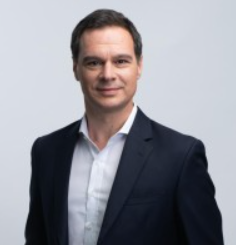
Yesterday, the SEC announced a Foreign Corrupt Practices Act enforcement action against Cyril Sebastien Dominique Cabanes (“Cabanes”) – a French citizen and resident of Singapore who was previously a member of the board of directors of Azure Power Global Limited (a Mauritius company with its principal place of business in India). During the time period relevant to the enforcement action, Azure was a publicly traded company with shares traded on the New York Stock Exchange.
The Cabanes enforcement action is the first SEC FCPA enforcement action against an individual since October 2020.
The Cabanes FCPA enforcement action concerns alleged bribes paid to Indian officials to secure multi-billion dollar energy projects for Azure and another company Adani Green Energy Limited. As highlighted at the end of this post, the SEC also charged two senior executives of Adani Green (Gautam Adani and Sagar Adani) with securities fraud (non-FCPA) in connection with the same alleged bribery scheme.
As will be explored in a follow-up post, the DOJ also criminally charged Cabanes and several others with FCPA violations in connection with the same alleged bribery scheme and also charged Gautam Adani, Sagar Adani, and others with non-FCPA criminal charges in connection with the same alleged bribery scheme.
In summary fashion, the SEC civil complaint against Cabanes alleges:
“Defendant Cabanes violated the Foreign Corrupt Practices Act of 1977 (“FCPA”), a law that generally prohibits companies whose stock is publicly traded in the United States, and individuals associated with those companies, from paying bribes to foreign officials in order to secure business in foreign countries; here, the Republic of India. Cabanes, formerly and at all times relevant herein, served as a Director on the Board of U.S. issuer Azure Power Global Limited (“Azure”), as a representative of the company’s largest stockholder, Caisse de dépôt et placement du Québec (“CDPQ”). CDPQ is a Montreal, Canada-based pension fund company established by the National Assembly of Quebec, and one of the world’s largest infrastructure investors.
While serving as an Azure Director, Cabanes, and others, schemed to make payments to state government officials in India as part of a massive bribery scheme (the “Bribery Scheme”) to secure multi-billion-dollar energy projects for Azure and for another company, Adani Green Energy Limited (“Adani Green”). Both Azure and Adani Green are renewable energy companies based in India that, respectively, own and operate power resources and sell the power those resources generate to the government of India.
The genesis of the bribery scheme is in December 2019, when the Solar Energy Corporation of India, Ltd. (“SECI”) [a company of the Ministry of New and Renewable Energy (“MNRE”), Government of India responsible for implementing Indian central government programs related to renewable energy, including funding large solar projects] awarded Azure and Adani Green contracts for a twelve-gigawatt (12 GW) solar energy project (the “Manufacturing Linked Projects”). During 2021 through 2023, Azure and Adani Green, and executives and agents of the companies, engaged in a scheme pursuant to which Adani Green paid or promised approximately $250 million in bribes to Indian state officials to secure contracts necessary to move forward with the Manufacturing Linked Projects, i.e., the Bribery Scheme. Cabanes became aware of and actively participated in the Bribery Scheme, including via the means of U.S. interstate commerce, no later than May 6, 2022.
Beginning no later than May 2022 Cabanes communicated with Azure officials through various means, including WhatsApp messages that were sent and received in the United States using the means of interstate commerce, along with other electronic communications, about the Bribery Scheme. As a result of, and reflected in these communications, Cabanes knew that executives of Adani Green had met with Azure representatives, including the Chairman of Azure’s Board of Directors (the “Azure Chairman”), to pursue payment from Azure for its agreed upon one-third share of bribes that the executives from Adani Green had paid or promised to pay state government officials in India. Cabanes also sent and received WhatsApp communications, and other communications, to and from the United States, using means of interstate commerce, to advance Azure’s participation in the Bribery Scheme.
With full knowledge of the agreement that Azure executives, including the Azure Chairman, had entered into with Adani Green and its executives and officials to pay Azure’s share of the corrupt payments, Cabanes took steps in furtherance of the authorization of bribes to state government officials in India by directing the Azure Chairman, and others at Azure and CDPQ, to find a “commercially doable deal” that would enable the Adani executives and officials and Adani Green to collect from Azure.
In furtherance of the scheme Cabanes also participated in efforts with the Azure Chairman to conceal information about the Bribery Scheme from the Azure Board of Directors and Azure’s attorneys, among others.
By virtue of the foregoing conduct …, Cabanes violated the Anti-Bribery Provisions of the Foreign Corrupt Practices Act.”
The complaint sets forth the following background regarding the “Manufactured Links Projects.”
“In 2014, the Indian central government announced a goal of achieving 175 gigawatts (“GW”) of renewable energy production capacity in India, including at least 100 GW of solar energy production capacity by 2022. At the time, renewable energy accounted for approximately 17 percent of all energy production capacity in India. The Indian central government sought to more than double that number.
In anticipation of this effort the Indian central government previously had instituted Renewable Energy Purchase Obligations that required Indian state-owned energy distribution companies (“DISCOMs”)—which are responsible for buying power and transmitting it to consumers within their respective regions—to buy and distribute to consumers certain minimum amounts of renewable energy.
Azure and Adani Green are renewable energy companies based in India. Azure specializes in building and operating solar farms, which generate electricity that is then supplied to the power grid. Adani Green develops, owns and operates utility-scale grid-connected solar and wind farm projects. Azure, like Adani Green, primarily derives its revenue by selling electricity to Indian central government agencies and to DISCOMs, typically under long-term fixed-price Power Purchase Agreements (or “PPAs”) that set the price (or “tariff”) that the purchaser will pay for power for the duration of the contract.
In June 2019, SECI, a renewable energy agency of the Indian government, announced a Request for Selection (“RfS”) seeking bids from solar power developers for the construction of a solar cell and module manufacturing plant that would be linked to SECI’s agreement to purchase power from the developer(s) with the winning bid(s).
Broadly described, SECI sought solar power developers to construct a plant or plants in India capable of producing solar power component parts domestically (like cells, modules, or wafers) and, in exchange for that construction and manufacturing, SECI would contract to purchase power from the developer(s) in an amount equal to a multiple of the power generating capacity of the solar components manufactured. The related projects became known as the Manufacturing Linked Projects.
Multiple companies, including Azure and Adani Green, submitted responses to what became an amended RfS. On December 10, 2019, as part of a government tender, SECI jointly awarded Azure and Adani Green contracts for the Manufacturing Linked Projects. Pursuant to Letters of Award issued by SECI, a) Adani Green would be responsible for and stood to benefit from two-thirds of the Manufacturing Linked Projects, and b) Azure would be responsible for and stood to benefit from one-third. Both Azure and Adani Green were projected to earn billions in revenue from the Projects.
Azure announced that it had won a portion of the RfS at an investor presentation on January 16, 2020, disclosing that SECI had awarded it a portion of the projects for the construction of a manufacturing plant or plants to produce solar power components with 1 GW capacity. In turn, SECI would contract to buy 4 GWs of solar power from Azure.
Five months later, on June 9, 2020, Adani Green followed suit, issuing a press release titled, “Adani Green Energy Wins The World’s Largest Solar Award; Leapfrogs Towards Goal Of 25 GW Of Installed Capacity By 2025.” The announcement noted that SECI had selected Adani Green to be awarded a portion of the projects associated with the RfS, and that it would build a manufacturing plant or plants to produce solar components with 2 GW capacity. In turn, SECI would contract to buy 8 GW of solar power from Adani Green.
Despite the announcements, SECI’s Letters of Award to Azure and Adani Green did not guarantee that SECI would purchase any power from them or that they would earn any revenue or profits. More needed to be done. At minimum, two additional contractual steps were required. First, SECI needed to enter into Power Supply Agreements (“PSAs”) with the DISCOMs (the Indian state-owned energy distribution companies) under which the DISCOMs would agree to buy energy from SECI at solar power prices consistent with those SECI had agreed to pay Azure and Adani Green in the Letters of Award. Second, after contracting with the DISCOMs, SECI needed to enter into PPAs, (again, Power Purchase Agreements) with Azure and Adani Green, respectively, pursuant to which SECI would buy power from each of them (which SECI would then resell to the DISCOMs under the PSAs).
Under the terms of the RfS, SECI was expected to enter into PPAs with Azure and Adani Green within 90 days of issuing the Letters of Award. That did not happen. Instead, the PPAs took more than 18 months—and were executed by SECI only after Azure and Adani Green, acting through various senior executives and officials, undertook a massive bribery scheme.
The problem was economics. The price SECI accepted for Azure and Adani Green to sell power related to the Manufacturing Linked Projects turned out to be too high. When SECI attempted to contract with Indian state governments and DISCOMs to offload power at prices consistent with the amounts to be paid to Azure and Adani Green, the Indian state governments refused. Their refusals were overcome only when Azure and Adani Green, acting through various senior executives and officials, paid or promised to pay, in aggregate, hundreds of millions of dollars of bribes to state government officials in India.”

The complaint alleges that that Cabanes joined the bribery scheme when Azure’s CEO and COO resigned and that he coordinated an extensive cover-up within Azure.
The complaint alleges:
[The Azure Chairman] told Cabanes that Adani had sought to collect Azure’s share of the bribes to state government officials in India relating to the Manufacturing Linked Projects, both for the 2.3 GW PPAs and a 650 megawatt (MW) PPA. The Azure Chairman recounted that Gautam Adani stated, in summary, that Azure owed approximately one-third of the total bribes promised or paid and that Azure’s share was the equivalent of approximately $83 million. Cabanes was aware of a high probability that the bribe payments promised by Gautam Adani and other Adani Green executives were incomplete; that is, some of the promised bribes had been paid and others were still owed.
Cabanes directly or indirectly made use of the means and instrumentalities of United States interstate commerce in connection with the acts, practices, and courses of business he engaged in to further the Bribery Scheme. Cabanes, knowing that Adani Green executives had told Azure executives that Adani Green needed to collect Azure’s one-third share of the bribes in furtherance of their agreement to pay off the government officials who had facilitated signing of the PSAs underlying the 2.3 GW and 650 MW PPAs, took steps while physically present in the U.S. in furtherance of the authorization of a transaction to fund these bribe payments.
[…]
Following the meetings with the Adanis, the Azure Chairman and Cabanes routinely strategized various transaction structures to pay Azure’s one-third share of the bribes that the Adanis had paid or promised to Indian state government officials.
When Azure representatives informed Gautam Adani that Azure might not be able to directly pay the amount it owed, Gautam Adani proposed that Azure satisfy its one-third portion of the bribes through non-cash transactions.
Among other things, Gautam Adani proposed that, to satisfy part of Azure’s obligation to pay one-third of the bribes, Azure cede control of its rights to the most valuable aspect of the Manufacturing Linked Projects—its right to sell 2.3 GW of power to SECI related to Andhra Pradesh—to Adani Green.
To that end, during a visit to the United States between May 5 and May 8, 2022, Cabanes participated in a WhatsApp exchange with the Azure Chairman during which they used the codename “SAG” or “Super Aggregator” to conceal references to Gautam Adani, while discussing how to pay Azure’s share of the bribes. Cabanes queried: “Is there a commercially doable deal here?” – which, in the context of their ongoing discussions, the Azure Chairman understood that Cabanes meant a transaction that would compensate Adani Green and the Adanis for Azure’s share of the bribery payments.
[…]
Throughout June and July 2022, Cabanes and the Azure Chairman regularly communicated by telephone and other electronic means regarding their efforts to identify and consummate a transaction that, directly or indirectly, would compensate Adani Green and the Adanis for Azure’s share of the bribes. They also discussed the need to conceal aspects of their involvement in any potential transaction from others at Azure. Cabanes repeatedly directed the Azure Chairman and others to withhold information related to the potential deal with Adani from others, including other members of Azure’s Board of Directors.
[…]
In a series of communications between late June 2022 and August 4, 2022, Cabanes took steps himself and directed others, including the Azure Chairman, to withhold information regarding their bribery payment plans from senior personnel at Azure and CDPQ, and from a Special Committee of the Azure Board of Directors that had been created to investigate the Manufacturing Linked Projects.
On September 30, 2022, shortly before scheduled interviews by the Special Committee of Cabanes, the Azure Chairman, and other Azure and CDPQ executives, Cabanes and the Azure Chairman convened a telephone call with the other executives being interviewed. The purpose of the call was for everyone to align their stories and agree that they would not fully disclose all relevant aspects of the agreement with Adani Green and the Adanis. All participants on the call agreed to withhold certain information from the Special Committee and its investigators.
[…]
The end result of these maneuvers was that Azure did not directly pay any money to Adani Green or the Adanis in satisfaction of Azure’s share of the bribe payments. Instead, Cabanes and Azure elected to meet part of Azure’s obligation by facilitating the indirect transfer of this lucrative corporate asset—the 2.3 GW PPA—to Adani Green and the Adanis, by first ceding it back to SECI under pretextual reasons. Cabanes acted in furtherance of that transfer while knowing that the Azure Chairman was actively working to facilitate Gautam Adani’s efforts to collect Azure’s share of the bribes. The transaction that resulted had the economic effect of transferring significant value to Adani Green and the Adanis from Azure.
Cabanes devised and directed a coordinated cover-up of the efforts to compensate Adani Green and the Adanis for the bribery payments or promises that included: withholding information about the Adani deal from non-CDPQ executives at Azure, including other members of the Board of Directors; lying to investigators, including Cabanes’s and the company’s own lawyers; lying to attorneys and investigators; withholding information about the Adani transactions from certain other Azure executives; colluding with others at CDPQ and Azure to align false narratives; and, scheming with others at CDPQ and Azure to conceal their misconduct behind a compromised “Special Committee” of the Azure Board of Directors that was deprived of full and accurate information regarding the Adani transactions.
Despite retaining valuable PPAs related to the Manufacturing Linked Project, albeit substantially reduced by the transfers to Adani Green, Azure never received any profits tied to the Bribery Scheme because it was interrupted by investigations related to the Manufacturing Linked Project and its contracts.”
The Cabanes FCPA enforcement was announced along with an SEC enforcement action charging Gautam Adani (Chairman of Adani Green’s Board of Directors) and his nephew, Sagar Adani (Executive Director of Adani Green’s Board) with securities fraud in connection with the same core conduct.
As alleged in a separate SEC complaint:
“In 2021, two senior executives of Adani Green Energy Ltd. (“Adani Green”)— Gautam Adani, Adani Green’s founder and controlling shareholder, and Sagar Adani, Adani Green’s Executive Director (collectively, “Defendants”)—engaged in a bribery scheme involving the equivalent of hundreds of millions of dollars to obtain contracts that benefitted Adani Green, while, at the same time, falsely touting the company’s compliance with antibribery principles and laws in connection with a $750 million bond offering (the “Offering”).
Gautam Adani founded Adani Green and Defendants are part of a four-person management team that controls it. For years, Defendants positioned Adani Green to investors and the public as a leader among its peers and within India in principles of good corporate governance, highlighting Adani Green’s purportedly rigorous anti-bribery and anti-corruption principles and policies, and seeking to appeal to investors who valued governance factors.
In September 2021, Defendants leveraged that narrative in the Offering to sell $750 million of Adani Green corporate bonds (“Notes”), including more than $175 million in Notes to investors in the United States.
In connection with the Offering, Adani Green told purchasers of the Notes that none of Adani Green’s directors or officers, including Defendants themselves, had paid or promised to pay bribes to government officials or attempted to unduly influence those officials. Adani Green and Defendants also emphasized to underwriters and potential investors that Adani Green had implemented robust anti-bribery and anti-corruption processes and that Adani Green was a leader in India in good corporate governance.
None of this was true. In the months and weeks before making these representations in connection with the Offering, Defendants were personally involved in paying or promising the equivalent of hundreds of millions of dollars in bribes to Indian state government officials to induce Indian state governments to enter into contracts necessary for Adani Green to develop India’s largest solar power plant project, from which Adani Green stood to earn billions of dollars.
A second company involved in that power plant project, Azure Global Power Limited (“Azure”), agreed to pay a portion of those bribes and Defendants were also personally involved in collecting payment from Azure.
Gautam Adani and Sagar Adani lied to purchasers of Adani Green’s Notes about Adani Green’s and their own involvement in a complex and high value bribery scheme. Those lies, made in connection with the offer and sale of Notes to investors in the United States, violated the antifraud provisions of the federal securities laws.”
In the SEC release, Sanjay Wadhwa (Acting Director of the SEC’s Division of Enforcement)
“As alleged, Gautam and Sagar Adani induced U.S. investors to buy Adani Green bonds through an offering process that misrepresented not only that Adani Green had a robust anti-bribery compliance program but also that the company’s senior management had not and would not pay or promise to pay bribes, and Cyril Cabanes participated in the underlying bribery scheme while serving as director of a U.S. public company. We will continue to vigorously pursue and hold individuals, including senior corporate officers and directors, accountable when they violate our securities laws.”
