

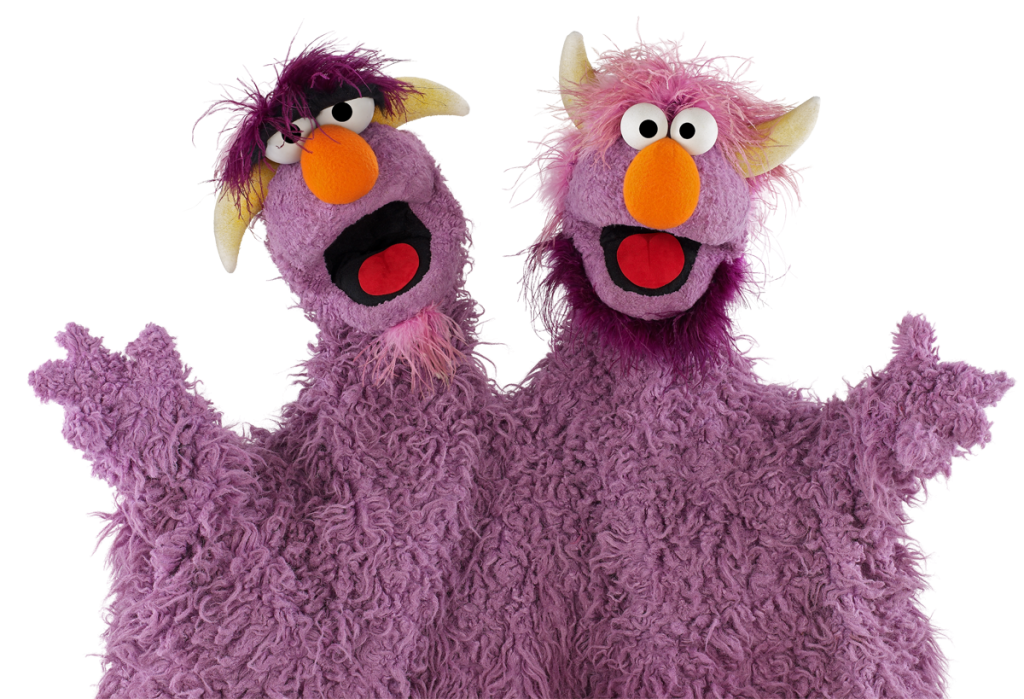
The general rule is that legal liability does not ordinarily hop-skip-and-jump around a corporate organization because separate legal entities (including even those within the same corporate hierarchy) are not liable for the legal liability of other entities (whether that liability arises in tort, contract or the FCPA).
However, if one entity is merely the “alter ego” of another entity, the other entity may be exposed to legal liability based on the conduct of the “alter ego.” The above picture can demonstrate alter ego issues, namely that one entity will be the alter ego of another if the entities share the same heart, organs, nervous system, etc.
Against this backdrop, it is interesting to see how the SEC asserted alter ego theories in two recent FCPA enforcement actions in finding that a parent company violated the FCPA’s anti-bribery provisions because its “agent” (a foreign subsidiary) engaged in improper conduct.
In the Clear Channel Outdoors enforcement action, the SEC stated under the heading “CCOH’s Control Over Clear Media” as follows:
“CCOH acquired an interest in certain advertising companies associated with Executive A [described as a Chinese citizen and resident who during the relevant period was Clear Media’s principal executive officer] and Executive A’s Relative in China in 1998. In 2001, Clear Media Limited listed its shares on the Main Board of the Stock Exchange of Hong Kong Limited, and CCOH reorganized its holding through Clear Media. From 2005 through March 2020, CCOH held a majority of Clear Media’s shares. CCOH provided out-of-home advertising services in China solely through Clear Media and, through CCI, consolidated Clear Media’s results in its financial statements.
During the relevant period, Executive A served as Clear Media’s principal executive officer. CCOH exercised control of Clear Media through the participation of two to three executives on Clear Media’s board of directors, including in positions as Executive Chairman and Deputy Chairman of its board. Executives from CCOH’s finance, legal, and compliance functions also participated regularly in Clear Media’s board meetings, as well as in certain Clear Media audit committee meetings.
CCOH controlled the majority of voting shares of Clear Media. CCOH set financial goals for Clear Media; supervised Clear Media’s financial performance, management, and organization; and defined Clear Media management’s scope of responsibility. Using U.S.- based email systems, CCOH executives approved Clear Media’s budget and significant transactions, including tenders for concessions. CCOH also controlled the adoption of Clear Media’s compliance policies and the hiring, firing, and compensation of Executive A and other Clear Media executives. Clear Media reported to CCOH through the Executive Chairman of Clear Media’s board of directors, a role filled by a CCOH executive for Asia Pacific from 2012 until 2015. Thereafter, the Executive Chairman of Clear Media’s board reported to CCOH’s head of the CCI division. CCOH conducted annual audits of Clear Media, including compliance, operational, and SOX audits.”
In the Albemarle enforcement action, the SEC stated:
“Albemarle exercised control over the sales activities of the Albemarle Subsidiaries, which acted as agents for Albemarle when retaining agents to sell catalysts globally. Albemarle officers served on the Albemarle Subsidiaries’ boards of directors and held signatory authority over bank accounts, at local branches of both U.S. and non-U.S. banks, used to pay sales intermediaries in the relevant countries. Albemarle sold refinery catalysts globally through agents and distributors approved by Albemarle sales, business, legal, compliance, and finance personnel and management. Personnel at the center of the misconduct reported directly or indirectly to issuer-employed managers in Albemarle’s sales and Refining Solutions organizations, who at times met with and communicated directly with customers. These managers also participated in regular sales strategy calls and meetings with Albemarle Subsidiary personnel and participated in evaluating and approving agent commissions and expenses.”
