

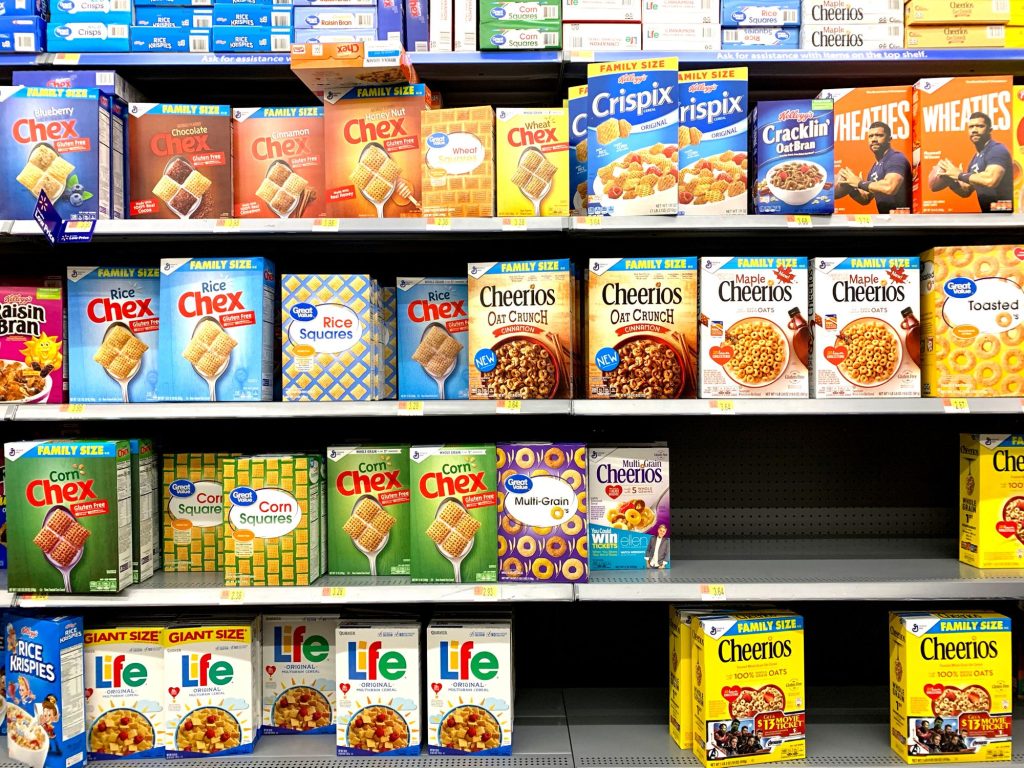
Shelf space at a grocery store or other retail store is probably not something one thinks much about.
Until one does.
A recent article in the Wall Street Journal titled “Grocers Get Picky on Shelf Space for Suppliers” highlights how the “contest for supermarket and grocery shelf space is heating up as brands … vie for a shrinking number of spots in the aisles.”
The article states:
“A confluence of factors influences which brands [get premium shelf space]. Among them are brand recognition and whether brands’ products are selling, or are expected to. Retailers also charge slotting fees for aisle space.
The fees, which food companies pay retailers in exchange for shelf space for their goods and which are often a topic of negotiation, depend on the retailers and brands, as well as on categories, finance chiefs and retail experts say.
[…]
Some brands are influential enough, and drive enough shopper traffic to products through their own marketing, that they may get around the fees. But for most companies, they are generally thought of as a cost of entry for shelf space, retail experts say. The fees, they said, can add up quickly, on average ranging anywhere from around $100 per item per store to five or even six figures. Leading brands may also influence what is on shelves as so-called ‘category captains’ which are generally a retailer’s top sellers of goods such as coffee, snacks, and cheese, and provide advice and recommendations about the appropriate product mix in a given store.
The aim behind these actions isn’t to get just any shelf space – it is to be in a prime location, which is around eye level. Having the choice placement, referred to with descriptors such as the ‘strike zone’ or the bull’s-eye,’ can be significant for sales.”
In other words, desirable shelf space can be something businesses seek and certain individuals may have discretion in awarding that shelf space.
Sounds like a scenario which could lead to scrutiny under the Foreign Corrupt Practices Act if that individual with discretion over shelf face is a “foreign official.”
A hypothetical?
Not exactly.
There have been three FCPA enforcement actions against alcoholic beverage (Beam, Diageo, and ABInBev) companies doing business in India.
All three enforcement actions involved an industry that was highly regulated by Indian government authorities regarding topics such as import, shipments, inspections, label registrations, retail distribution, and … shelf placement.
For instance, the SEC’s enforcement action against Beam found, among other things:
“… Beam’s Indian subsidiary, Beam India, made improper payments to various government officials in connection with obtaining or retaining business in the Indian market. Senior executives at Beam India directed schemes using its third-party sales promoters, distributors and other third parties in connection with sales, promotions, distribution, and other commercial activities. The promoters, distributors, and other third parties made illicit payments to employees at government controlled depots and retail stores and various government offices to increase sales orders, get better positioning on store shelves, process and secure license and label registrations, and facilitate the distribution of Beam India’s spirit products from its bottling facility to warehouses in other states. The third parties received funds, or were reimbursed, for the illicit payments by providing fabricated or inflated invoices to Beam India. The expenses were falsely recorded at Beam India and thereafter consolidated into Beam’s books and records.
[…]
Beam India used third-party promoters to market its products in the government channel. The third-party promoters, with Beam India’s knowledge and authorization, also directed improper payments to government officials at retail stores and depots in order to secure orders of Beam products as well as placement of Beam products in a prominent shelf position in retail stores.”
(emphasis added).
