

Southern Glazer’s Resolves $12.5 Million Commercial Bribery Enforcement Action
I must admit, I was yesterday days old when I learned that there is a specific federal statute which prohibits “commercial bribery” in the alcohol beverage industry.
27 U.S.C. § 205 (titled “Unfair Competition and Unlawful Practices”) states:
“It shall be unlawful for any person engaged in business as a distiller, brewer, rectifier, blender, or other producer, or as an importer or wholesaler, of distilled spirits, wine, ormalt beverages, or as a bottler, or warehouseman and bottler, of distilled spirits, directly or indirectly or through an affiliate:
(c) Commercial Bribery
To induce through any of the following means, any trade buyer engaged in the sale of distilled spirits, wine, or malt beverages, to purchase any such products from such person to the exclusion in whole or in part of distilled spirits, wine, or malt beverages sold or offered for sale by other persons in interstate or foreign commerce, if such inducement is made in the course of interstate or foreign commerce, or if such person engages in the practice of using such means, or any of them, to such an extent as substantially to restrain or prevent transactions in interstate or foreign commerce in any such products, or if the direct effect of such inducement is to prevent, deter, hinder, or restrict other persons from selling or offering for sale any such products to such trade buyer in interstate or foreign commerce: (1) By commercial bribery; or (2) by offering or giving any bonus, premium, or compensation to any officer, or employee, or representative of the trade buyer.”
Strip Club Issuer Charged With Bribing Tax Official With Lap Dances (Among Other Things)

RCI Hospitality Holdings Inc. is a publicly traded Texas corporation with shares traded on the NASDAQ exchange. Through its subsidiaries, RCI owns and operates more than 60 strip clubs and restaurants throughout the U.S. including
three located in New York.
As an issuer, RCI is subject to the FCPA including the books and records and internal controls provisions.
The books and records provisions generally require issuers to “make and keep books, records, and accounts, which, in reasonable detail, accurately and fairly reflect the transactions and dispositions of the assets of the issuer.”
Bribery Of A U.S. “SOE” Official
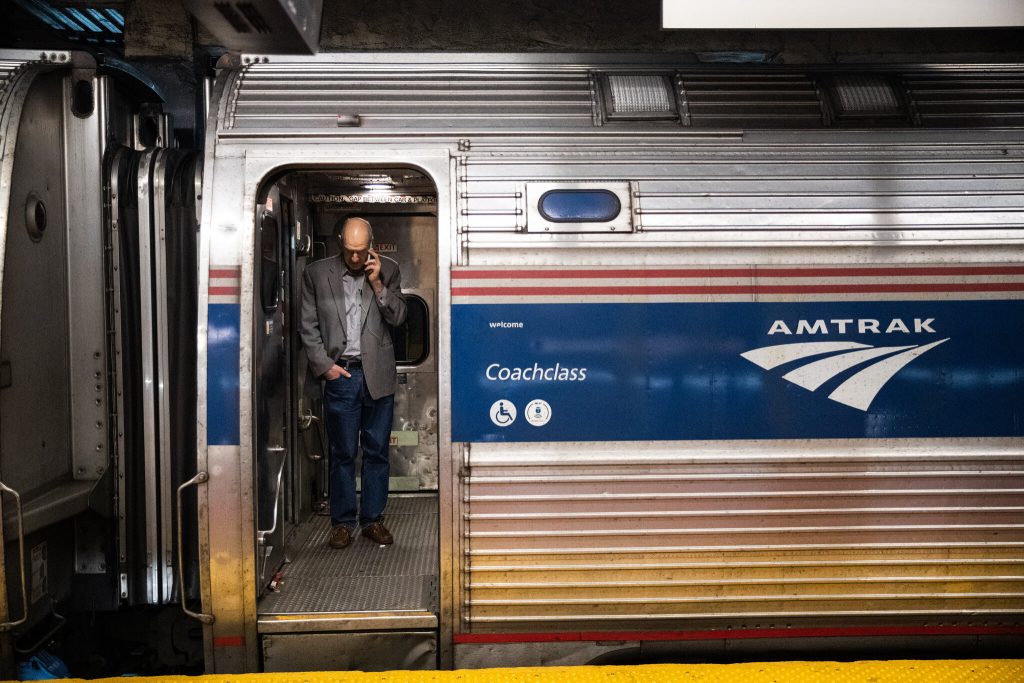
Last week, the DOJ announced criminal charges against Mark Snedden (the owner of Mark 1 Restoration) for, among other things, conspiracy to commit federal program bribery.
According to the DOJ, the company (the “Contractor”) was awarded a $58 million contract by Amtrack to be the main contractor on a facade repair and restoration project at Amtrak’s 30th Street Station in Philadelphia. Pursuant to the contract, the Contractor was prohibited from “offer[ing] to any Amtrak employee, agent, or representative any cash, gift, entertainment, commission, or kickback for the purpose of securing favorable treatment with regard to award or performance of any contract or agreement.”
Domestic Bribery Alleged In Connection With Fire Department Inspections

Unlike the FCPA’s anti-bribery provisions, 18 USC 666 (Theft or bribery concerning programs receiving Federal funds) does not contain an express facilitation payment exception which exempts conduct to “expedite or secure the performance of a routine governmental action” defined to include “obtaining permits, licenses, or other official documents.”
Even though the FCPA contains such a provision, and even though Congress explained in the legislative history that the FCPA would not reach “payments made to secure permits, licenses, or the expeditious performance of similar duties of an essentially ministerial or clerical nature which must of necessity by performed in any event,” many FCPA enforcement actions in the modern era of enforcement do indeed involve licenses, permits, and the like.
A recent domestic bribery enforcement action – invoking 18 USC 666 – concerns similar conduct.
Another Instance Of Alleged Domestic Bribery
In yet another instance of alleged domestic bribery involving U.S. officials (see here and here for other recent examples), the DOJ recently announced that Robert Burke (a retired Navy Admiral) and Yongchul “Charlie” Kim and Meghan Messenger (the co-CEO’s of Next Jump – a training and leadership development company) were criminally charged “related to their roles in a bribery scheme that involved a U.S. government contract.”
According to the DOJ release: