

Guilty Plea
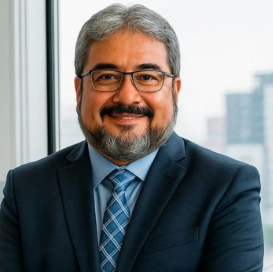
This recent post checked in on the Foreign Corrupt Practices Act enforcement action against Abraham Cigarroa Cervantes (pictured – a Mexican citizen described as a former finance director of the Latin America division of Stericycle).
In terms of background, in mid-2022, Stericycle (an Illinois based medical waste disposal company) resolved a net $59 million parallel DOJ and SEC Foreign Corrupt Practices Act enforcement action (see here and here for prior posts).
In the words of the DOJ: “From in or about and between at least 2011 and 2016, Stericycle, through certain of its employees and agents, knowingly and willfully conspired and agreed with others to corruptly offer and pay approximately $10.5 million in bribes to, and for the benefit of, foreign officials in Brazil, Mexico, and Argentina in order to obtain and retain business and other advantages for and on behalf of Stericycle. Stericycle earned approximately $21.5 million in profits from the corrupt scheme and through its corruptly obtained and retained government contracts.”
A Fishy Situation
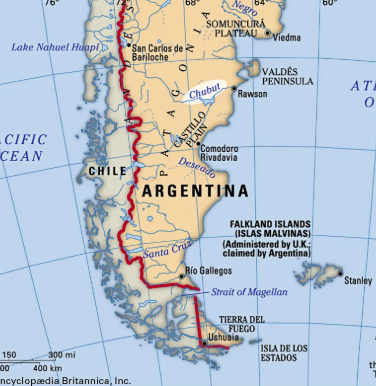
An interesting civil action was recently filed in federal court in California by Red Chamber Co. (a world leader in the fishing industry and one of the largest global suppliers of shrimp) against Grupo Profand S.L. (a multinational company headquartered in Spain engaged in the fishing, processing, and commercialization of seafood products).
The complaint begins:
“This case is about economic espionage, corporate subterfuge, and government corruption in Argentina that has resulted and will continue to result in a sever domestic injury suffered in California to one of the largest and most respected family-owned businesses in the United States.”
DOJ Charges Former Stericycle Executive

In mid-2022, Stericycle (an Illinois based medical waste disposal company) resolved a net $59 million parallel DOJ and SEC Foreign Corrupt Practices Act enforcement action (see here and here for prior posts).
In the words of the DOJ: “From in or about and between at least 2011 and 2016, Stericycle, through certain of its employees and agents, knowingly and willfully conspired and agreed with others to corruptly offer and pay approximately $10.5 million in bribes to, and for the benefit of, foreign officials in Brazil, Mexico, and Argentina in order to obtain and retain business and other advantages for and on behalf of Stericycle. Stericycle earned approximately $21.5 million in profits from the corrupt scheme and through its corruptly obtained and retained government contracts.”
Last week, the DOJ filed criminal charges against Mauricio Gomez Baez based on the same core conduct. As alleged in the information, Gomez Baez (a Mexican citizen and resident of Miami) worked for Stericycle as the Senior Vice President of Stericycle’s Latin American (LATAM) division whose business responsibilities included oversight and management of Stericycle LATAM and certain of Stericycle subsidiaries, including acquisitions, operations, finance, and sales.
Latin America in Flux: Recent Anti-Corruption Developments

Today’s post is from Debevoise attorneys Andrew Levine, Matthew French, and Nestor Almeida. (See here for a version of this post with footnotes).
In recent years – and notwithstanding encouraging windows of progress – economic difficulties, political shifts, and the pandemic’s lingering effects have undercut anti-corruption efforts in Latin America. The fourth annual Capacity to Combat Corruption Index (“CCC Index”), published in June 2022, reflects these recent challenges. Most countries in Latin America experienced declines in their assessed anti-corruption capabilities, with only a few demonstrating stability or improvement.
Friday Roundup

Checking in with Firtash, what the …?, if only it were that simple, and for the reading stack.
It’s all here in the Friday roundup.
Checking In With Firtash
As highlighted in this prior post, in April 2014 the DOJ announced the unsealing of a criminal indictment charging six individuals “with participating in an alleged international racketeering conspiracy involving bribes of state and central government officials in India to allow the mining of titanium minerals.” Among the defendants was high-profile Ukrainian businessman Dmitry Firtash.