

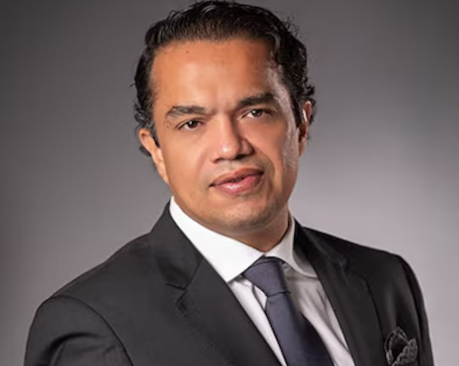
Earlier this month Ramon Alexandro Rovirosa Martinez was found guilty after a bizarre trial of various charges in connection with an alleged Mexican bribery scheme.
As reported here: “the US corruption trial of Mexican businessman Ramon Alexandro Rovirosa Martinez featured no fact witnesses, which led the judge to block the government from introducing most of its evidence until their closing argument.”
Last week, Rovirosa filed a motion for a judgement of acquittal.
The motion states:
“The guilty verdicts entered in this action on December 5, 2025, must be set aside, and a judgment of acquittal must be entered, for the following reasons:
1. The Government failed to meet its burden of proof that Mr. Rovirosa participated in a conspiracy, in violation of 18 U.S.C. § 371, and committed violations of the Foreign Corrupt Practices Act, 15 U.S.C. §§ 78dd-1, et seq. (“FCPA”). Specifically, the Government did not present sufficient evidence to establish: (A) that there was an agreement among Mr. Rovirosa and the alleged co-conspirators to commit a violation of the FCPA; (B) that Mr. Rovirosa knew of any unlawful purpose of any agreement to violate the FCPA or joined in any agreement to violate the FCPA willfully; (C) that there was a connection between Mr. Rovirosa and the entities that benefited from the allegedly illegal payments; (D) that Mr. Rovirosa knew about and/or authorized the allegedly illegal payments to any foreign official; (E) that any offer to pay, payment, promise to pay, or authorization of payment was for the purpose of influencing any act or decision of a foreign official in his official capacity; inducing such foreign official to do or omit to do any act in violation of the lawful duty of such foreign official; securing any improper advantage; or inducing such foreign official to use his influence with a foreign government or instrumentality thereof to affect or influence any act or decision of such government (in this case, PEMEX, Mexico’s state owned petroleum corporation); (F) that Mr. Rovirosa acted knowingly or willfully; and (G) that jurisdiction is proper in the Southern District of Texas.
2. The Government presented evidence to the jury that was either not properly admitted into evidence and/or that should not have been admitted into evidence.
A. The jury was allowed to hear the recording of an interview between Mr. Rovirosa and ICE agents that was not admitted into evidence and which the Government relied on (and mischaracterized) in its arguments and during its presentation of the evidence. The interview did not address the issues that were alleged in the Indictment and thus served to constructively amend the Indictment. Further, the recording included unredacted, objected-to hearsay statements by the co-defendant that violated Bruton v. United States, 391 U.S. 123 (1968).
B. The jury was provided with text messages to and from alleged co-conspirators that were never properly admitted into evidence, and the Government never offered evidence to satisfy any legal exception to the hearsay rule.
C. The jury was provided with testimonial translations of text messages with no testimony by the translator, despite defense counsel’s request and objection, in violation of the Confrontation Clause.
D. The Government presented the testimony of Carlos Espinosa Barba, a convicted felon with no direct knowledge of the facts of this case and whose testimony had no relevance to this case, to discuss PEMEX’s policies and his money laundering conviction for participating in an unrelated bribery scheme, even though the witness had never been employed by PEMEX, he had no relevant information about the case, and his inflammatory testimony was severely prejudicial Mr. Rovirosa, in violation of Mr. Rovirosa’s due process rights and Fed.R.Evid. 403.
E. The Government did not provide Mr. Rovirosa and his counsel with the forensic images of his own cell phone and the cell phone and iPad of Mario Avila, nor other cooperators who had provided statements and information relevant to Mr. Rovirosa’s defense, despite multiple requests by counsel, thereby depriving Mr. Rovirosa of his right to inspect the evidence used against him by the Government at trial and develop exculpatory information necessary for his defense.
F. The Government called a purported expert who had never been qualified as an expert, was not an expert, and whose testimony created evidence instead of explaining it, in violation of Fed.R.Evid. 702, when the Government did not have a witness from PEMEX of any other fact witnesses in the case.
Under the heading “Case Overview,” the motion states:
“The trial of the Government’s case was built on a false and misleading narrative and the improper use of inadmissible evidence. In opening statement, the Government relied heavily on a surreptitiously recorded interview of Mr. Rovirosa and told the jury that he “even told law enforcement he knew it was wrong to pay bribes.” (Tr. Transcript, p. 190). That assertion was misleading and prejudicial.
The recorded interview was inadmissible Rule 404(b) evidence and contained hearsay statements by a co-defendant that should have been barred from admission under Bruton. More importantly, the Government misstated its substance. Mr. Rovirosa did not admit to paying bribes. What he actually said was that he understood it would be wrong for Roma Energy—an uncharged entity wholly unrelated to the Indictment—to pay bribes of any kind. By presenting that statement as an admission of personal wrongdoing, the Government deliberately invited the jury to believe that Mr. Rovirosa had confessed to the charged conduct when, in fact, he had not.
This framing was not accidental. Throughout opening statement, the Government argued its case rather than previewing evidence, repeatedly characterizing conduct as “bribery”—a term not charged in the Indictment—and interpreting text messages for the jury before any witness testimony. The clear objective was to tie Mr. Rovirosa’s inadmissible statement to the charged offenses and to present it as a confession by implication.
That false narrative continued throughout the trial. Through a handful of witnesses, the Government introduced a limited number of text messages and records and asked ICE agents— who had no personal knowledge of the communications, the parties, or the alleged transactions—to speculate about their meaning. Those agents were invited to interpret cryptic messages and to portray Mr. Rovirosa and his co-defendant as participants in a long-running international bribery scheme, despite the absence of direct evidence supporting that conclusion.
The Government repeatedly used the 90-minute surreptitiously recorded interview to “glue” its case together, even though the recording was never admitted into evidence, never transcribed into the trial record, and never provided to the jury during deliberations. Instead, the jury was forced to rely entirely on the Government’s characterizations of the statement. That statement contained inadmissible and undisclosed Rule 404(b) material concerning Roma Energy and co-defendant Avila’s Bruton-barred allegations. Even the Government’s lead investigative agent, Matthew Wood, conceded that the statement did not concern the conduct charged in the Indictment. (Tr. Transcript p. 337).
Compounding the prejudice, another Government agent acknowledged that complete forensic images of Mr. Avila’s and Mr. Rovirosa’s devices existed and had never been produced to the defense. Thus, while the Government relied on selective extractions and speculative interpretations, it simultaneously withheld the very evidence that could have tested or refuted the Government’s evidence and its criminal allegations.
The trial concluded with testimony from witnesses who could not supply the missing proof. The Government presented an “expert” to address PEMEX’s status as a foreign governmental entity despite his admission that he had reviewed no evidence in the case and lacked familiarity with PEMEX or the alleged conduct. The final witness was a convicted felon who testified about his own criminal conduct and the purported impact of corruption on PEMEX, even though this witness had never worked for PEMEX and had no connection to Mr. Rovirosa or the charged offenses.
When the improper character evidence, speculative agent testimony, and guilt-by association are stripped away, the Government’s case is precisely what it promised: thousands of text messages, untethered to context, with only prosecutors explaining what the messages supposedly mean. Mr. Rovirosa’s convictions were not based on admissible evidence proving knowledge, intent, agreement, or purpose. His convictions were based on mischaracterized statements, association with convicted criminals, and prosecutorial narrative. The trial process and resulting convictions therefrom violated fundamental principles of due process and thus cannot stand.
