

A Look At Oztemel’s Second Circuit Appeal

In September 2024, Glenn Oztemel (previously employed by Arcadia Fuels Ltd. and Freepoint Commodities LLC) was found guilty at trial of FCPA and related offenses in connection with a Brazil bribery scheme. (See here for the prior post).
As stated in the DOJ release: “According to court documents and evidence presented at trial, Oztemel […] paid bribes to officials of Petróleo Brasileiro S.A. (Petrobras), the Brazilian state-owned oil and gas company, to obtain lucrative contracts for Arcadia Fuels Ltd. (Arcadia) and Freepoint Commodities LLC (Freepoint). […] With the assistance of others, Oztemel paid and caused the payment of bribes to Petrobras officials for their assistance in helping Arcadia and Freepoint to obtain and retain fuel oil contracts with Petrobras and by providing Oztemel and others with confidential information regarding Petrobras’ fuel oil business. Oztemel and his co-conspirators caused Arcadia and Freepoint to make corrupt payments — disguised as purported consulting fees and commissions — to a third party intermediary and agent, Eduardo Innecco, 74, knowing that Innecco would pay a portion of those funds to Brazilian officials, including to Houston-based Petrobras trader Rodrigo Berkowitz.”
Further Thoughts On “The FCPA Reinforcement Act”

Earlier this week, various Democratic Senators introduced a bill titled “The FCPA Reinforcement Act” seeking to extend the statute of limitations to ten years – for a limited time period – for certain FCPA offenses. (See here for the prior post).
This post contains additional thoughts on the bill.
First, statute of limitations are a bedrock, black-letter legal principle. As stated by a unanimous Supreme Court: “Statute of limitations are intended to ‘promote justice by preventing surprises through the revival of claims that have been allowed to slumber until evidence has been lost, memories have faded, and witnesses have disappeared. They provide ‘security and stability to human affairs. [They] are ‘vital to the welfare of society [and] ‘even wrongdoers are entitled to assume that their sins may be forgotten.’”
“The FCPA Reinforcement Act” Introduced In Senate

Despite the brief 118 day “pause” of FCPA enforcement in 2025 (during which various aspects of FCPA and related enforcement continued), corporate FCPA enforcement by the DOJ in 2025 was above certain recent prior years. (See here).
The past nine months has been one of most active periods of FCPA trials of individuals in the FCPA’s nearly 50 years. In September, there was an FCPA trial. In December, there was an FCPA trial. In February, there was an FCPA trial. Post-trial activity continues in some of these matters in which the DOJ remains steadfast in its positions.
Another FCPA trial is soon to begin. (See here).
Last week, the DOJ brought a notable FCPA enforcement action against individuals. (See here).
The enforcement theories in these matters are generally similar to prior DOJ enforcement theories over the past approximate 20 years.
Despite the above facts, some insist that FCPA enforcement has stopped, slowed down, or changed.
This group now formally includes various Democratic Senators who recently introduced “The FCPA Reinforcement Act” in the Senate.
DOJ Responds To Statute Of Limitations Issue In Rovirosa Matter

This prior post highlighted an August DOJ FCPA enforcement action concerning an alleged bribery scheme in Mexico.
The indictment charges Ramon Alexandro Rovirosa Martinez (a citizen of Mexico and a lawful permanent resident of Texas) and Mario Alberto Avila Lizarraga (a citizen of Mexico and lawful permanent resident of Texas) for their roles in an alleged bribery scheme to retain and obtain business related to Petróleos Mexicanos (PEMEX), the state-owned oil company of Mexico, and PEMEX Exploración y Producción (PEP), PEMEX’s wholly owned exploration and production subsidiary.
Rovirosa Files Motion To Dismiss Based On Statute Of Limitations
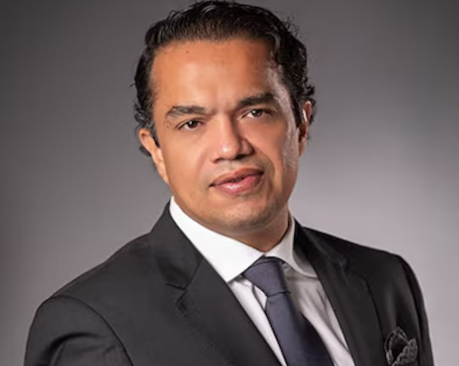
This prior post highlighted a recent DOJ FCPA enforcement action concerning an alleged bribery scheme in Mexico.
The indictment charges Ramon Alexandro Rovirosa Martinez (a citizen of Mexico and a lawful permanent resident of Texas) and Mario Alberto Avila Lizarraga (a citizen of Mexico and lawful permanent resident of Texas) for their roles in an alleged bribery scheme to retain and obtain business related to Petróleos Mexicanos (PEMEX), the state-owned oil company of Mexico, and PEMEX Exploración y Producción (PEP), PEMEX’s wholly owned exploration and production subsidiary.