

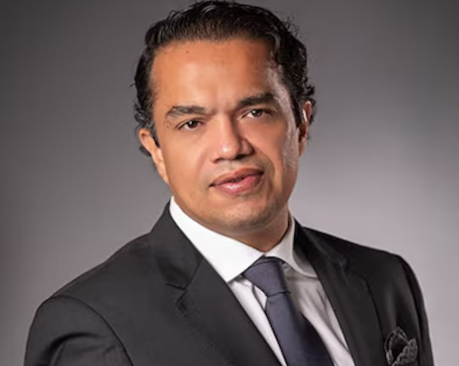
Trial was supposed to begin today in U.S. v. Rovirosa (see prior posts here, here, here, here and here).
Instead, last week Judge Kenneth Hoyt (S.D. Tex) set a status conference for today.
Earlier today, Roviorsa filed another motion to dismiss.
The motion begins with this “Question Presented.”
“In United States v. Panci, 256 F.2d 308, 310 (5th Cir. 1958), Circuit Judge Joseph C. Hutcheson (former U.S. district judge and Houston mayor), asked whether “[i]t is conceivable that a conviction could be or rather should be had in a case such as this where not one witness could be cross-examined as to the statements testified to, as involving the defendant, for each and every one of those statements were hearsay?” He ruled no.”
The motion states in summary fashion:
Factual Background on Dismissal
On September 29, at the pretrial conference, the government announced “ready for trial” on October 6. This was welcome news to Rovirosa, who since his weekend arrest on August 10, has been eager to publicly clear his name with a jury. In every filing he has demanded a trial as soon as possible. And every government response included their acknowledgement they were ready for trial. An early trial was important for Rovirosa because he knew the government was not prepared; and part of Rovirosa’s defense strategy was to exploit this weakness.
Avila’s Phone. Rovirosa knew the government had a thin case from day one. The allegations in the Indictment focused on Mario Avila (“Avila”) and his phone. There was no text message, document, or other evidence that showed Rovirosa knew anything about what Avila was doing, nor agreed with him to do anything. With no government witnesses with any knowledge of the facts, Avila’s phone was an indispensable part of Rovirosa’s defense. In two separate filings, a bill of particulars filed on September 2, and a motion to compel, filed on September 8, Rovirosa asked for Avila’s phone. Both motions cited Judge Bray’s August 11, 2025, discovery order.
Discovery Order. Judge Bray’s discovery order said that if the government failed to comply with its obligations under Rule 16, Brady, and Giglio, and the Due Process Protections Act, the remedy included exclusion of evidence, sanctions, and/or dismissal of this case. The government responded to Rovirosa’s motions with ridicule, saying he was not acting in “good faith” and creating controversy where none existed. The government also said explicitly that it had given Rovirosa the contents of the phone. Rovirosa relied on these statements to prepare his defense, which the government now knows had to do mainly with showing the weaknesses in the government’s case.
No Confrontation. On September 22, the government disclosed it has only four potential witnesses. Two witnesses are (1) a case agent and (2) the government agent who did the cell phone extraction of the phones in the case. The government has since attempted to do away with this extraction witness and offer the cell phone contents by affidavit or certificate, in violation of the Confrontation Clause and Melendez-Diaz, 557 U.S. 305 (2009). The other two witnesses are (3) a defendant from an unrelated case, Carlos Espoinosa Barba, a convicted felon cooperator who worked for a different Pemex entity than the one mentioned in this case and (4) a civil lawyer, David Lopez, who stated in his report that the only information he has reviewed is the Indictment. The civil lawyer’s report is cut and pasted from the report he prepared for Barba’s case in the EDNY, where he testified to paying bribes. None of the four witnesses has any personal knowledge of any of the facts of this case. Virtually every record in this case has been translated from Spanish to English, and far too often, incorrectly. There is no witness from Pemex, no witness who has read and understood any of the original records in Spanish. No one who can offer any testimony regarding the voluminous records and messages.
Compounding this problem, the case agent, the only one who has even looked at the discovery, does not speak Spanish and will testify using only translations of documents prepared by over a dozen different translators—none familiar to the Court or the defendant, with untested, unexplained, and unknown credentials. These translations are riddled with errors and guesses about the meaning. The case agent and government’s trial plan, as disclosed at the October 2 hearing, is for the case agent to “present” the translations in summary form using a PowerPoint presentation to the jury. The government thinks the meaning of these texts (which, are almost exclusively from Avila’s phone) are clear and need no interpretation, but the Constitution disagrees. If the government follows its plan, there will be no witness or evidence for the defendant to confront in this case.
Discovery Violation. On October 1, on the eve of trial, the government told Rovirosa and the Court that it had misrepresented discovery compliance in a court filing where it had stated that it had turned over the contents of Avila’s phone, which it has had in its possession since 2021. The email said the government failed to produce over 735,000 Spanish records from Avila’s phone, conceding a violation of Judge Bray’s order. In addition, the same week, the government continued to update its exhibit list and provide new translated documents to Rovirosa, notwithstanding stating it was ready for trial on September 29. The government also continues to provide other device information and records, in a continuing violation of Judge Bray’s order. To date, the government concedes it has not provided Rovirosa with all the required discovery and their proposed exhibits.
During the October 2 status conference, when the Court mentioned that the trial could not move forward because of the government’s discovery violations disclosed a day earlier, Rovirosa advised the Court that the government’s Constitutional violations have caused him irreparable prejudice. Additional time, i.e., second, third, or more bites of the apple, only benefits the government and hurts Rovirosa, allowing the government an opportunity to fix the issues with its case and address Rovirosa’s primary defense. In effect, Rovirosa laid his cards on the table, the government laid their cards on the table, and then the government used its own actions to force the Court to deal a new hand with a reset of the trial date.”
