

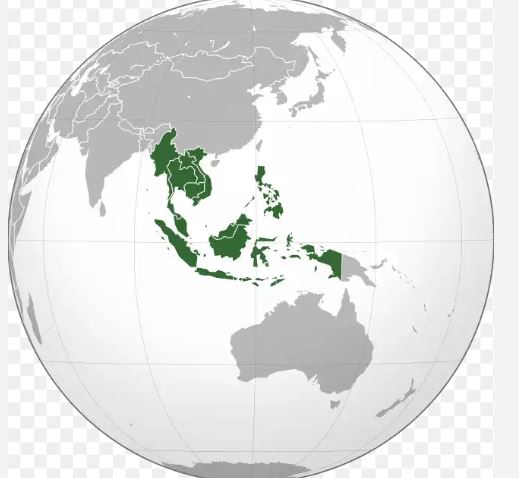
Previous posts have focused on Foreign Corrupt Practices Act enforcement actions concerning conduct (in whole or in part) in Thailand, Vietnam, Indonesia, and Malaysia.
This post takes a look at FCPA enforcement actions involving conduct (in whole or in part) in other Southeast Asian countries: the Philippines, Laos, and Myanmar.
Philippines
In 2024, the DOJ criminal charges against various individuals (including Smartmatic executives) concerning an alleged bribery and money laundering scheme “to retain and obtain business related to the 2016 Philippine elections. […] These bribes were allegedly paid to obtain and retain business related to providing voting machines and election services for the 2016 Philippine elections and to secure payments on the contracts, including the release of value added tax payments.” In 2025, Smartmatic was also criminally charged in connection with the same core conduct. Smartmatic, as well as the executives, are contesting the charges and the enforcement action remains pending.
The enforcement action concerned the company’s alleged “failure to devise and maintain sufficient internal controls over a global hospitality program that the company hosted in connection with its sponsorship of the 2008 Beijing Summer Olympic Games” and involved invitations to officials in the following countries: Burundi, the Philippines, Congo and Guinea.
As to the Philippines, the allegations stated:
“In July 2007, BHPB became embroiled in a dispute with a local JV partner concerning a prospective nickel mining operation in the Philippines. The JV partner sued BHPB in local court and filed requests with the country’s Secretary of Department of Environment and Resources (“DENR”), requesting reversion of the mining rights that the JV partner had assigned to the JV.
In October 2007, a BHPB employee from the Stainless Steel Materials CSG submitted a hospitality application to invite the Secretary and his spouse to attend the Olympics, with airfare included. The completed application contained a “Yes” response to Question 10, but only described a technical services agreement that BHPB was considering submitting to the DENR for the Secretary’s approval. Question 10 of the hospitality form did not explicitly require, and the employee’s response did not provide, any information about the Secretary’s role in reviewing the JV partner’s reversion request or the fact that the President of the Philippines had designated the Secretary to mediate the dispute between BHPB and its JV partner. The form included a “No” response to Question 11.
The Secretary accepted BHPB’s invitation in December 2007. In March 2008, he issued a decision denying the JV partner’s reversion request and continued during the ensuing months to mediate the parties’ dispute. In late July, BHPB became concerned that the company’s JV partner had learned about the Olympics invitation. As a result, BHPB withdrew the invitation shortly before the Olympics began.”
The enforcement action concerned conduct in the Philippines and the allegations stated: “Emery Transnational, a Manila, Philippines-based firm engaged in shipping and freight operations in the Philippines, was controlled by a wholly-owned, U.S.-based subsidiary of Con-way. … [B]etween 2000 and 2003, Emery Transnational made approximately $244,000 in improper payments to foreign officials at the Philippines Bureau of Customs and the Philippine Economic Zone Area. […] [T]hese payments were made to induce these foreign officials to violate customs regulations, settle customs disputes, and reduce or not enforce otherwise legitimate fines for administrative violations.”
The enforcement action concerned conduct in Benin, the Philippines, and South Africa.
From 1999 to 2003, DWC [Datron World Communications (“DWC”), a division of
Datron Systems Inc., which was acquired by Titan in September 2001] sold approximately $1.1 million in equipment and paid approximately $48,000 in commissions to its Filipino agent. That agent made cash payments to high-ranking military officials to obtain business for Datron and Titan.
The agent tried to discuss these payments with senior officers or executives of Datron, but according to the agent, the officers or executives did not want to discuss the subject.
Certain other countries, but not “sounding in bribery”
The enforcement action concerned conduct in China, Thailand, and the Philippines.
As to the Philippines, the allegations stated: “InVision, through the conduct of certain employees, was aware of a high probability that its agents or distributors in the Philippines … had paid or offered to pay money to foreign officials or political parties in connection with transactions or proposed transactions for the sale by InVision of its airport security screening machines.”
Laos
The enforcement action concerned conduct in China, India, Thailand, Laos, Indonesia, Bosnia, Vietnam, Malaysia, Croatia, Serbia, Slovenia, Slovakia, Iran, Saudi Arabia, Libya, Syria, the United Arab Emirates, Mauritania, Congo, Niger, Madagascar, and Turkey.
As to Laos, the allegations stated: “[Between 2000 to 2006] ADT Thailand [ADT Sensormatic Thailand an indirect wholly owned subsidiary of Tyco] recorded payments in the amount of approximately $78,000 to one of its subcontractors as payments for site surveys for a government traffic project in Laos, but the payments instead were channeled to other recipients in connection with ADT Thailand’s business in Laos.
Myanmar
The enforcement action concerned conduct in Costa Rica, Bangladesh, Bulgaria, Egypt, Indonesia, Myanmar, Panama, the United Arab Emirates, and Vietnam.
As to Myanmar, the allegations stated: “Aon Limited retained an introducer in Myanmar to assist Aon Limited in connection with its account with Myanmar Airways and Myanmar Insurance, two government-owned entities.” “Company records indicate that the introducer likely used a portion of his commission to improperly influence a government official on Aon Limited’s behalf in connection with the Myanmar account.”
