

Prosecutorial Mishaps Or Misconduct In FCPA Trials

This recent post highlighted a Judge’s Memorandum and Order dismissing the criminal indictment and granting a motion of acquittal in U.S. v. Rovirosa. The Judge’s decision was based on the lack of evidence to support Rovirosa’s trial court conviction in violation of the Confrontation Clause of the Sixth Amendment.
This example is just the latest example of DOJ mishaps or misconduct in FCPA trials. Set forth below are five other examples. Five may not seen like a large number, but then again there have only been 26 FCPA trials.
In addition, this post also highlights five other examples of defendants ultimately prevailing in FCPA trials. Given the date of several of these matters (and the lack of online court materials), it is not known if any of these instances also involved prosecutorial misconduct or other mishaps.
Judge To Toss Rovirosa Conviction
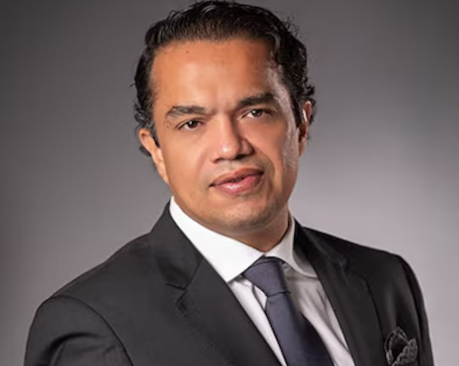
In December 2025, Ramon Alexandro Rovirosa Martinez was found guilty after a bizarre trial of various charges in connection with an alleged Mexican bribery scheme. (See here for the prior post).
As reported here, the trial featured no fact witnesses which led the judge to block the government from introducing most of its evidence until their closing argument.
Soon after the verdict, Rovirosa was taken into custody and has been in prison since.
Post-trial, Rovirosa filed a motion for a judgement of acquittal and among the reasons stated were the following:
(i) “the Government presented evidence to the jury that was either not properly admitted into evidence and/or that should not have been admitted into evidence;”
(ii) “the jury was provided with text messages to and from alleged co-conspirators that were never properly admitted into evidence, and the Government never offered evidence to satisfy any legal exception to the hearsay rule;” and
(iii) “the jury was provided with testimonial translations of text messages with no testimony by the translator, despite defense counsel’s request and objection, in violation of the Confrontation Clause.”
DOJ OIG Concludes That FBI Agent Engaged In “Disgraceful Conduct” In Connection With FCPA Investigation
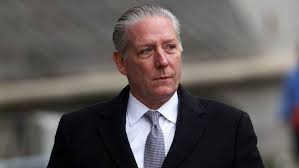
As highlighted in this prior post, in 2017 the DOJ criminally charged Chi Ping Patrick Ho (of Hong Kong, China) and another with conspiring to violate the Foreign Corrupt Practices Act, violating the FCPA, conspiring to commit international money laundering, and committing international money laundering.
Ho was associated with China Energy Fund Committee (CEFC) (a entity fully funded by CEFC Energy Company Limited.
Defense Counsel Asserts That The DOJ Invented A “Cartel / FCPA Case” As Part Of A “PR Campaign”

This prior post highlighted a recent DOJ FCPA enforcement action concerning an alleged bribery scheme in Mexico.
The indictment charges Ramon Alexandro Rovirosa Martinez (a citizen of Mexico and a lawful permanent resident of Texas) and Mario Alberto Avila Lizarraga (a citizen of Mexico and lawful permanent resident of Texas) for their roles in an alleged bribery scheme to retain and obtain business related to Petróleos Mexicanos (PEMEX), the state-owned oil company of Mexico, and PEMEX Exploración y Producción (PEP), PEMEX’s wholly owned exploration and production subsidiary.
Yesterday, Rovirosa’s attorneys (Ryan McConnell, Matthew Boyden, and Lawrence Finder – all former DOJ prosecutors) filed two motions.
The first is a motion to strike the DOJ’s reference (not in the indictment, but in a separate motion) to Rovirosa being associated with Mexican cartels.
Interesting Turn Of Events In Boncy Enforcement Action

In 2017 (in connection with an undercover string) the DOJ unsealed criminal charges against Joseph Baptiste (a retired U.S. Army Colonel, practicing dentist, and founder / president of a Maryland-based Haitian focused non-profit) for alleged Haitian bribery. In 2018 the DOJ added criminal charges against Roger Boncy in connection with the same core conduct. (See here).
Unlike most individual FCPA defendants, Baptiste and Boncy put the DOJ to its burden of proof and in June 2019, after a two-week trial, a federal jury in Boston found Baptiste guilty of one count of violating the Travel Act and one count of conspiracy to commit money laundering and Boncy guilty of one count of conspiracy to violate the FCPA and the Travel Act. (See here).
Thereafter, in post-trial motions the defendants sought an acquittal or a new trial based on ineffective assistance of counsel. (See here). In March 2020, U.S. District Court Judge Allison Burroughs (D. Mass.) granted Baptiste and Boncy a new trial based on ineffective assistance of counsel. (See here).
In August 2021, the First Circuit affirmed a new trial for the defendants. (See here).
That was a rather long introduction to set the stage for the re-trial of Baptiste and Boncy which is scheduled to begin in July.