

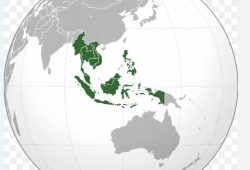
Previous posts have focused on Foreign Corrupt Practices Act enforcement actions concerning conduct (in whole or in part) in Thailand, Vietnam, Indonesia, and Malaysia.
This post takes a look at FCPA enforcement actions involving conduct (in whole or in part) in other Southeast Asian countries: the Philippines, Laos, and Myanmar.
Philippines
In 2024, the DOJ criminal charges against various individuals (including Smartmatic executives) concerning an alleged bribery and money laundering scheme “to retain and obtain business related to the 2016 Philippine elections. […] These bribes were allegedly paid to obtain and retain business related to providing voting machines and election services for the 2016 Philippine elections and to secure payments on the contracts, including the release of value added tax payments.” In 2025, Smartmatic was also criminally charged in connection with the same core conduct. Smartmatic, as well as the executives, are contesting the charges and the enforcement action remains pending.
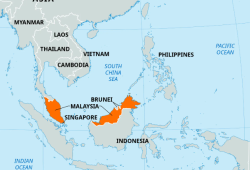
This post highlights five FCPA enforcement actions (ranging from the largest FCPA settlement of all-time to one of the first FCPA enforcement actions in 1978) concerning conduct (in whole or in part) in Malaysia.
The enforcement action (the largest FCPA settlement in history) concerned bribes to various Malaysian and Abu Dhabi officials in connection with 1Malaysia Development Berhad (1MDB), Malaysia’s state-owned and state-controlled investment development company.
The same core conduct was also at issue in the 2018 FCPA enforcement action against Low Taek Jho (Jho Low), Ng Chong Hwa (Roger Ng – a former managing director at Goldman Sachs), and Tim Leissner (the former Southeast Asia Chairman at Goldman Sachs and Participating Manager Director). Leissner pleaded guilty and was sentenced in 2025 to 2 years in prison . In 2022, Ng was found guilty at trial of FCPA and related offenses and was sentenced to 10 years in prison. Jho Low remains a fugitive.
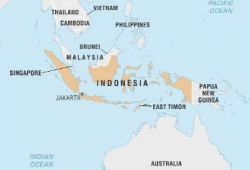
This post highlights the twenty-five FCPA enforcement actions concerning conduct (in whole or in part) in Indonesia.
The enforcement action concerned conduct in South Africa and Indonesia.
As to Indonesia, the allegations were: “Between approximately 2015 and 2018, SAP, through its agents, including but not limited to SAP Indonesia and its personnel, engaged in a scheme to bribe Indonesian officials, to obtain improper business advantages for SAP in connection with various contracts between and among SAP and Indonesian departments, agencies, and instrumentalities.”
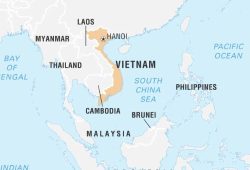
Set forth below are the general details of fifteen FCPA enforcement actions (all since 2008) which have involved (in whole or in part) conduct in Vietnam.
The enforcement action concerned conduct in China, India, Indonesia, United Arab Emirates, and Vietnam.
As to Vietnam, the allegations stated that: “Albemarle corruptly obtained contracts at two state-owned oil refineries in Vietnam through the use of an intermediary sales agent who requested increased commissions to pay bribes to PetroVietnam and refinery officials and to structure tender requirements to favor Albemarle. […] In 2016, Albemarle also used Vietnam Intermediary Company and its connections to PetroVietnam officials to corruptly obtain business at another state-owned refinery in Vietnam, Nghi Son Refinery and Petrochemicals LLC (“NSRP”). NSRP was owned by a joint venture that included, among others, PetroVietnam and Kuwait Petroleum International, also a state-owned entity.”
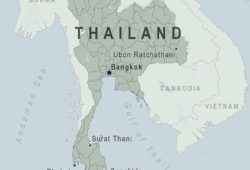
This post highlights FCPA enforcement actions concerning conduct (in whole or in part) in Thailand.
Since 2004, there have been fourteen FCPA enforcement actions concerning conduct (in whole or in part) in Thailand.
The enforcement action concerned conduct in Thailand based on the conduct of a subsidiary in Thailand and largely focused on Thai officials visiting massage parlors and participating in non-business travel funded by the subsidiary.

One of the interesting things about writing about the FCPA and related issues on a daily basis for over 15 years is the frequency in which I come across content of former DOJ/SEC enforcement officials saying things in conflict with positions they articulated while at the government. (See here for a prior post).
Hui Chen was “the first-ever Compliance Counsel Expert at the United States Department of Justice, Hui was the exclusive consultant to the federal prosecutors in the Fraud Section, evaluating corporate ethics and compliance programs in areas such as anti-fraud, anti-bribery/kickback, healthcare, quality control, manipulation of financial markets, process safety, and environmental protection. She is the author of the Fraud Section’s well known “Evaluation of Corporate Compliance,” which has been widely praised by compliance practitioners and recognized by government regulators and standard setters around the world.” (See here).
During Chen’s time at the DOJ, the message from the DOJ (as it has long been before and after her tenure) was always disclose and cooperate.

In March 2026, the DOJ criminally charged David Ferrera and Marc Tilman with FCPA and related offenses in connection with an alleged bribery scheme involving an employee of Centre Hospitalier Universitaire de Reims (CHU Reims) in France. (See here for the prior post).
According to the DOJ: “CHU Reims was wholly owned and controlled by the government of France and performed a function that France treated as its own. CHU Reims was an “instrumentality” of a foreign government, and CHU Reims’s officers and employees were “foreign officials,” as those terms are used in the FCPA …”.
The prior post noted that the DOJ enforcement theory that employees (such as physicians, nurses, mid-wives, lab personnel, etc.) of certain foreign health care systems can “foreign officials” under the FCPA – and thus occupy a status akin to a President or Prime Minister – was dubious.

Silly?
Warranted?
Somewhere in between?
Who knows.
But the back and forth between the DOJ and Judge Nicholas Garaufis (E.D.N.Y.) in connection with the DOJ’s consent motion to dismiss in US v. Adani et al continues.
Earlier this week, Judge Garaufis granted the DOJ’s motion to dismiss fraud charges against certain defendants (even though he disagreed with the vast majority of the DOJ’s positions), while at the same time rejecting the DOJ’s motion to dismiss FCPA and obstruction charges against certain other defendants. (See here for the prior post).

In 2024, the DOJ criminally charged various individuals in connection with an alleged Indian bribery scheme. (See here for the prior post).
This recent post highlighted how Judge Nicholas Garaufis (E.D.N.Y.) granted the DOJ’s motion to dismiss various non-FCPA fraud charges against certain defendants.
However, Judge Garaufis denied – for the moment – the motion to dismiss FCPA and obstruction charges against certain other defendants.
Regarding the “FCPA Charges against Non-Appearing Defendants,” Judge Garaufis wrote:

In 2024, the DOJ criminally charged various individuals in connection with an alleged Indian bribery scheme. (See here for the prior post).
Gautam Adani (a citizen of India and founder of the Adani Group which includes numerous portfolio companies including Adani Green Energy – and Indian energy company) was charged with securities fraud conspiracy, securities fraud, and wire fraud conspiracy.
Sagar Adani (a citizen of India and Gautam Adani’s nephew and Executive Director of Adani Green’s Board of Directors) was charged with securities fraud conspiracy, securities fraud, and wire fraud conspiracy.

In 2014, the 11th Circuit released its decision in U.S. v. Esquenazi.
The case was, and remains, the only appellate court decision in Foreign Corrupt Practices Act history to substantively address the FCPA’s “foreign official” element.
In pertinent part the court stated:
“An ‘instrumentality’ under … the FCPA is an entity controlled by the government of a foreign country that performs a function the controlling government treats as its own. Certainly, what constitutes control and what constitutes a function the government treats as its own are fact-bound questions. It would be unwise and likely impossible to exhaustively answer them in the abstract. Because we only have this case before us, we do not purport to list all of the factors that might prove relevant to deciding whether an entity is an instrumentality of a foreign government. For today, we provide a list of some factors that may be relevant to deciding the issue.

In mid-April, Judge Kenneth Hoyt (S.D. Texas) granted post-trial motions by Ramon Alexandro Rovirosa Martinez and ordered that he be released from prison. (See here).
Shortly thereafter, on May 8th, the DOJ filed a notice of appeal in the Fifth Circuit. (See here).
Earlier this summer, the DOJ requested a 30-day extension of time in which to file its opening brief stating that the “the Office of the Solicitor General has not yet determined whether or on what grounds to allow a government appeal to proceed in this case.”
The DOJ is still unsure of an actual appeal.